



By Alan Clement
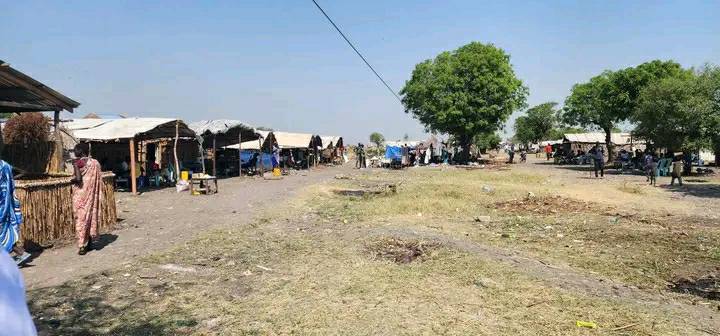
The Upper Nile State government has revealed plans to shift operations to Nasir, and urged civilians to return.
Senior state officials began arriving in Nasir County on Tuesday, March 17, ahead of Governor Jacob Dollar Ruot, who was expected to reach the area on Wednesday as part of a broader effort to re-establish government presence and encourage displaced residents to return.
In an exclusive interview with No. 1 Citizen Daily Newspaper, Upper Nile State Minister of Information Peter Ngwojo said the relocation is intended to rebuild public confidence and demonstrate that Nasir town is secure enough for civilians to resettle.
“In order to encourage the citizens to return to the town of Nasir, we have relocated the office here,” Minister said.
He added that the presence of the full state administration in Nasir is meant to send a clear signal of stability and reassurance, underscoring the government’s commitment to restoring confidence and demonstrating that the town is under active protection.
“We encourage the people to return to their homes because Nasir town is safe now and secure,” said Minister Ngwojo
Officials already on the ground include the Minister of Education Alberto, Minister of Roads and Bridges Jiach Yien, Minister of Cooperative David Ali, and Member of Parliament Paul Biel Chol; an indication of a coordinated government effort to temporarily shift the administrative center closer to communities affected by displacement.
However, the government’s call for returns comes amid the humanitarian gaps, particularly in health services and the limited presence of aid agencies, leaving civilians without the essential support needed to make resettlement viable.
“People of Nasir, they have many needs,” Minister Ngwojo acknowledged.
Despite the government’s relocation to Nasir, he stressed that civilian returns depend on renewed humanitarian support, urging NGOs and international agencies to restore health and basic services.
“Health services are not available here. Those organisations, international organisations and NGOs are not operating fully here in Nasir. That is why we are urging them to come,” Minister Ngwojo appealed.
He said local authorities have already engaged humanitarian actors to resume operations, stressing that their presence is vital for sustaining civilian returns.
“The Honourable Commissioner met with them yesterday and urged them to come and operate from Nasir hill under his protection,” explained, assuring them that the government will provide security guarantees so they can deliver services without fear.
The push for civilian return is unfolding amid insecurity in Nasir County, where the Commissioner last week ordered evacuations from Mandeng and nearby areas due to imminent fighting raising doubts about the feasibility of large-scale resettlement.
Minister Ngwojo acknowledged that government forces are moving to secure the area, further heightening risks to civilians.
“The SSPDF are heading to the area. So, it is very important to urge the people to come out,” he said.
The simultaneous evacuation from conflict zones and encouragement of returns to Nasir town underscores a dual-track reality for civilians; one defined by both displacement and cautious resettlement.
He rejected suggestions that the two dynamics are contradictory stating; “It does not look like a contradiction,” he said. “
He emphasized that the situation in outlying areas remains primarily a military matter. “Yes, it is a military issue and we cannot even intervene. We are urging the citizens to come out for their safety,” he said.
“Since the civil war erupted in 2013, Upper Nile State has faced repeated cycles of conflict and displacement, with Nasir County often on the frontline; authorities now see the return of government institutions as a step toward stabilisation ahead of anticipated elections.
For many residents, the decision to return may hinge less on political assurances and more on the availability of basic services such as healthcare, food assistance, and protection.
As the governor prepares to arrive and formally begin operations from Nasir, the coming days are likely to test whether the government’s physical presence can translate into tangible improvements on the ground or whether the gap between policy and reality will persist for civilians caught between conflict and return.