

By Lodu William Odiya
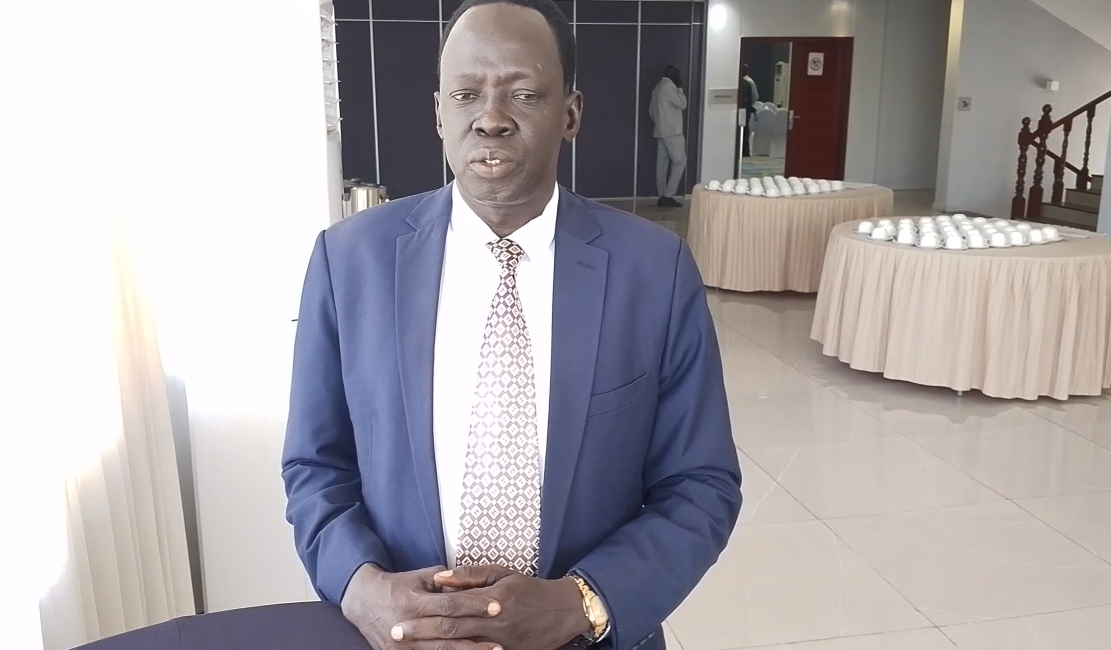
The Northern Bahr El Ghazal state Director General in the Ministry of General Education and Instruction, Christopher Athian Door, has raised concerns over persistent challenges affecting the distribution and management of learning materials.
He warned that the situation continues to undermine the quality of education across the country.
In an exclusive interview with No. 1 Citizen Newspaper after a learning-teaching material validation workshop in Juba on Tuesday, Athian said the workshop, organised by the National Ministry of General Education, aims to strengthen policies on the management, accountability, and use of teaching and learning materials.
“This is a big challenge because many states lack trucks and logistical capacity to move the materials further. Some areas are also difficult to access due to poor infrastructure,” he stated.
He noted that while efforts have been made to improve the system, weak supply chains remain a major obstacle.
Athian explained that under the current policy, materials are delivered only up to state headquarters, leaving state authorities responsible for transporting them to counties, payams, and schools.
According to Athian, large quantities of materials are often delivered to facilities with limited storage capacity, making proper record-keeping and distribution difficult.
He emphasised the need for training resource managers to improve storage and accountability systems.
Despite these logistical hurdles, Athian said the ultimate goal of the new policies is to ensure that both teachers and learners can effectively use the materials.
“There should be training targeting education managers, teachers, and Parent-Teacher Associations (PTAs) to improve understanding and utilisation of these resources at the grassroots level,” he told No. 1 Citizen newspaper.
He underscored that the shortages of textbooks continue to affect learning outcomes, with many schools and several students who are forced to share a single book, limiting their ability to study effectively.
“The materials are not enough. You find many learners sharing one textbook, which affects their understanding,” he said.
According to Athian, the shortage has also contributed to the illegal sale of government-provided materials in local markets.
Although clearly marked “Not for Sale,” some textbooks reportedly find their way into shops, where they are sold to desperate parents and students.
The director general also stressed that such practices are unlawful, noting that all government and partner-supported materials, particularly those bearing donor markings, were meant to be distributed free of charge.
He added that the authorities in Northern Bhar El Ghazal State have involved police and local leaders to confiscate any such materials found on sale and return them to schools.
Athian urged other states to adopt similar measures to prevent cross-border trading of textbooks.
He also called on the national ministry and development partners, including UNICEF, to extend support beyond state headquarters to ensure the timely delivery of materials to schools.
“Distribution must go beyond the state level. Without that, materials delay, and learners suffer,” he said.
He also blamed the printing companies for not making a thorough correction before printing books to avoid typo errors, citing the primary six mathematics book.
However, Inasuk Peter, who is the general manager in one of the printing companies, emphasised that their major principle is to print what has been approved by the clients.
“When it comes to printing, we normally print what is approved by our client. More so, like this government booklet, we make sure it is approved and signed by the requester,” he said.
“Now, like these three primary textbooks, what we do is we have to print samples first, then we take them to the ministry, where the ministry has stamped them, showing approval. So, in case of any error, it’s not from us,” he explained.