


By Kei Emmanuel Duku
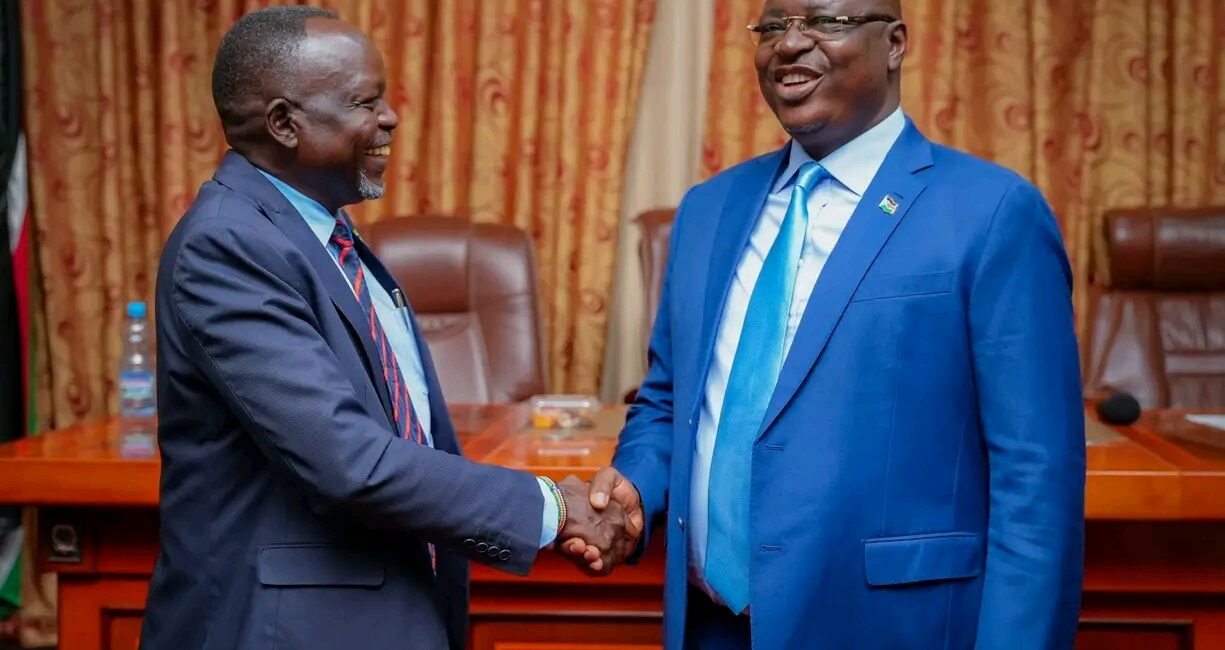
The newly installed Speaker of the Central Equatorial State (CES) Legislative Assembly has issued a blistering assessment of the state’s current affairs, warning that “chronic insecurity” and rampant “land grabbing” are strangling the agricultural and economic potential of what is traditionally ranked as South Sudan’s premier state.
During a high-stakes swearing-in ceremony held on Monday in Juba, Rt. Hon. Taban Emmanuel Baya declared that while the state often basks in the glory of being ranked number one in the country, the reality for its citizens is defined by a debilitating lack of funds in the middle of plenty and a “constant loss of innocent lives.”
Speaker Baya, a veteran of over 30 years in public service and a former MP for Terekaka County, refused to offer the usual diplomatic platitudes, instead opting to “dig deeper” into the suffering of his constituents.
“Central Equatorial State is most often ranked as the number one state in the country in all spheres. And though I would have liked us to bask in that glory, it is obvious that our state still faces real-life challenges,” the speaker stated, noting that hunger remains rampant despite the region’s massive agricultural potential.
He painted a grim picture of a state where productive areas are inaccessible for the better part of the year, and potable water remains a luxury most cannot afford.
“Land grabbing and other land-related malpractices are alive and well,” Baya cautioned, adding that “chronic insecurity” has created an environment where innocent lives are lost, and children are increasingly likely to drop out of school.
He characterised the current state of affairs as being marked by “poor governance” and low levels of the rule of law. To address these systemic failures, Baya called for a move away from partisan interests.
“Instead of enjoying the temporary limelight or concentrating on the pursuit of partisan interests, we must instead dig deeper to identify the root causes of our problems,” he urged the August House.
The speaker signaled a rigorous new era of legislative oversight, specifically targeting the extraction of natural resources and land use.
He pledged that the assembly would “ask hard questions about the extraction of our resources, the efficiency and effectiveness of revenue generation, and its expenditure,” while insisting on regular and transparent reporting.
Baya emphasised that the mace of the House is a symbol of authority that must be used to “unlock opportunities, protect rights, support physical discipline, accountability, and support subsidiarity or devolution of power” so that decisions are made closer to the people.
Backing this call for institutional renewal, CES Governor Emmanuel Adil Anthony addressed the parliamentarians, reminding them that they represent the “will and aspiration of the people.” The governor acknowledged that the assembly had endured significant challenges during the period it lacked a speaker, but framed the day as the “beginning of renewed commitment and revitalised performance.”
He urged the members to support the executive wing in a spirit of “mutual respect and shared responsibility” to deliver progress for the state.
Adil also introduced a specific proposal for the house to consider in its conduct of business: expanding the specialised committees from eight to ten to enhance the assembly’s functionality. He stressed that the success of governance depends on an “effective collaboration” anchored in the rule of law.
“Let us collectively reject divisions, disorder, and inefficiency, and instead embrace unity, accountability, and purposeful leadership,” the governor stated.
He encouraged Speaker Baya to lead with a “wisdom of patience and firmness,” noting that the reputation of the parliament rests on the integrity of its leadership and support staff.
As the fiscal year 2025-2026 draws to a close, Speaker Baya has already set the agenda, calling on all institutions to begin working on annual plans of operation that will form the basis for the upcoming state budget and performance monitoring.
“I am the custodian of this Assembly’s dignity and independence. Therefore, I pledge to be impartial, to protect the right of every member to speak, and to ensure that our debates are rigorous, respectful, and focus on the common good of our people,” Baya concluded, promising that his office would remain open to all and that the business of Central Equatorial State would always come first, beyond any social or political affiliations.