



By Louis Loku
The communities of Mura-Hatiha and Tirangore in Eastern Equatoria State have formally ended years of hostility after signing a peace agreement facilitated by the state government, marking a significant step toward reconciliation and stability in the region.
The agreement was reached following a series of consultations and dialogue sessions organised by the government in Torit.
The conflict between the two communities had led to loss of life, destruction of property, disruption of farming activities, and strained social relations for several years.
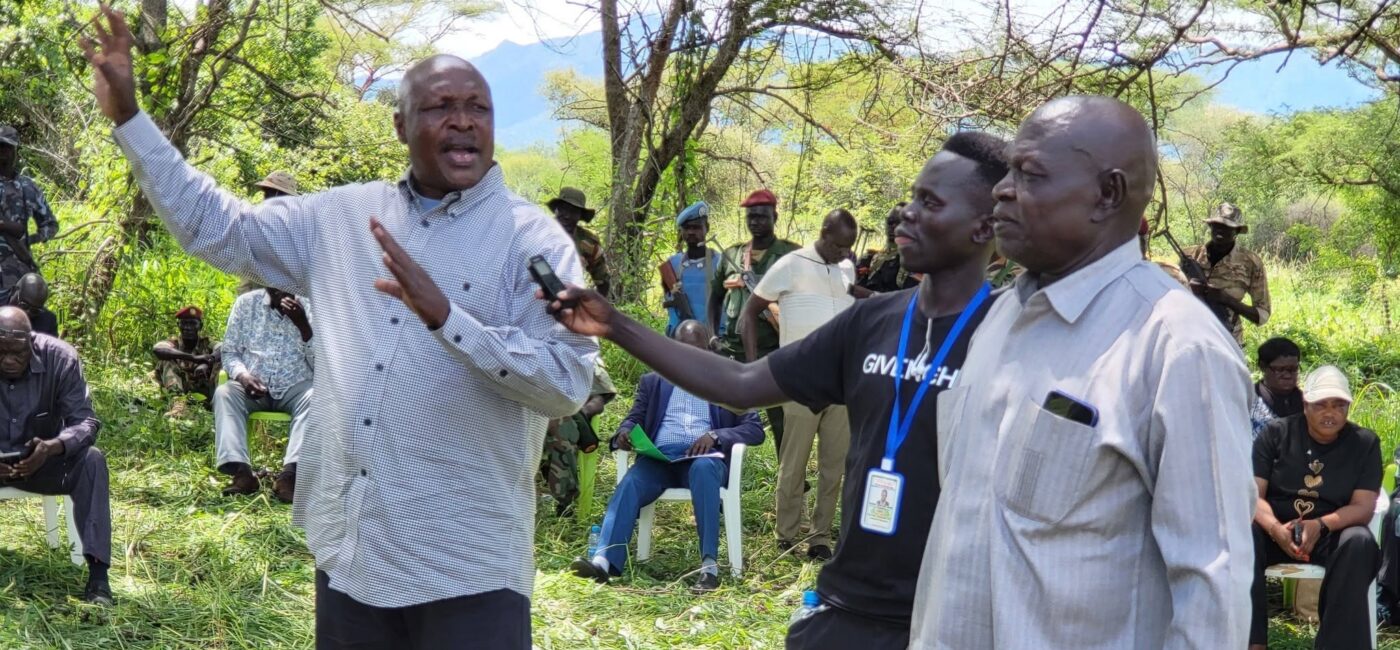
The peace accord was sealed during a traditional reconciliation ceremony held at the disputed border area between the two villages.
In a symbolic gesture of unity and forgiveness, black bulls were slaughtered by both communities, and the meat was mixed and shared among representatives of the Monyomiji (youth) from both sides.
Addressing the gathering, Eastern Equatoria State Governor Louis Lobong Lojore welcomed the decision by the two communities to reconcile and urged residents to put past grievances behind them.
Governor Lobong praised community leaders and residents for choosing dialogue over violence, emphasising that the peace initiative was driven by the people themselves, with the government serving only as a facilitator.
“The decision to make peace belongs to the communities. Our role as government is to support and strengthen such initiatives,” he said.
The governor urged individuals with unresolved disputes to seek justice through legal channels rather than resorting to communal confrontations. He assured residents that government institutions and security agencies would address legitimate grievances in accordance with the law.
Regarding the long-standing border dispute, the two communities agreed that the matter would be addressed separately through traditional mechanisms involving elders and recognised landowners from both villages under the observation of the state government.
Governor Lobong also encouraged residents to resume normal social and economic activities, including farming, grazing, and trade. He called on neighboring communities to support peace efforts and intervene early whenever tensions arise.
Warning against any breach of the agreement, the governor said the government would take appropriate measures to prevent a return to conflict and ensure the protection of lives and property.
He further appealed to former combatants to report to Torit for registration and organisation, while urging untrained youth to join designated cantonment centers.
Stressing the importance of unity among Otuho-speaking communities, he called on citizens to focus on development, cooperation, and peaceful coexistence.
The deputy governor echoed the governor’s remarks and urged all parties to fully implement the provisions of the peace agreement.
The signing of the accord is seen as a major milestone in the Eastern Equatoria State Government’s ongoing efforts to promote reconciliation, strengthen community relations, and foster lasting peace and stability across the state.