




By Hou Akot Hou
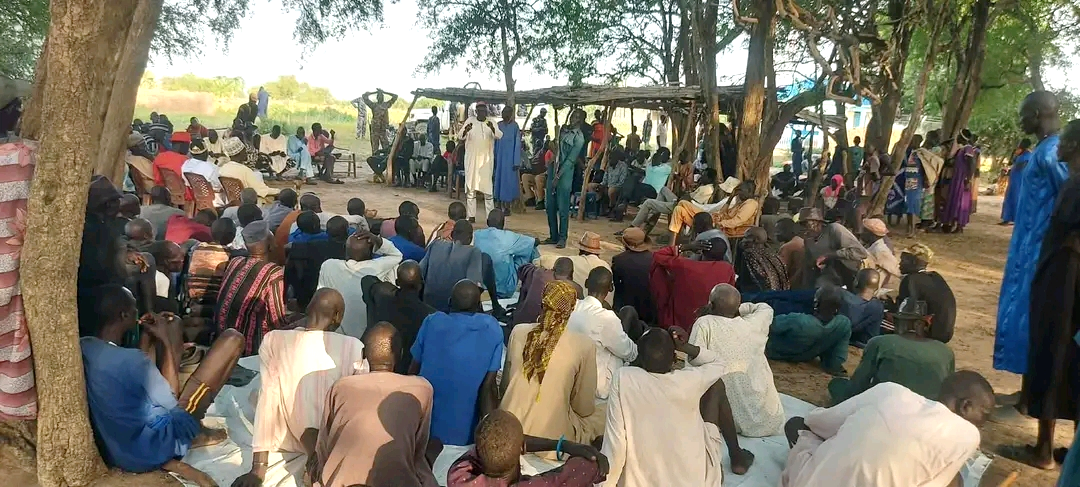
Authorities in Tonj East County of South Sudan’s Warrap State have appealed for urgent humanitarian assistance following prolonged communal violence that has left people displaced and vulnerable to hunger and disease.
Speaking to the media, Tonj East County Commissioner Machuei Bith Bol Malek said the ongoing conflict has severely weakened the ability of residents to support themselves.
Although many displaced people have begun returning to their homes across five payams, they remain unable to recover without external assistance.
According to the commissioner, approximately 20,000 people were displaced from the payams of Makuac, Ayok, Wunliet, Ayak, and surrounding areas.
“We have a very large number of people who are struggling to survive on their own,” Bith said. “Due to the continuous local conflicts, we have been trying to coordinate support, but very little assistance has materialised.”
He identified food insecurity as the most urgent challenge, noting that many families now depend on wild fruits and leaves for survival. He added that the food crisis has also worsened health conditions in the county.
“In the health sector, the issue of food comes first because it is closely linked to people’s health,” he explained. “Many patients do not receive proper medical attention in most health facilities, and there is little we can do without support. Therefore, we are appealing for assistance.”
A local youth leader, Dominic Garang Dhal, also emphasised the need for comprehensive recovery efforts, including food aid, healthcare services, and psychosocial support.
“Many people say that youth are the main drivers of conflict, but in many cases, disputes are fueled by adults who spread divisive messages within communities,” Dhal said. “If messages of peace are consistently promoted, we can achieve lasting reconciliation. That is what we encourage through our churches.”
Greater Warrap and neighboring states have experienced recurring conflicts driven by revenge attacks and competition over resources.
Many observers believe local peace initiatives could succeed if all communities fully embrace a fair and comprehensive disarmament process.
Critics argue that selective or forceful disarmament leaves some groups armed while others are not, contributing to the continued proliferation of weapons and insecurity.