


By Louis Loku
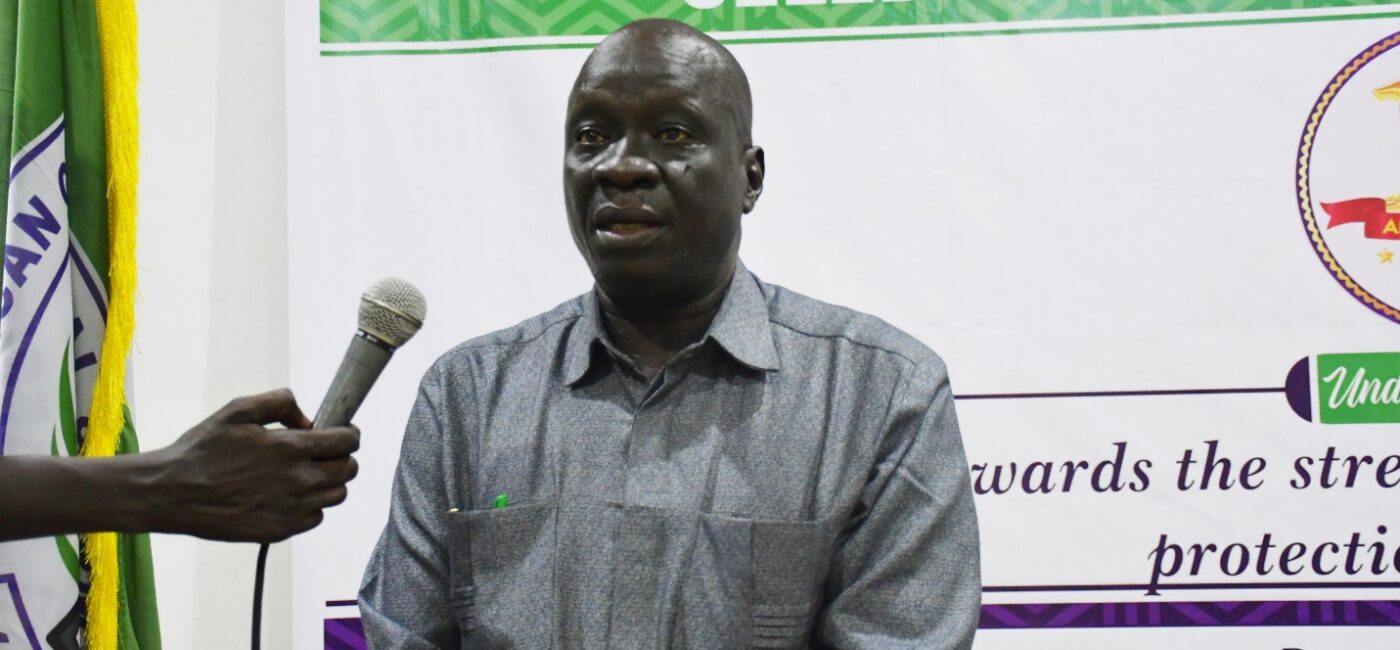
Legal practitioner Dr. Geri Ramondo Legge has said that access to justice must not be determined by financial status, emphasising that the constitution guarantees legal aid and court access for citizens unable to afford legal representation.
Dr. Geri said both the government and legal professionals have a responsibility to ensure that vulnerable citizens are not excluded from the justice system because of poverty.
The remarks were made by the legal expert in an interview with the No. 1 Citizen newspaper during celebrations marking the 11th anniversary of the Africa Centre for Legal Studies and Human Rights in Juba.
He explained that the Transitional Constitution places the responsibility for legal aid on the Ministry of Justice and Constitutional Affairs, while advocates are ethically required to provide pro bono legal services to those who cannot afford legal fees.
“We have legal aid and pro bono services; pro bono service refers to free legal services provided by lawyers to individuals who cannot afford to pay legal fees. Citizens who are unable to pay advocates’ fees can come to us, and we will provide them with legal services, especially vulnerable people,” he said.
Dr. Geri stressed that access to the courts is a constitutional right protected under Article 20 of the Transitional Constitution and should be available to all citizens regardless of their economic circumstances.
“The right to litigation is a constitutional right,” Dr. Geri said, adding that financial hardship should not prevent citizens from accessing justice.
According to Dr Geri, South Sudan’s civil procedure laws also provide safeguards for indigent persons seeking justice.
Individuals who cannot afford court fees may apply for exemptions, allowing them to pursue their cases without bearing the full financial burden associated with litigation.
He explained that applicants seeking such exemptions must disclose information relating to their income, employment status, salary, property ownership, housing arrangements, and other assets so that courts can determine whether they qualify for assistance.
“If you prove that you meet the required conditions, the court can exempt you from paying court fees and, in some cases, even the cost of legal representation,” he said.
He acknowledged that the process of obtaining fee exemptions may take time but encouraged citizens facing financial challenges not to abandon their pursuit of justice.
Although the application process may take time, Dr. Geri encouraged citizens facing financial challenges to seek legal advice so they can be guided through the procedure and exercise their constitutional right to justice.
The remarks were made during celebrations marking the 11th anniversary of the Africa Centre for Legal Studies and Human Rights, which brought together lawyers, judicial officers, civil society organisations, and human rights advocates to reflect on progress made in promoting legal education, human rights protection, and access to justice in South Sudan.
Participants at the event emphasised the importance of strengthening legal aid services and public awareness programs to ensure that all citizens, particularly vulnerable groups, can effectively exercise their constitutional rights and access justice without discrimination.