

By Sabri Dibaco
The Reconstituted Joint Monitoring and Evaluation Commission (RJMEC) has expressed serious concern over the slow implementation of South Sudan’s revitalised peace agreement, warning that the country risks relapsing into violence unless urgent political action is taken ahead of the scheduled December 2026 general elections.
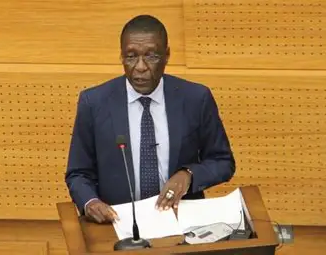
In a briefing delivered virtually to the United Nations Security Council (UNSC) on August 6, 2026, RJMEC Interim Chairperson Ambassador Major General George Aggrey Owinow (Retd.) said progress in implementing the agreement has been severely hindered by a prolonged political and security impasse, worsening humanitarian conditions, and economic challenges.
Owinow noted that although the National Elections Commission has begun nationwide civic and voter education campaigns and the Political Parties Council has successfully registered 39 political parties, the country remains inadequately prepared for credible, peaceful, and inclusive elections scheduled for December 22, 2026.
“The key electoral requirements, including political consensus, completion of the necessary unified forces, adequate funding, improved security, and guarantees for civic and political freedoms, remain unresolved,” the RJMEC statement reads.
The RJMEC Chairperson also criticised recent amendments to key provisions of the peace agreement that sought to separate the permanent constitution-making process and the national census from the election timetable.
“According to RJMEC, these amendments were adopted without following the procedures outlined under Article 8.4 of the peace agreement, raising concerns about adherence to the accord,” the document stated.
RJMEC reported continued clashes involving forces affiliated with the South Sudan People’s Defence Forces (SSPDF), the SPLA-IO, and other armed groups in Upper Nile, Jonglei, Unity, and parts of Equatoria.
The commission said implementation of the permanent ceasefire remains inconsistent, while Phase II of the Necessary Unified Forces, security sector reforms, and the Disarmament, Demobilisation and Reintegration (DDR) program have largely stalled.
The commission further highlighted worsening humanitarian conditions, including displacement, food insecurity, and limited humanitarian access, which continue to restrict citizen participation in political and civic processes.
It also observed that women’s representation remains below the 35 per cent quota provided for under the peace agreement.
Despite these challenges, RJMEC acknowledged progress in several areas, including public financial management reforms, increased transparency in oil revenue management, advancements in the permanent constitution-making process, and efforts toward establishing the Commission for Truth, Reconciliation, and Healing.
However, the Compensation and Reparation Authority and the Hybrid Court for South Sudan are yet to be established.
RJMEC urged the United Nations Security Council and regional partners to support full implementation of the peace agreement, encourage inclusive political dialogue, strengthen electoral institutions, and back transitional justice mechanisms.
The commission also called on the parties to de-escalate tensions, release political detainees and the first vice president, and recommit to the peace agreement.
Owinow warned that the collapse of the R-ARCSS would threaten both regional and international peace and security.
He appealed to the Security Council to consider sending a solidarity mission to Juba to engage South Sudan’s political leaders and help chart a peaceful path toward completing the transitional period and conducting democratic elections.
The Reconstituted Joint Monitoring and Evaluation Commission (RJMEC) is the official oversight body established under Chapter VII of the agreement.
Its mandate is to monitor, evaluate, and oversee implementation of the peace agreement and to submit regular reports to regional and international stakeholders, including the United Nations Security Council.
The August 6 briefing covered progress made between April 1 and June 30, 2026, and comes just months before South Sudan’s planned first post-independence general elections scheduled for December 22, 2026.