



By Lodu William Odiya
The Israeli government has reaffirmed its commitment to establishing a satellite ground station for science students at the University of Juba, a project expected to strengthen scientific research, technological learning, and higher education in South Sudan.
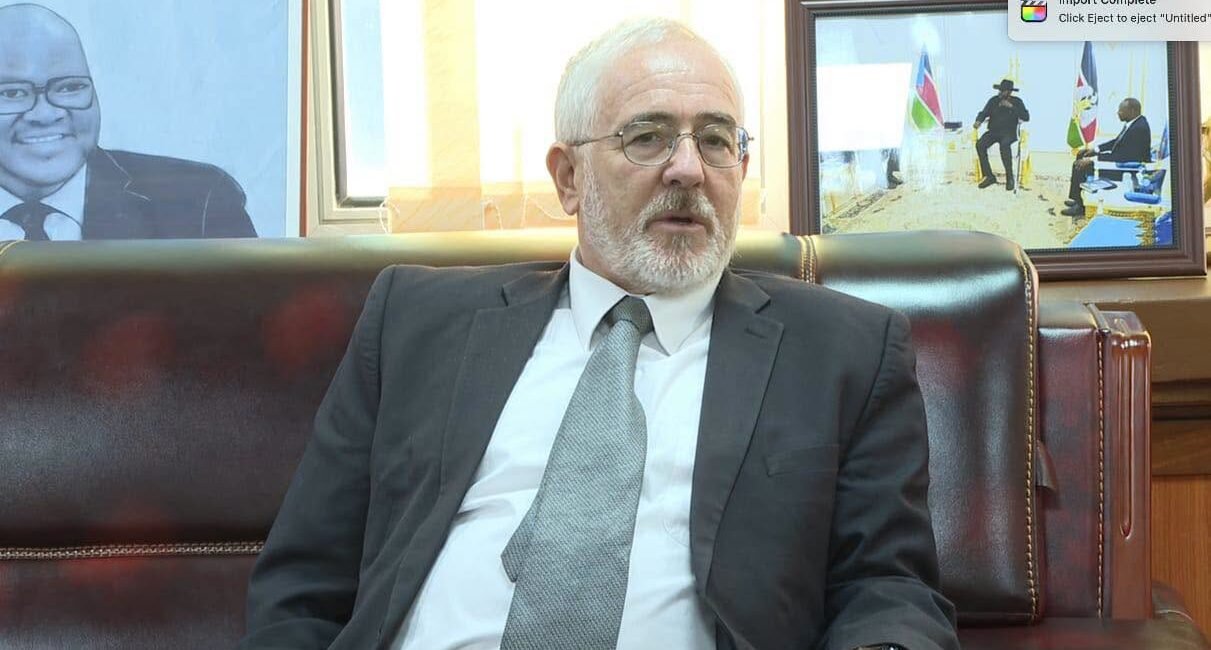
The commitment was made during a meeting between the Caretaker Minister of Information, Communication Technology, and Postal Services, Ateny Wek Ateny, and the Israeli Ambassador to South Sudan, Gershon Kedar, in Juba on Wednesday, according to a statement from the minister’s office.
“Ambassador Kedar described the project as a continuation of Israel’s capacity-building program for students in South Sudan,” the statement partly read.
The discussions focused on the significance of the proposed facility, which is expected to support data collection, scientific research, and academic programs.
Ateny reaffirmed the ministry’s commitment to supporting the initiative, saying it would provide students with opportunities to access scientific knowledge and practical learning comparable to those available to their counterparts in other countries.
“Ateny Wek Ateny said the project would enable students to learn on an equal footing with their counterparts worldwide,” the statement read.
The proposed satellite ground station could become an important resource for universities in South Sudan, where access to advanced scientific equipment and specialised research facilities remains limited.
Satellite technology has become increasingly important in modern scientific education, allowing students and researchers to collect, receive, and analyse information about the Earth, weather patterns, environmental changes, and other scientific phenomena.
For students studying information technology, telecommunications, physics, environmental science, agriculture, and geography, access to satellite data could provide practical experience beyond classroom lessons.
It could also help universities develop research programs that respond to local challenges, including climate change, flooding, drought, and food insecurity.
The facility could also encourage collaboration between South Sudanese universities and international scientific institutions, creating opportunities for academic exchange, technical training and joint research.
If effectively implemented, the project could help build a new generation of South Sudanese scientists, engineers, and technology specialists capable of contributing to national development.
However, its success depends on sustained investment in equipment maintenance, reliable electricity and internet connectivity, qualified technical personnel, and training opportunities for lecturers and students.
The government and university authorities would therefore need to ensure that the facility becomes an accessible, functional learning resource for students and researchers.
The initiative represents a potential step towards strengthening scientific education and expanding South Sudan’s participation in global technological advancement.