

By Lodu William Odiya
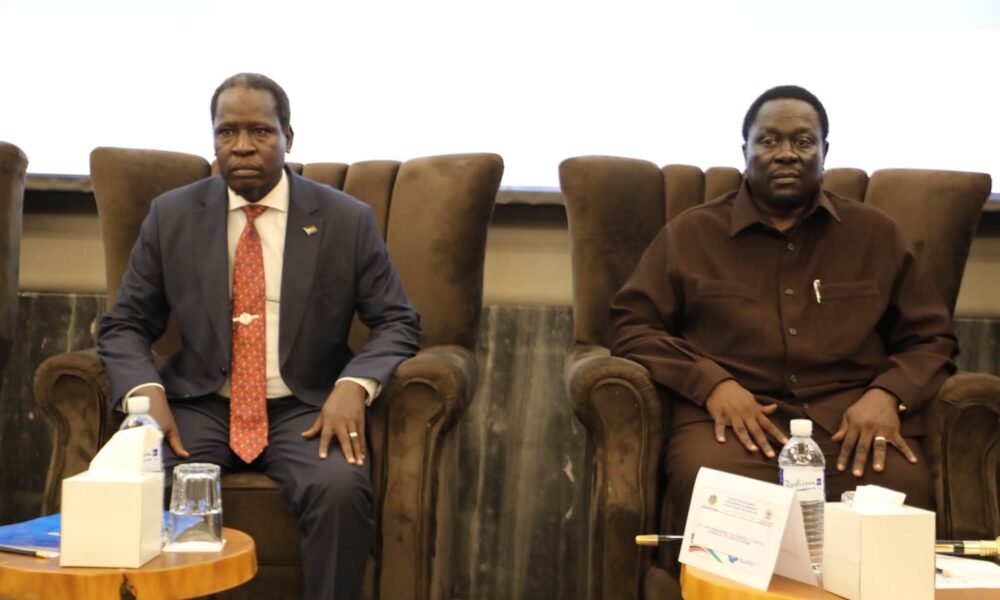
The Ministries of Health of South Sudan and Uganda have signed a Memorandum of Understanding (MoU) to strengthen cross-border collaboration on health security and improve the protection of communities in the two neighboring countries.
The agreement is aimed at enhancing cooperation in disease surveillance, preparedness, and response to public health emergencies, particularly threats that can spread across the porous border shared by the two countries.
Speaking during the opening ceremony, Dr Ader Macar Aciek, Executive Director of the South Sudan National Public Health Institute (NPHI), said the current concern over Ebola Virus Disease demonstrates the need for countries to work together in preparing for and responding to public health emergencies.
He said no country could effectively manage a major health emergency in isolation, particularly when the threat has the potential to cross international borders.
“Although preparedness measures are being strengthened, the risk of cross-border transmission requires us to remain vigilant, coordinated, and proactive. Our experience has demonstrated that the first-line defense against a public health emergency is not the border itself,” Macar said.
He said the real first line of defense was preparedness, coordination, surveillance, and trust between neighbouring countries.
According to Macar, the South Sudan National Public Health Institute is mandated to provide national leadership and technical coordination in public health protection, disease prevention, health security, surveillance, outbreak preparedness and response, laboratory services, and public health research under a One Health approach.
“The Institute serves as a key technical institution for strengthening the country’s capacity to prevent, detect, and respond rapidly to public health threats and emergencies, including outbreaks and other biological, environmental, and emerging health risks,” he said.
Macar added that the NPHI works closely with the Ministry of Health, government institutions, sub-national authorities, communities, and national and international partners to strengthen integrated surveillance, emergency operations, laboratory systems, risk assessment, and epidemic intelligence.
He said the MoU would provide a framework for South Sudan and Uganda to institutionalise cooperation in several critical areas.
“These include cross-border surveillance, information sharing, early warning and alert systems, laboratory coordination, case detection and referral, infection prevention and control, risk communication and community engagement, points of entry, preparedness, simulation exercises, joint investigations, and coordinated response to public health emergencies,” he said.
Dr Mathew Tut, a representative of the Africa Centres for Disease Control and Prevention (Africa CDC), said the agreement was particularly important because South Sudan and Uganda share a long and porous border.
He said the MoU would help establish a coordinated framework for preventing, mitigating, and responding to public health emergencies of international concern.
Meanwhile, Dr. Tolbert Geelweh Nyenswah, Country Director of the Africa CDC in South Sudan, highlighted the importance of early detection and community-level interventions in containing disease outbreaks.
Nyenswah said that 78 percent of confirmed Ebola deaths in the Democratic Republic of Congo occurred within communities rather than health facilities.
The officials said stronger cross-border cooperation would therefore be essential to detecting health threats early, limiting transmission and protecting communities on both sides of the South Sudan-Uganda border.