

Writer: Yang Ater Yang
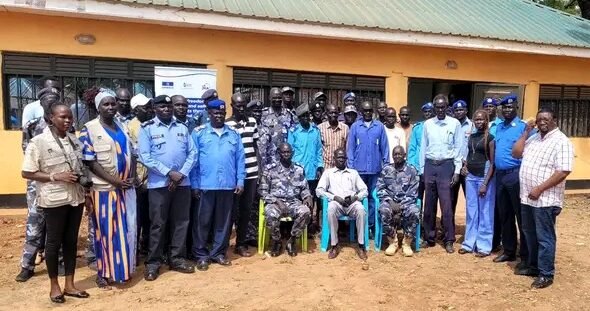
Journalists and security personnel in Lakes State have undergone a two-day training on freedom of expression, journalists’ safety, and professional cooperation ahead of South Sudan’s December 2026 general elections.
The training was organised by the National Press Club (NPC) South Sudan, with support from the Japan International Cooperation Agency (JICA) and UNESCO. It brought together journalists, security personnel, and information officers to strengthen relations between the media and security institutions.
The participants discussed press freedom, access to information, professional journalism, safety and protection of journalists, and the importance of building trust between the two sectors.
Police spokesperson Elijah Mabor Makuac called for the training to be extended to county levels, saying security personnel operating outside the state capital also needed knowledge of journalists’ rights and professional responsibilities.
He warned that failing to train officers at the county level could undermine the objectives of the workshop, particularly during the election period when journalists and security personnel are expected to work closely.
Moses Malok Mabeny, Director General at the Ministry of Information and Communication in Lakes State, welcomed the training and urged organisers to expand similar activities to reach more groups.
“What we want to say is to appreciate ourselves for the knowledge you gained within these two days in your training. What you want to know first as a security and the journalists. We want to know the relationship or link between you for these 2 days and how you are going to practice it,” he said.
“You want your collaboration, and you want to know the way you will address yourself on both sides of the media and the security. This is the link I want you to know such that you deliver the knowledge you gain from this workshop to the people of Lakes State,” he added.
He said journalists needed additional training in election reporting and conflict-sensitive journalism as the country approaches the December polls.
Mabeny also called for stronger cooperation between media professionals and security institutions to improve information delivery and promote responsible reporting in the state.
Media consultant and trainer Paul Jimbo said the training aimed to encourage journalists and security personnel to treat each other as partners rather than adversaries.
He said the workshop covered journalistic ethics, professionalism, safety and protection, freedom of expression, access to information, and trust-building between the two sectors.
Jimbo emphasised that security personnel have a responsibility to protect journalists and facilitate their access to information while respecting their professional duties.
He added that the Rumbek workshop was part of a wider training program being conducted in several parts of South Sudan, including Pibor, Unity State, Ruweng Administrative Area, and planned activities in Malakal, Kuajok, and Wau.
Albino Keer Nyot, a security personnel who attended the training, described the workshop as an important opportunity to strengthen professional relations and promote mutual protection.
“I also want to thank the participants, both media personnel and the security personnel, who have been attending this workshop for why we have come here for two days. This is a great opportunity, and it is a pleasure for us to be here. To begin with, this workshop is very crucial for us as the State citizens and South Sudan citizens,” he said.
He said security institutions must prioritise the safety of citizens and help create conditions for peaceful and credible elections.
Meanwhile, journalist representative Peter Machuei Ater called on authorities to provide timely information to journalists to enable accurate and balanced reporting.
He stressed that journalists must remain truthful, impartial, and professional, particularly during election campaigns, when candidates and political parties should receive fair coverage.
Ater also raised concerns about social media pages allegedly interfering with journalists’ work and called for appropriate action to address challenges affecting professional reporting.
He urged journalists to embrace gender-sensitive, conflict-sensitive, and peace journalism, warning that irresponsible reporting could fuel tensions within communities.
The participants said stronger cooperation between journalists and security institutions would be essential to protecting press freedom, promoting public access to information, and supporting peaceful elections in South Sudan.