


By Lodu William Odiya
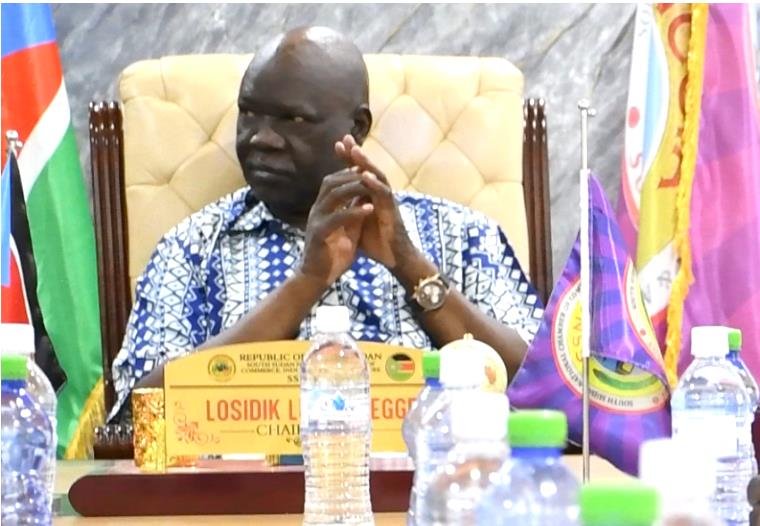
The Chairperson of the South Sudan National Chamber of Commerce, Losidik Ladu Lukak, has raised concern over the poor condition of the Nimule-Juba Road, saying it contributes to rising commodity prices and increases the cost of doing business in the country.
Lukak said responsibility for constructing and maintaining the road rests with the government, particularly the relevant roads authorities, and not the business community.
He questioned why traders are blamed for high commodity prices when poor road conditions continue to affect the transportation of essential goods into Juba.
“Look at the Nimule Road. Is it not the road bringing food commodities to Juba? Who is responsible for constructing it, and who collects the taxes?” he asked.
Lukak said traders’ vehicles frequently overturn or break down along the road, resulting in damaged goods, delays and additional transportation expenses that eventually affect prices in the markets.
He recalled that journeys from Nimule to Juba previously took only a few hours, but poor road conditions have significantly increased travel time, making the movement of goods difficult.
“Everything is being blamed on us. We have what we call the private sector and the government. We have a Ministry of Roads, and that is their responsibility,” he said.
He also clarified that price control is not the responsibility of the Chamber of Commerce but falls under the Ministry of Trade and Industry.
The Chamber’s chairperson called for a clear distinction between government responsibilities and those of the private sector in addressing the country’s economic challenges.
The 192-kilometre Nimule-Juba Highway connects South Sudan’s capital to Nimule, a border town linking the country to Uganda.
It is a major trade corridor through which imported food, fuel and other essential commodities enter South Sudan.
The road also connects the country to the Northern Corridor, which extends through Uganda to the Port of Mombasa in Kenya.
Originally completed in 2012 with support from the United States Agency for International Development (USAID), the highway has experienced deterioration over the years, prompting calls for rehabilitation.
The road’s poor condition has remained a concern for transporters, traders and consumers, as delays and increased transportation costs contribute to the high cost of living.