



By Yang Ater Yang
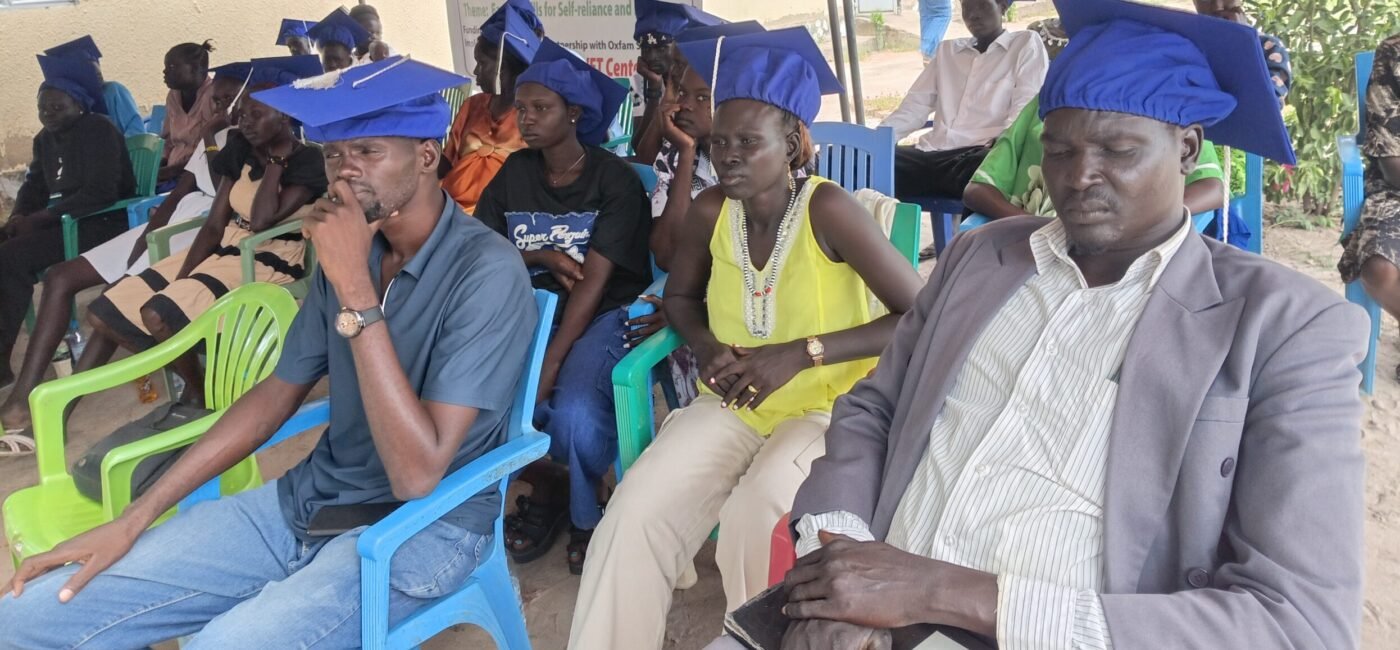
At least 25 learners, including 19 women, have graduated after completing a three-month vocational training program at a vocational training centre in Rumbek, Lakes State, supported by the Disabled Agency for Rehabilitation and Development (DARD) in partnership with Oxfam.
The graduates received training in tailoring, basic computer skills, and hairdressing, equipping them with practical knowledge intended to improve their employment opportunities, support self-reliance, and contribute to local economic development.
Speaking during the graduation ceremony, Hakim Cipuouyuc Awur, DARD’s executive director in Rumbek, commended the learners for their commitment and perseverance throughout the three-month program.
He reminded the graduates that completing the course was not the end of their journey but the beginning of their participation in the labour market.
“I want also to remind the learners that today’s event is not the end of the training but the beginning of your journey into the world of the national market,” Awur said.
He said technical and vocational education and training (TVET) offered opportunities for individuals to acquire practical skills, contribute to national development and improve their livelihoods.
Awur added that vocational training should go beyond classroom learning by ensuring graduates acquire the necessary skills and tools to put their knowledge into practice.
Nyankor John, a hairdressing trainer, said the program had equipped participants with practical knowledge that they intended to use in their future work.
She commended DARD and Oxfam for supporting the training, saying the graduates were committed to applying what they had learned.
“You have given us practical knowledge and skills that we shall use tomorrow in our work. The partnership between DARD and Oxfam is a blessing,” John said.
She added that the graduates would ensure the knowledge gained during the training did not end with the graduation ceremony but translated into productive activities in their communities.
Charles Anau Cirillo Majok, director general in the Lakes State Ministry of General Education and Instruction, described vocational training as important to national development because it provides practical skills that enable people to contribute to their communities.
He said graduates could use their skills to establish small businesses, produce uniforms, manufacture furniture, and participate in construction activities.
Majok also commended DARD and Oxfam for supporting the programme, noting that the government had established a national TVET policy aimed at expanding vocational training opportunities across the country.
He said the government wanted each state to have at least one national vocational training centre where young people could acquire skills relevant to the labour market.
Majok encouraged graduates to explore opportunities beyond government employment, saying vocational skills could help them generate income and support their families amid limited formal job opportunities.
Gabriel Makuei Goljok, acting director general in the Lakes State Ministry of Labour, Public Service, and Human Resource Development, also welcomed the initiative, describing skills-based training as an important tool for economic growth and youth empowerment.
He said vocational education could help young people earn daily incomes, support their families, and contribute to community development.
Goljok commended the graduates for their resilience throughout the three-month program and encouraged them to seek employment or establish businesses in their respective fields.
He urged graduates to apply for jobs that match their qualifications, advising those trained in computer skills, tailoring, and hairdressing to pursue opportunities relevant to their areas of expertise.
The acting director general also pledged that the labour ministry would engage other relevant state ministries, including the Ministry of Trade, to explore ways of supporting graduates entering the market.
He said discussions would focus on helping the graduates establish businesses and access opportunities to develop their skills, including exploring possible support regarding taxation as their enterprises grow.
The graduation highlights ongoing efforts by DARD and Oxfam to promote vocational education as a pathway to self-reliance, particularly for women and young people seeking practical skills and alternative sources of income.
However, the graduates’ ability to translate their training into sustainable livelihoods will depend on access to tools, start-up capital, employment opportunities, and continued support from government and development partners.