


By Alan Clement
Transitional National Legislative Assembly (TNLA) Speaker Dr. Jemma Nunu Kumba has appointed Ambrose Pitia Lomin as the First Deputy Speaker.
The position was recently left vacant after the president revoked the appointment of Oyet Nathaniel Perino, who fled the country with the title due to political tension that emerged after Dr. Riek Machar’s arrest.
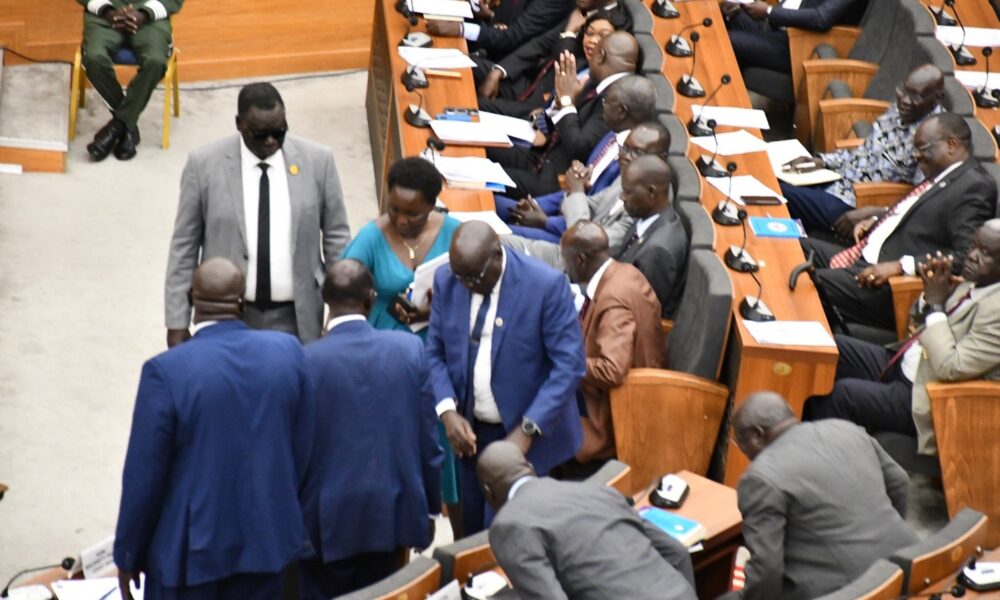
The announcement of the new 1st deputy speaker was made during the Assembly’s first extraordinary sitting on Thursday, September 4th, 2025, marking a significant shift in SPLM-IO’s parliamentary leadership.
The appointment was initiated based on the recommendation of the interim SPLM-IO chairperson in Juba, Ambassador Stephen Par Kuol, in consultation with President Salva Kiir according to the order read by the Clerk of the Assembly. The move reflects internal recalibrations within SPLM-IO and its positioning in the transitional government.
Speaker Kumba affirmed the legitimacy of the appointments, describing them as consistent with parliamentary regulations and reflective of the shifting dynamics within the transitional government.
In a related move, Speaker Kumba also reshuffled the Assembly’s administration by relieving Makuc Makuc Ngong of his duties as Clerk to the TNLA and appointed Santino Majak Deng as the new Clerk. Makuc was appointed as the Deputy Chairperson of the Relief and Rehabilitation Commission on Wednesday replacing Aguek Ring Mabil in a presidential decree.
“These changes are in accordance with parliamentary regulations,” Dr. Kumba told lawmakers reinforcing the procedural framework behind the reshuffle.
The removal of key SPLM-IO figures and their replacement through factional endorsement suggests growing internal divisions and a strategic repositioning within the party. Analysts warn that the developments could affect SPLM-IO’s cohesion and its legislative influence.
As South Sudan navigates its fragile transition toward peace and democratic governance, the latest parliamentary shakeup underscores the fluid nature of political alliances and the pivotal role of institutional leadership in shaping the country’s future.