





By Alan Clement
Some lawmakers in the Transitional National Legislative Assembly have raised concerns that the country’s lack of a national airline places it at a strategic disadvantage under the proposed UAE-South Sudan Air Services Agreement.
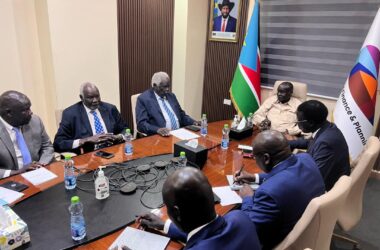
The concerns were raised during deliberations a joint committee report on the air services agreement between South Sudan and the United Arab Emirates (UAE) on Friday September 5, 2025.
The agreement outlines reciprocal air access “between and beyond” the territories of both countries with the aim of regulating air services in accordance with the South Sudan Civil Aviation Act of 2012.
Victor Omuho Ohide, representing Constituency No. 3 in Eastern Equatoria State, questioned the benefits South Sudan could reap under the agreement without a national carrier. “As much as the agreement is good, we are at a disadvantage because we don’t have a national carrier. When they come here, they will enjoy our airspace. But what do we have to enjoy in theirs?” he asked.
“We should lobby for a national carrier even if a small one to ensure reciprocal benefit,” he added. He also questioned the legal clarity of the term “beyond territory,” asking for expert interpretation on whether flights to third countries like Qatar would require separate permissions.
Jackline Ajongo echoed the concern, citing Article 5 of the agreement which allows designated airlines from both countries to compete freely. “What competition do we have? We don’t have airplanes or cargo services. Until we have our own airline, we shouldn’t rush into such agreements,” she argued.
Speaker Jemma Nunu Kumba intervened, asking whether South Sudan might not establish its own airline in the future. But Ajongo insisted that until a national carrier is created, such agreements risk favoring foreign partners disproportionately.
Peter Lomude Francis of Yei River County raised symbolic concerns, noting the absence of South Sudan’s logo on the agreement document. “These are two sovereign states. Our emblem should be there,” he said.
However, some legislators defended the deal. Asha Abas Akuei described it as a strategic step toward integrating South Sudan into global markets. “Yes, we don’t have a national airline, but this should not make us weak. Emirates has some of the best airlines and airports in the world. By connecting with them, we open South Sudan to global trade, currency, and investment markets,” she said.
She urged lawmakers to view the agreement as a foundation for building South Sudan’s civil aviation future.
The debate highlighted the broader challenge of building a viable national airline, a goal lawmakers said is essential to ensuring equitable benefits from bilateral aviation agreements and long-term strategic positioning.
While the agreement may pave the way for international connectivity, lawmakers emphasized the need for safeguards and a clear roadmap toward establishing a national carrier that can compete and represent South Sudan in global airspace.