

By Kei Emmanuel Duku
The Union of Journalists of South Sudan (UJOSS) today expressed dismay after its members were denied entry to cover the commencement of the trial for the suspended First Vice President, Dr. Riek Machar, and his co-accused.
According to a press release from UJOSS, their members were informed that only journalists from the state-run South Sudan Broadcasting Corporation (SSBC) would be granted access to the court proceedings at the Freedom Hall in Juba.
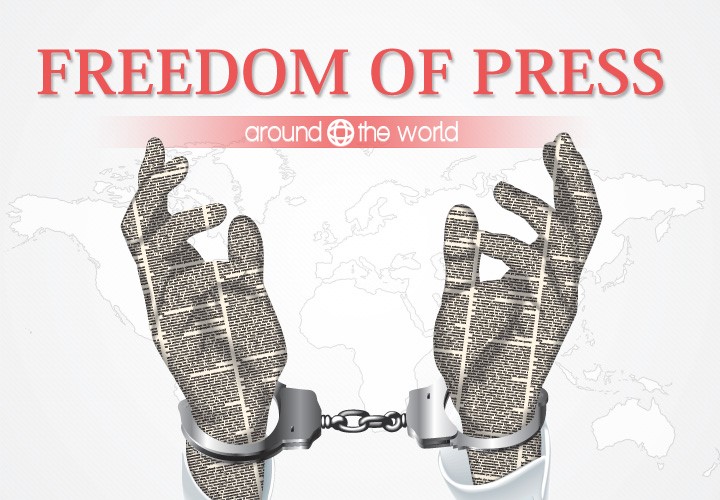
While appreciating the access provided to SSBC, UJOSS highlighted that its members serve various media houses and audiences, and the denial of entry is a direct affront to the freedom of the press.
The union condemned the act as a violation of the Transitional Constitution of South Sudan 2011, as amended, particularly articles 24 and 32, which protect press freedom. UJOSS noted that this denial was facilitated by the Ministry of Justice and Constitutional Affairs, an institution constitutionally mandated to protect the very rights being violated.
Following the incident, Edmund Yakani, Executive Director of the Community Empowerment and Progress Organization (CEPO), weighed in, bringing the matter to the attention of the country’s leadership, including the Ministry of Justice and Constitutional Affairs and the judiciary.
Yakani stated that despite assurances from various public institutions that the trial would be transparent and open for public and media access, the reality on the ground proved otherwise.
“It’s only SSBC that have been allowed to go and observe the other media houses, being national independent or non-state media houses, who were told to go to the Ministry of Information to access approval for access to the court,” Yakani said.
He viewed this as a significant impediment to the trial’s transparency and a signal that the judiciary’s independence and credibility could be compromised.
In a constructive appeal, Yakani urged the Ministry of Justice to engage with other state agencies to grant access to private and non-state media, as well as civil society observers.
He emphasized that such access is crucial for ensuring transparency, raising the bar for accountability, and confirming the credibility and independence of the judiciary. This, he argued, would assure the public that the legal process is free from political manipulation and is a true test of the rule of law.
The media landscape in South Sudan is largely underdeveloped and has been shaped by decades of conflict and political instability. While a number of progressive media laws, such as the Media Authority Act of 2013, were passed after the country’s independence, their implementation remains a major challenge.
The government-owned South Sudan Broadcasting Corporation (SSBC), which operates both television and radio, is a dominant player and is often used by the ruling party to voice its views.
In South Sudan Radio is the most popular and trusted source of news, with dozens of FM stations operating across the country. Conversely, print media primarily circulates among the educated elite in urban areas.
Independent journalists and media houses often operate in a climate of fear, largely due to the pervasive influence of the National Security Service (NSS). The NSS has been documented to engage in arbitrary arrests, harassment, surveillance, and detention of journalists, stifling critical reporting and forcing many into self-censorship.
This restrictive environment stands in stark contrast to the constitutional guarantees of press freedom and makes it difficult for a vibrant, independent media to flourish.