
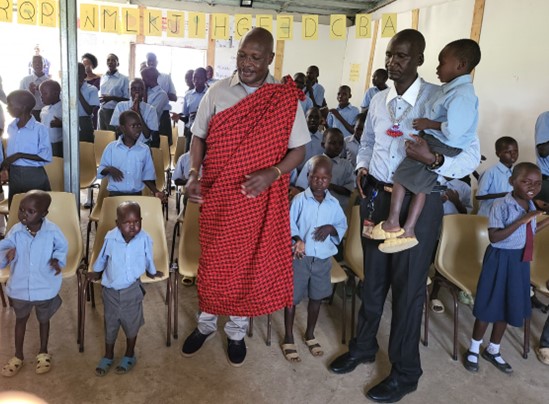

Eastern Equatoria State Governor Luis Lobong Lojore has pledged timely support for the Triple LLL Orphanage Center in Kapoeta.
The Governor’s pledge came during a recent visit to the center, according to a statement from the Eastern Equatoria State Governor’s Press Unit. Lobong met with the 375 Orphans and Vulnerable Children (OVC) currently housed there, assuring them of timely government support to ensure their healthy growth and welfare.
He commended Hakim Peter Lopeyok, the founder of the Triple LLL OVC, for establishing the center and supporting vulnerable children in the community. Governor Lobong encouraged the children to work hard in their studies and showcase their talents, reiterating his administration’s commitment to improving their living conditions.
During the visit, the Governor pledged immediate provisions, including first aid drugs, a rickshaw (tricycle) for transport, and a monthly supply of sugar for their tea. Additionally, he donated cash in South Sudanese Pounds (SSP) for urgent food needs and urged the children to remain focused on their education.
The orphanage administration, on its part, outlined several significant challenges facing the center: Shortages of food, farming tools, shelters, and classrooms, Lack of transport for emergencies, inadequate first aid supplies, poor road access, lack of electricity and fencing Absence of a proper kitchen and utensils and Shortage of staff.
The need for support at Triple LLL reflects a wider crisis in South Sudan. The ongoing conflict has dramatically increased the number of orphans, with an estimated one million children displaced and at least 60% classified as orphans.
Compounding the issue, successive flooding and funding cuts have pushed South Sudan’s orphaned children into one of the world’s most severe humanitarian crises. Thousands are facing hunger, illness, and emotional trauma without stable care.
Despite the 2018 Revitalized Agreement on the Resolution of the Conflict, peace remains fragile. Sporadic violence and political tensions have undermined implementation, deepening the suffering of the civilian population.
By the end of 2023, two-thirds of South Sudan’s population faced serious food insecurity, and flooding in 2024 destroyed much of the country’s farmland. Worsening instability in 2025 has left orphaned children exposed to malnutrition, preventable diseases, and violence. Organizations like UNICEF and the Sudan Relief Fund have highlighted that these children, many arriving alone and traumatized after walking for days, are struggling with severely limited access to food, healthcare, education, and shelter.