




By Alan Clement
The Association of Gynaecologists and Obstetricians of South Sudan (AGOSS) has called on the government and parliament to urgently enact key health and gender bills, warning that maternal mortality and gender-based violence remain at crisis levels in the country.
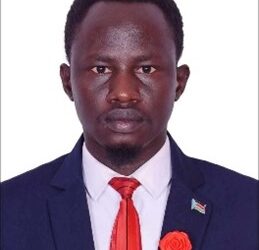
Speaking at the closing day of the 4th Annual Scientific Conference on Sunday, Dr. Garang Dakjur Lueth, Assistant Professor of Obstetrics and Gynaecology at the School of Medicine – Juba Teaching Hospital, presented the resolutions under the theme “Resilient Health Care for Women: Navigating Challenges in South Sudan’s Sexual and Reproductive Health Landscape.”
“South Sudan’s maternal mortality rate stands at 692 deaths per 100,000 live births. This is one of the highest in the world. We cannot continue to lose mothers to preventable causes such as bleeding after birth, unsafe abortion, and poor referral systems,” Dr. Lueth said.
He stressed that without these laws, South Sudan risks continued shortages of qualified personnel and weak regulation of professional standards, undermining efforts to reduce maternal mortality and improve reproductive health services nationwide.
“We urge the Council of Ministers and the Transitional National Transition Assembly to pass the Midwives and Nurses Council Bill and the Allied Health Professional Bill to strengthen our health workforce,” he added.
AGOSS also demanded immediate action on the long-delayed Gender-Based Violence (GBV) Bill, citing alarming statistics of child marriage and adolescent pregnancies.
“Fifty-two percent of girls are married before the age of 18, and adolescent birth rates stand at 158 per 1,000. South Sudan is also ranked second in the region for GBV cases. The GBV Bill must be enacted to protect women and girls from violence and harmful practices,” Dr. Lueth emphasized.
The conference highlighted that postpartum haemorrhage accounts for 60 percent of maternal deaths, while unsafe abortion contributes to 38 percent. AGOSS recommended strengthening surveillance through the national Maternal and Perinatal Death Surveillance and Response (MPDSR) system, training healthcare workers on early recognition of emergencies, and expanding the Boma Health Initiative to improve community referrals.
The association also urged the government to prioritize health financing by allocating 15 percent of the national budget to health, in line with the Abuja Declaration.
In a ground-breaking revelation, AGOSS presented data showing that 84 percent of semen samples analyzed in Juba were abnormal, signaling a growing male infertility crisis.
The association recommended establishing fertility services in major public hospitals, including Juba Teaching Hospital, Wau Teaching Hospital, and Malakal Teaching Hospital.
The conference noted that menopause remains a neglected health issue in South Sudan. AGOSS resolved to raise awareness among communities and urged junior doctors to consider menopause in their diagnoses.
AGOSS reaffirmed that family planning is a basic human right, stressing that women must be empowered to access services voluntarily without male control. The association committed to advocating for adolescent-friendly reproductive health services and reducing teenage pregnancies.
With 80 percent of deliveries still occurring at home, obstetric fistula cases are on the rise. AGOSS called for increased awareness on facility-based deliveries, training of fistula surgeons, and expansion of rehabilitation services.
AGOSS pledged to strengthen partnerships with the Ministry of Health, UN agencies, NGOs, and universities. It also announced plans to extend the annual scientific conference to three days, establish a research grant for young scientists, and publish conference proceedings to enhance visibility.
“We must invest in postgraduate training, research, and innovation. Only then can South Sudan build a resilient health system for women,” Dr. Lueth concluded.
The Ministry of Health welcomed the resolutions, with Rev. Dr. Janet Michael, Director General of Nursing and Midwifery, acknowledging the urgent need for implementation.
“The resolutions have been great and we know that now they need to be acted upon. We are not very lucky because we have a lot of medical personnel who are skilled, and yet quality care is not reflected in our facilities,” she remarked.
“Whether you go to private hospitals or public ones, you don’t see the care that satisfies patients,” she added.
She noted that even well-equipped private hospitals often fail to deliver quality care, forcing many South Sudanese to seek treatment abroad.
“We need to change our attitude towards work and towards emergencies. Too often, women come in bleeding and are left waiting in line. Some die because we did not act fast. We need to see danger and respond immediately,” Dr. Michael stressed.
Her remarks echoed AGOSS’s call for stronger emergency response systems and respectful maternity care, underscoring that maternal mortality can only be reduced if both legislation and frontline health workers change their approach.