


By Alan Clement
At the International Day to End Impunity for Crimes Against Journalists, speakers called for urgent action to halt growing attacks, online harassment, and legal pressures undermining press freedom in South Sudan.
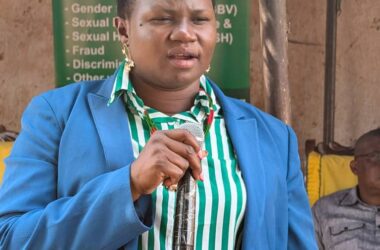
Held under the theme “United for Journalists’ Safety in South Sudan: Ending Impunity in the Digital Age, Defending Press Freedom,” Commissioner Moiga Nduru of the Access to Information Commission set the tone for the event, warning journalists to master new technologies while resisting overreliance on artificial intelligence.
“If you don’t master modern technology, you become irrelevant tomorrow,” Nduru told the audience.
“But don’t allow AI to carry you away; it will destroy your initiative. Whatever you write should unite our people. Your role is to unite, not to divide,” he added.
His remarks linked concerns about digital tools with the ethical responsibilities of reporters in fragile societies.
Oyet Patrick, President of the Union of Journalists of South Sudan (UJOSS), pressed the government and security agencies to investigate recent violations and to stop what he called a “culture of impunity that is now reaching the public.
He cited recent local incidents when a radio listener in Magwi County who was reportedly beaten after calling a programme, and a journalist who was briefly detained in Juba for photographing a traffic jam to illustrate how intimidation is widening beyond reporters to ordinary citizens who use the media to voice opinions.
“These are not isolated cases,” Oyet said.
“When listeners and journalists fear to speak, misinformation fills the void. We are calling on police, prosecutors and judges to do their work investigations, prosecutions and transparent judgments must follow,” Oyet stressed.
These threats to journalists were echoed by UNESCO and aid agencies represented at the event. They stressed that the local pattern mirrors a troubling global trend.
Jasper Okudi, UNESCO’s representative, read parts of the Director-General’s message noting the scale of the problem and emerging technology-driven threats.
UNESCO’s monitoring shows that impunity for crimes against journalists remains the norm in most cases, and the agency has placed a 2025 emphasis on the dangers of AI-facilitated gender-based violence against women journalists.
Speakers at the commemoration urged concrete reforms. Jacob Atem of Norwegian People’s Aid (NPA) said humanitarian partners would continue supporting media capacity and safety training, but added that resources alone would not suffice:
“Impunity must end. Prosecutions and reforms are required so journalists can safely hold authorities to account,” he said
Speakers framed their demands against recent global data showing a stark rise in lethal attacks on media workers.
Independent monitors had documented record numbers of journalists killed in 2024 and persistent legal and digital threats that have intensified in the last three years, pushing watchdogs to call for radical reforms in how killings and online abuse are investigated and prosecuted.
They also pointed to structural weaknesses inside South Sudan.
Reporters Without Borders and other indices show South Sudan’s press environment remains fragile, even as some rankings improved in 2025; media stakeholders say legal protections, investigative capacity and resourcing for police and courts are still inadequate to tackle crimes against journalists.
Practical recommendations from the event included creating a dedicated rapid-response mechanism to protect journalists under threat, specialist police training and resourcing so investigations proceed promptly, and judicial fast-tracking of cases involving attacks on media workers.
Additional measures emphasized comprehensive digital-safety and gender-sensitive training for journalists, along with stronger monitoring and reporting partnerships between media associations and international bodies.
Speakers repeatedly warned that impunity begets more violence and self-censorship. “If attackers believe they will not be held accountable, more violations will follow,” Oyet said adding, “If journalists choose silence out of fear, the people lose the right to know.”
As South Sudan prepares for a politically sensitive period ahead, organisers warned that protecting journalists is not a favour to the press but a public good: transparent reporting supports accountability, development and peaceful participation and without it, democracy itself is weakened.