


By Alan Clement
South Sudan’s leaders face mounting pressure to fast‑track the Revitalised Peace Agreement as the transition nears its end, with the Norwegian Ambassador warning delays could spark renewed conflict and imperil fragile stability.
Norway’s Ambassador to South Sudan, Roar Haugsdal, delivered a pointed message at the National Stakeholders’ Dialogue in Juba. He urged political parties to act decisively before the opportunity slips away.
“Enough is enough. South Sudan has already seen too much violence. It is time to turn the page,” Haugsdal told stakeholders, cautioning that the country could slide back toward large-scale conflict unless parties recommit to dialogue, security arrangements, and full implementation of the peace deal.
He emphasized that while the international community stands ready to support renewed political engagement, primary responsibility rests with national leaders.
“As the transitional period nears its end, open and honest dialogue is not a choice but a necessity,” he said.
The Ambassador underscored the importance of civic space, stressing that peace is built not only at negotiation tables but in villages, churches, mosques, schools, cattle camps, and market stalls across South Sudan.
He called on government leaders to protect the freedom of civil society actors, faith leaders, and the media so they can continue holding institutions accountable.
Aligned with this warning, UN Women’s Deputy Country Representative, Korto Williams, described the moment as existential for women’s safety and participation in peacebuilding.
She cited the UN Secretary-General’s 2025 Women, Peace and Security (WPS) report, which revealed that 676 million women and girls now live within 50 km of deadly conflict; the highest number since the 1990s.
The report also documented a dramatic 87 percent surge in conflict-related sexual violence between 2022 and 2024, alongside a quadrupling of civilian casualties affecting women and children.
Despite decades of advocacy, women remain drastically underrepresented in peace processes, making up less than 10 percent of negotiators and only 8 percent of mediators worldwide.
“These are not just numbers; they are a call to action,” Williams said.
She stressed that without meaningful women’s participation at every level from national institutions down to Payam and Boma structures; South Sudan cannot build sustainable peace.
Williams warned that a relapse into conflict would disproportionately harm women and girls, and insisted that peace must become a lived reality rooted in inclusivity, dignity, and resilience.
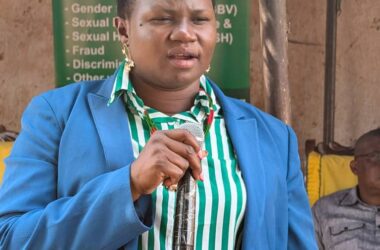
Local civil society leaders echoed these concerns. Jackline Nasiwa, Executive Director of the Centre for Inclusive Governance, Peace and Justice, told the gathering that “only 10 percent of the peace agreement has been implemented.”
Reports from the Reconstituted Joint Monitoring and Evaluation Commission (RJMEC) confirm that many critical tasks remain unfulfilled, including security arrangements, political benchmarks, and judicial reforms. These delays risk destabilising progress as the transition deadline looms.
Partner institutions, including UN Women and Norway, reaffirmed their commitment to supporting South Sudan’s peacebuilding journey.
Williams acknowledged government efforts particularly the Ministry of Gender, Child and Social Welfare, as well as the Ministries of Peacebuilding and Youth and Sports for championing the Women, Peace and Security agenda.
She also acknowledged significant donor support from the Norwegian government and the UN Peacebuilding Fund, even as resources diminish and needs increase.
However, both Williams and Haugsdal made clear that while external backing is vital, it cannot substitute for political will.
Haugsdal noted, “The courage of leaders to choose peace is more important than financial assistance.” This was echoed by Williams who emphasized that, “Peace must not remain a promise, but become a reality.”