

By Kei Emmanuel Duku
South Sudan is staggering on the edge of an educational catastrophe as the nation’s refugee population nears the 600,000 mark, leaving an entire generation of displaced children at risk of being lost to the streets. New data reveals that while registration systems are filled with the names of hundreds of thousands of children, the classrooms meant to hold them are increasingly empty due to a staggering collapse in funding and enrollment.
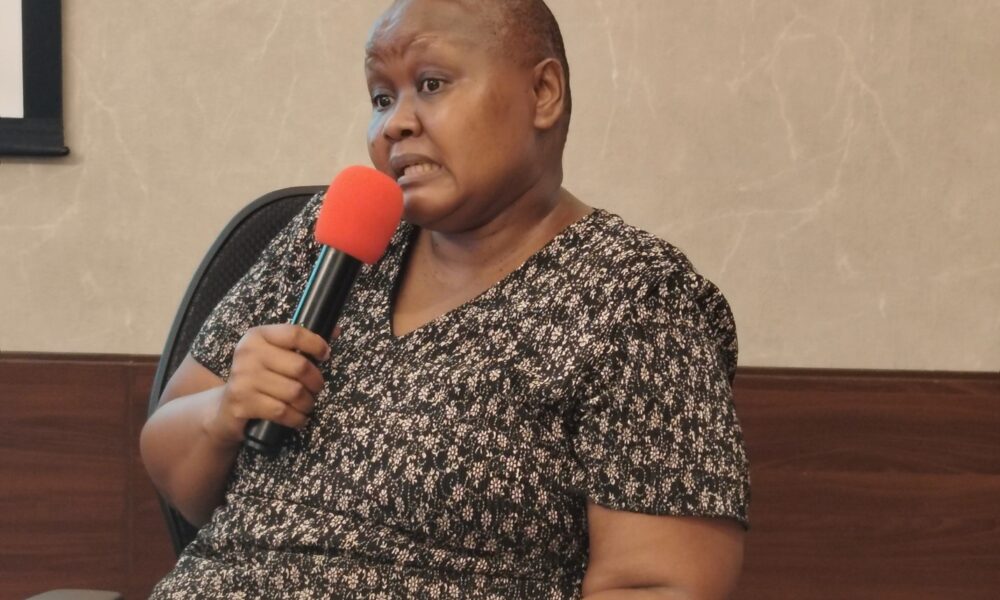
Speaking during a multi-stakeholder dialogue on strengthening access to Higher Education for displaced populations, Janet Akala, UNHCR Education Specialist, painted a grim picture of the nation’s humanitarian landscape. As of December 4, 2024, South Sudan is hosting 598,741 refugees and asylum seekers, with the bulk of the population based in Upper Nile’s Maban refugee camps, followed by the Ruweng Administrative Area, Central Equatoria, and Aweil in Northern Bahr el Ghazal.
“The biggest number, over 95%, are from Sudan,” Akala noted, highlighting the immense pressure placed on the country since the outbreak of the Sudan conflict in April 2023. Since that date, UNHCR has recorded over 1.289 million arrivals, including 870,000 South Sudanese returnees and over 400,000 refugees.
The crisis is most visible in the bottlenecks of the border, where slightly above 9,000 refugees and returnees remain stuck at the transit center in Renk. However, Akala warned of a more silent crisis: the stateless population, which has grown to 20,000 people.
The statistics regarding the “education population” are particularly haunting. Out of the 500,000-plus refugees and asylum seekers, 365,767 (61%) are of school-going age. Although, the data shows a freefall in enrollment rates. Primary school gross enrollment, which stood at 68% in 2023, dropped to 46% in 2024, and has now sunk to just 36% in 2025.
“This implies that we have so many refugee and asylum seeker children that we can account for in our registration system, but we are not able to account for them in the education system,” Akala warned. “And therefore, they are presumed to be out of school. So we are losing out on an entire generation.”
Secondary education enrollment has similarly crashed from 20% in 2023 to just 10% expected for 2026. At the tertiary and higher education level, the situation is even direr, with only 1% of the eligible population just 358 refugees currently supported.
The Specialist attributed this decline to an unprecedented funding situation in 2025. The pullout of a major donor, who previously funded pre-primary education in the critical areas of Maban and Jamjang, has led to office closures and the termination of essential programs.
“This has implications in terms of planning for general education and for basic education,” Akala stated, emphasizing that without a stabilized funding landscape, the “basic education” from pre-primary to university will remain a broken promise for millions of South Sudanese, refugees, stateless and asylum seekers
The refugee crisis in South Sudan is largely fueled by the civil war in Sudan that erupted in April 2023, creating a massive influx of people into South Sudan’s northern states.
While South Sudan maintains an open-door policy, the national education infrastructure was already strained prior to the conflict. The current unprecedented funding situation mentioned by the UNHCR refers to a global shift in donor priorities, which has resulted in a significant budget deficit for South Sudan’s humanitarian response, specifically impacting the ability of agencies to maintain schools in the Maban and Ruweng hosting areas.