




By Kei Emmanuel Duku
In a bid to rescue the county’s rapidly vanishing forests, the Commissioner of Kajo-Keji has issued a stern directive to immediately cease all unauthorized timber activities. The move comes as local leaders warn that uncontrolled environmental destruction is pushing the region toward an ecological breaking point, threatening the very water sources and soil fertility that sustain thousands of families.
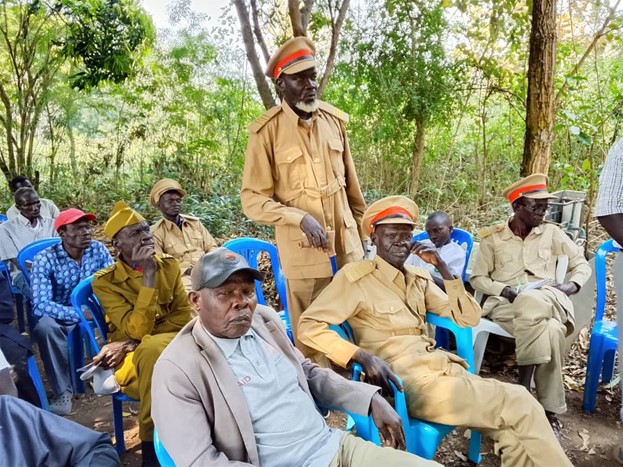
Following a high-level consultative meeting with stakeholders in Liwolo Payam, the county administration signaled a shift from dialogue to enforcement. The gathering, which included traditional chiefs, youth, and religious leaders, addressed the “growing concerns” over timber trafficking and rampant charcoal production that have gripped the area.
The environmental toll of the logging boom in Liwolo has become impossible to ignore. Participants at the meeting highlighted a grim reality: accelerating soil erosion, the drying up of vital water sources, and a loss of biodiversity that directly undermines agriculture, the backbone of the local economy.
Addressing the stakeholders, Wani Jackson Mule, the Commissioner of Kajo-Keji County, reminded the community that natural resources are a shared heritage that must be defended against predatory practices.
“Our forests are our life,” Commissioner Mule emphasized. “If we allow indiscriminate logging and lumbering to continue, we are destroying our own future. Development must be sustainable and lawful.”
According to Kenyi Joseph, the County Press Secretary, the Commissioner noted that rampant logging does more than just degrade the land; it fuels local insecurity and robs future generations of their livelihoods.
The meeting concluded with more than just rhetoric. Commissioner Mule directed Payam authorities to tighten monitoring and work alongside community leaders to identify and report offenders. To ensure long-term compliance, a joint task force comprising county officials, traditional leaders, and youth representatives was formed to oversee the forests and lead reforestation efforts.
Stakeholders in Liwolo Payam have pledged their full support for these enforcement measures. Local leaders proposed new bylaws at the Boma level to regulate tree cutting, coupled with awareness campaigns to educate residents on the benefits of conservation.
“The unit cost of ignoring this destruction is too high,” noted the press release from Kenyi Joseph. “Sustained dialogue and community ownership are the only ways to safeguard our long-term environmental resilience.”
Illegal logging has long been a flashpoint in Kajo-Keji County and across Central Equatoria State (CES). For years, the region has been a hub for the high-value timber trade, often involving unregulated foreign and local interests.
In response to the escalating destruction, the Central Equatoria State Government has previously issued several executive orders aimed at curbing the trade. Most notably, the State Ministry of Agriculture, Environment, and Forestry has repeatedly banned the felling of trees for commercial timber and charcoal production in Kajo-Keji and other parts of the state.
Despite these orders, enforcement remains a challenge due to the involvement of armed actors and the remote nature of the forests, making the recent community-led task force in Liwolo a critical step in local environmental protection.