



By Alan Clement
South Sudan is poised for major infrastructure gains as the African Development Bank (AfDB) confirmed feasibility studies for electricity imports from Ethiopia and a new transport corridor linking Juba to Djibouti via Ethiopia.
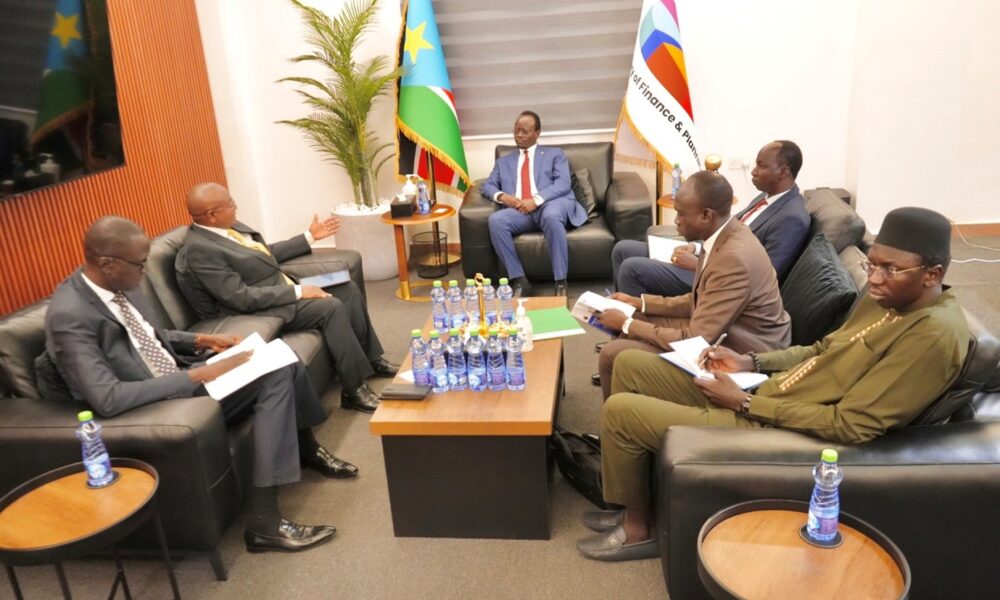
In a statement from the Ministry of Finance and Planning communication department, the plans to connect South Sudan to Ethiopia and Djibouti through new road and energy projects were unveiled during a meeting between the Minister of Finance and Planning, Dr. Bak Barnaba Chol and Themba Bhebhe, the Country Manager for African Development Bank
The plans unveiled on Wednesday marked a significant step toward deeper regional integration and economic renewal.
AfDB’s Country Manager Themba noted that the projects form part of the Horn of Africa Initiative, a regional program aimed at strengthening trade, energy security, and cross-border connectivity.
“The corridor and transmission line studies mark the beginning of South Sudan’s deeper integration into the Horn of Africa economy,” Mr. Bhebhe told the Minister in a statement.
“We are laying the groundwork for energy access and trade routes that can transform livelihoods,” he added.
According to the statement, the AfDB board recently approved a new three-year strategy for South Sudan covering 2025–2027, with six major investments worth an estimated USD 300 million.
While three national programs will target water, sanitation, energy, and youth empowerment, the regional projects are expected to redefine South Sudan’s position in East Africa.
Minister Bak welcomed the initiative, stressing the government’s commitment to cooperate with the Bank.
“South Sudan’s future depends on opening up to our neighbors,” he said adding, “Energy imports and road links will reduce costs, attract investment, and strengthen our economy.”
South Sudan, landlocked and heavily reliant on oil exports, has long struggled with poor infrastructure and limited access to regional markets. Transport costs remain among the highest in Africa, while electricity shortages constrain industrial growth and basic services.
By linking South Sudan to Ethiopia’s power grid, the AfDB-backed feasibility study could provide a lifeline to households and businesses facing chronic energy deficits. Ethiopia, which has invested heavily in hydropower, is seen as a potential supplier of affordable electricity to its neighbors.
The proposed Kapoeta–Boma–Raad road corridor, meanwhile, would connect South Sudan to Ethiopia and onward to Djibouti’s port, offering a critical outlet for trade.
Regional integration has been a recurring theme in South Sudan’s development agenda, with policymakers arguing that access to diversified trade routes and energy sources is essential for stability.
The AfDB’s investment comes at a time when the government is under pressure to broaden its economy beyond oil and create jobs for a growing youth population.
If implemented, the Horn of Africa corridor could position South Sudan as a more connected player in East Africa, opening opportunities for commerce, reducing isolation, and enhancing resilience against regional shocks.