


By Alan Clement
In a bid to save mothers, newborns and strengthen resilience against malaria, South Sudan has launched twin health initiatives tackling maternal care and malaria at the National Health Summit 2025.
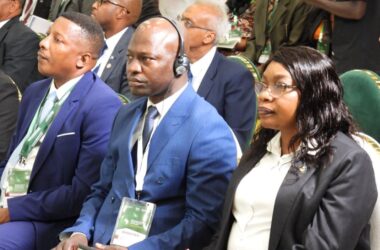
According to a statement from the Health Ministry’s communication department, at the National Health Summit 2025 in Juba, the Minister of Health, Sarah Cleto Rial, announced the launch of her comprehensive Ministerial Initiative on Maternal and New-born Health.
She said the plan would prioritize the delivery of essential, high-quality services in the hardest-to-reach and most underserved areas of the country.
“This initiative is designed to save lives, build system resilience, advance universal health coverage, and prioritize equity,” she declared, underscoring the government’s determination to place maternal and new-born health at the forefront of the national agenda.
The World Health Organization’s Country Representative, Dr. Humphrey Karamagi, reaffirmed WHO’s commitment to supporting the rollout, stating, “Every mother and newborn deserves safe, dignified, and quality care.”
He pledged continued technical and operational support to ensure the initiative’s sustainability and impact.
The summit also witnessed the formal launch of the High-Burden High-Impact (HBHI) approach, an evidence-based strategy to accelerate the fight against South Sudan’s most devastating communicable diseases.
The Vice President and Chair of the Service Cluster, H.E. Josephine Joseph Lagu, presided over the announcement, stressing that malaria remains one of the country’s most significant public health challenges.
“This approach will target and rapidly scale up interventions in areas and populations most affected by preventable illnesses,” she said, highlighting the government’s high-level commitment to integrating HBHI into the national data.
Malaria accounts for 66.8 percent of outpatient morbidity and nearly 50 percent of deaths in South Sudan, with reported cases reaching 3.8 million in 2024.
The HBHI strategy is expected to focus resources where the burden is highest, particularly in rural and conflict-affected regions.
The dual launches come against the backdrop of South Sudan’s fragile health system, which continues to grapple with limited infrastructure, shortages of skilled personnel, and recurrent humanitarian crises.
UNICEF’s Humanitarian Action for Children (HAC) 2025 report for South Sudan confirms that 9.3 million people, including about 5 million children, require humanitarian assistance this year, and that 2.3 million children are at risk of acute malnutrition.
These figures illustrate the scale of vulnerability that the new initiatives seek to address.
Parliamentarians have previously raised concerns about the country’s high maternal mortality rate, one of the highest globally, and the urgent need for systemic reforms to ensure equitable access to care.
The Minister’s initiative directly responds to these calls by embedding maternal and new-born health into the broader push for universal health coverage.
The combined momentum of the maternal health plan and the HBHI strategy signals a turning point in South Sudan’s public health policy.
By aligning maternal care with disease control, the government aims to strengthen resilience and reduce preventable deaths across the population.
The presence of both ministerial and vice-presidential leadership at the summit underscored the political weight behind the initiatives, while WHO’s endorsement added international credibility.
The collaboration between government and partners reflects a growing recognition that fragmented interventions are insufficient in the face of overlapping crises.
The National Health Summit 2025 marked a decisive moment in South Sudan’s journey toward better health outcomes.
With maternal and new-born health elevated to national priority status and malaria targeted through HBHI, the country is attempting to chart a path toward equity-driven, system-wide reform.
Whether these initiatives will overcome entrenched challenges remains to be seen, but the government’s dual offensive has set a new benchmark for ambition in the health sector.
As Minister Sarah Cleto Rial concluded, “We must protect the most vulnerable, and we must do so now.”