


By Alan Clement
UNICEF and WFP have formalized a UN-to-UN agreement under Global Partnership for Education (GPE) support to deliver homegrown school meals to 6,000 children in South Sudan, linking nutrition directly to education access.
According to a UNICEF/WFP South Sudan statement, the programme will source food locally from smallholder farmers, linking communities directly to schools and ensuring children receive daily meals.
Officials stressed that the initiative is designed to strengthen resilience and reduce reliance on imported aid, while stimulating rural economies.
South Sudan continues to face one of the world’s most severe humanitarian emergencies. UNICEF reports that throughout 2025, 7.7 million people endured acute food insecurity, with 2.3 million children under five at risk of malnutrition.
At the same period, WFP assisted more than 3.6 million people this year but warns of a $322 million funding shortfall threatening future operations.
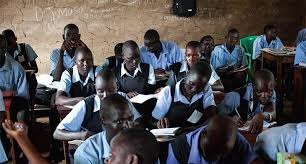
Education remains fragile, with UNICEF estimating that two-thirds of children are out of school. Dropout rates are highest among girls, who are often forced into early marriage or household labour.
School meals have been shown to improve attendance and learning outcomes, offering families an incentive to keep children in classrooms.
“This partnership is about more than meals. It’s about giving children a chance to learn, grow, and thrive,” said Mary‑Ellen McGroarty, WFP’s Country Director in South Sudan.
The agreement builds on a $1.6 million pact signed in December 2025 between the Ministry of General Education and Instruction and WFP to expand school feeding nationwide.
Pilot programmes in Yambio and Bentiu have already shown success, with children receiving hot meals of beans and posho. Teachers report improved concentration and attendance, while parents note reduced pressure to provide food at home.
Though modest compared to the scale of need, the two‑year plan is seen as a critical step toward sustainable, community‑driven solutions. With 6,000 children set to benefit immediately, UNICEF and WFP hope to expand coverage as resources allow.
Officials noted that the emphasis on homegrown meals could provide a replicable model for resilience, offering South Sudan a path to address hunger and education together despite ongoing instability.