



By Alan Clement
South Sudan has joined high-level regional meetings in Bujumbura as the country seeks solutions to persistent flooding, severe electricity shortages, and mounting climate pressures.
According to a statement from the Ministry’s communication department, South Sudan is participating in the Joint Nile Governance Meetings as part of its push to secure long-term water security and climate resilience through strengthened Nile Basin cooperation.
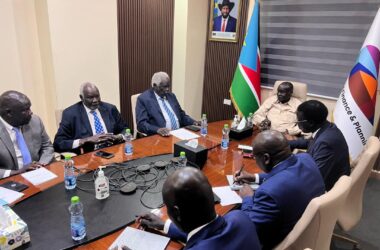
South Sudan’s delegation is led by the Minister of Water Resources and Irrigation, James Mawich Makuach, who departed Juba on December 4 for Burundi, accompanied by Undersecretary Achier John and senior ministry officials.
Their attendance reflects Juba’s recognition that national water, energy, and climate challenges cannot be resolved without regional coordination.
South Sudan’s mission in Bujumbura centers on securing equitable access to shared water resources, advancing energy partnerships, and strengthening climate adaptation efforts.
The Joint Nile Governance Meetings; bringing together the 33rd Nile Council of Ministers (Nile-COM), the 28th Nile Equatorial Lakes Council of Ministers (NELCOM), and the 37th ENSAP Council of Ministers (ENCOM) are expected to deliberate issues that directly affect the country: sustainable water development, hydropower cooperation, and flood management.
Before departing, Makuach emphasized the urgency, stating: “Our people deserve the dividends of cooperation. Water security is not a luxury it is a necessity.”
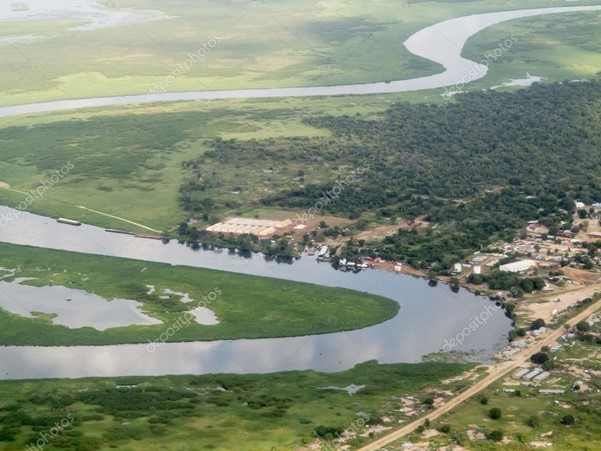
South Sudan’s hydrological realities make these discussions critical. The Sudd wetlands; one of the largest in the world, expanding up to 57,000 square kilometers during peak flooding remain central to the country’s ecological and socio-economic stability.
While vital for biodiversity, the wetlands generate recurring floods that displace communities, damage farmland, and weaken infrastructure.
The Sudd Wetlands Management Strategy 2022–2050 outlines the need for balanced environmental protection and development, but implementation hinges on regional collaboration.
The country’s electricity crisis further heightens expectations for Nile cooperation. The World Bank’s 2024 Energy Access Report shows that less than 10 percent of South Sudan’s population has reliable electricity, one of the lowest access rates globally.
Hydropower opportunities tied to Nile Basin partnerships offer a potential turning point. At the same time, climate change is accelerating risks.
A 2025 UN Environment Programme assessment warned that rising temperatures and erratic rainfall could increase the nation’s flood risks by up to 30 percent in the next decade without major adaptive measures making regional integration indispensable.
South Sudan’s parliament has repeatedly underscored the national importance of Nile cooperation.
In July 2025, the Transitional National Legislative Assembly debated the Eastern Nile Forum’s Regional Innovation Report, stressing stronger ties with Ethiopia, Sudan, and Egypt to reduce mistrust and enhance resilience.
Lawmaker Luka Peter Uget Dari, member of the Committee on Water Resources and Irrigation remarked: “We cannot afford to let history repeat itself. Cooperation is the only path forward.”
The earlier ratification of the Nile Basin Initiative’s Cooperative Framework Agreement (CFA) in 2024 marked a milestone, opening doors for power and infrastructure development.
Information Committee Chairperson Oliver Morri described the move as “a gift to the people of South Sudan,” noting its potential to ease nationwide electricity shortages.
The Nile Basin Initiative noted that stronger regional cooperation is essential for improving flood management and boosting agricultural productivity across the basin.
It stressed that South Sudan’s extensive wetlands help regulate water flows and support livelihoods, and that coordinated regional management can make those wetlands a source of resilience rather than vulnerability.
As the Joint Nile Governance Meetings proceed, South Sudan approaches the discussions with clear national priorities: reducing the human impact of floods, expanding electricity access, and ensuring clean water for its communities.
The country’s participation signals Juba’s determination to translate regional commitments into tangible benefits fewer floods, improved energy security, and stronger climate resilience for ordinary citizens.