




By Kei Emmanuel Duku
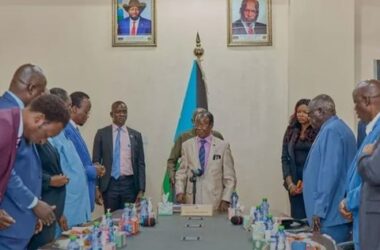
In a move set to transform the landscape of food safety and trade in South Sudan, the South Sudan National Bureau of Standards (SSNBS) has officially inked a landmark agreement with the World Food Programme (WFP) to modernize the nation’s primary testing laboratory.
The Memorandum of Understanding (MoU), signed on Tuesday, paves the way for a comprehensive refurbishment of the SSNBS facility. This strategic partnership is being hailed as a “significant milestone” in the government’s efforts to overhaul the country’s quality infrastructure and ensure that what reaches the tables of South Sudanese citizens is safe for consumption.
“This is more than just a renovation; it is a commitment to the lives of our people,” said Gloria Nyoka, Chairperson of the SSNBS. “By enhancing our laboratory testing capacity, we are fundamentally improving our ability to deliver essential services. A modern lab is the backbone of food safety and national quality assurance.”
Under the new agreement, WFP’s support will focus on equipping the facility to meet international benchmarks. The upgraded laboratory is expected to act as a catalyst for trade facilitation, allowing South Sudan to verify the quality of imports and exports more efficiently, thereby boosting the local economy.
“Our mandate is to safeguard public health and ensure strict compliance with national standards,” Nyoka added during the signing ceremony. “With the support of WFP, the SSNBS is now better positioned to fulfill this duty. We are deeply grateful for their continued partnership in building a sustainable quality infrastructure for South Sudan.”
The project is expected to address long-standing gaps in the Bureau’s technical capacity. Once the refurbishments are complete, the adequately equipped facilities will allow for faster, more accurate testing of food commodities and other essential goods, providing a critical safety net for the country.
The South Sudan National Bureau of Standards (SSNBS) is the statutory body mandated to protect consumers and the environment by ensuring products meet rigorous safety standards.
Despite the Bureau’s tremendous success in confiscating expired and toxic goods at the various entry points across the country, it has also faced numerous challenges regarding technical equipment and laboratory space, often limiting the scope of its testing capabilities.
The World Food Programme (WFP) has been a long-standing partner in South Sudan, not only in humanitarian food assistance but also in capacity building. This latest MoU reflects that humanitarian aid and national development must go hand-in-hand and by investing in the SSNBS laboratory, the partnership aims to create a self-sustaining system where South Sudan can independently monitor food safety, facilitate smoother cross-border trade, and protect the health of its 12 million citizens.