


By Alan Clement
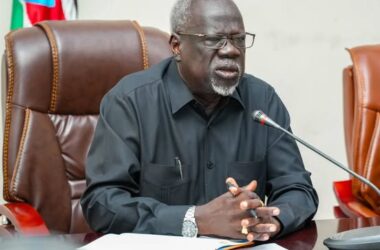
Jonglei State Governor Dr. Riek Gai Kok has warned communities against political incitement and manipulation that could fuel violence, urging residents to uphold unity and peace as South Sudan prepares for national elections.
According to a statement from the governor’s press unit, while addressing community leaders, youth, women, and elders during his field tour, the governor urged citizens not to allow politicians to exploit local grievances or mobilize them into conflict.
“Do not let politicians manipulate you into fighting senseless wars,” Dr. Riek said in a statement. He added that the intentions of opposition groups are often to sow division and instability, warning that such actions threaten hard-won gains toward peace.
“We are all children of Jonglei,” the governor declared adding, “Do not let anyone destroy the unity that you have with your neighbours. Let our unity continue and grow stronger.”
He emphasized that communities must resist narratives that encourage confrontation and instead work together to preserve coexistence at the local level.
Dr. Riek’s remarks come amid renewed national focus on electoral preparations following repeated delays to South Sudan’s first post-independence general elections.
Political leaders have increasingly framed peace and stability as prerequisites for credible polls, particularly in states like Jonglei that have historically experienced cycles of communal violence and armed conflict.
Jonglei has long been vulnerable to intercommunal clashes, cattle raiding, and political rivalries that have undermined governance and humanitarian access.
Against this backdrop, the governor’s warning reflects broader concerns that election-related competition could inflame tensions if political actors resort to incitement or mobilization along ethnic or factional lines.
The governor underscored that participation in the democratic process, rather than violence, is the most effective means for citizens to influence leadership and protect stability. He encouraged residents to prepare for the elections peacefully and to view the ballot as a tool for change.
According to governor Riek, unity among communities is essential not only for security but also for ensuring that elections can take place in an environment free from fear and intimidation.
Similar messages have been echoed by other South Sudanese leaders in recent months. President Salva Kiir Mayardit has repeatedly called on political actors to prioritize peace and refrain from actions that could plunge the country back into conflict, warning that violence would derail the transition and undermine national aspirations for democracy.
In public addresses, the president has urged communities to resolve disputes through dialogue and to reject calls for armed confrontation.
Senior government officials and peace partners have also emphasized the link between peace and elections.
The United Nations Mission in South Sudan has consistently appealed to political leaders and communities to maintain calm, cautioning that inflammatory rhetoric and localized violence could compromise electoral credibility and broader stability.
UNMISS has stressed that leaders at all levels bear responsibility for discouraging hate speech and preventing manipulation of civilians.
Religious and traditional leaders have similarly reinforced calls for restraint. Church leaders across the country have urged citizens to resist political provocation, warning that renewed violence would reverse progress made since the signing of the revitalized peace agreement.
They have encouraged South Sudanese to embrace reconciliation and peaceful civic engagement as the nation approaches a critical political milestone.
In Jonglei, local authorities say community cooperation will be key to preventing violence. County officials and traditional chiefs have been urged to work closely with security agencies and civil administrators to address early warning signs of tension.
The state government has repeatedly called on youth not to be used as instruments of violence, emphasizing their role in peacebuilding and development.
Dr. Riek concluded his address by reaffirming the state government’s commitment to peace and stability, urging residents to reject violence in all its forms. He said Jonglei’s future depends on unity and collective responsibility, particularly at a time when national attention is focused on elections.
As South Sudan edges closer to the polls, the governor’s warning highlights a growing consensus among leaders that peace is not only a political necessity but a shared obligation.
Whether communities heed these calls may prove decisive in determining whether elections strengthen stability or reopen old wounds in one of the country’s most fragile regions.