

By Manas James Okony
The National Election Commission (NEC) has reiterated its commitment to holding South Sudan’s general elections by December 2026. The Commission emphasized that preparations are well underway, with offices established across ten states and an official electoral timeline set to be released within two weeks.
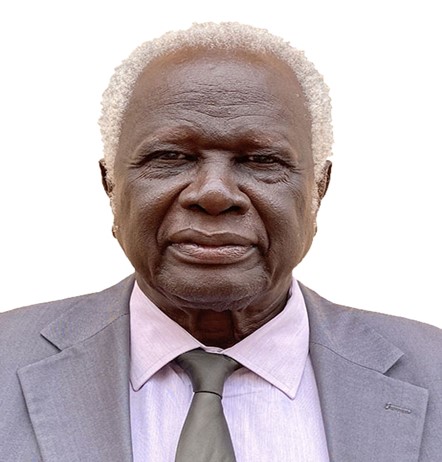
The renewed pledge follows a press conference held on December 22, 2025, where NEC Chairman Prof. Abednego Akok Kachuol confirmed that the upcoming polls will utilize the 2010 geographical constituencies. This decision aims to ease concerns regarding how the exercise would proceed in the absence of a recent census or newly defined boundaries.
Speaking to No. 1 Citizen Daily Newspaper yesterday, Prof. Akok confirmed that the roadmap remains on track, “On December 22, 2025, we declared that the 2010 geographical constituencies will be used across the ten states and three administrative areas,” Prof. Akok stated. “Constituencies will account for 60 percent of the seats, followed by a women’s list of 25 percent, and a party list of 15 percent, plus two additional seats. This reflects a political consensus among the parties to the 2018 agreement.” Prof. Akok outlined the immediate steps for the electoral cycle:
Late January 2026: Release of the official electoral timeline, February 2026: Launch of nationwide civic education, Post-February: Commencement of voter registration.
The Chairman noted that State High Election Committee (SHEC) offices are fully operational in ten states, with the exception of Upper Nile State, where setup is expected to be completed during the current dry season. He added that administrative areas are awaiting legal amendments to empower the formation of electoral administrative councils.
Furthermore, the Ministry of Justice is reportedly working on constitutional and legislative amendments. “The Ministry is reviewing relevant electoral laws to ensure they are conducive to the current environment,” Prof. Akok said. “So far, everything is on track, and the training of facilitators is ongoing across the states with support from our partners.”
Despite the Commission’s optimism, public opinion remains deeply divided. Civil society activists continue to express scepticism regarding the country’s readiness, pointing to a fragile security situation and several unmet prerequisites under the peace deal.
The Revitalized Agreement on the Resolution of the Conflict in South Sudan (R-ARCSS), signed in 2018, established the framework for these elections. While it mandated the formation of a unified national army and a transitional government, many key provisions essential for a free and fair vote remain only partially implemented.
As December 2026 approaches, the success of the transition will depend not only on the NEC’s logistics but also on the government’s ability to ensure security, uphold the rule of law, and foster a safe environment for civic engagement.