



By Kei Emmanuel Duku
South Sudan and Sudan have pivoted toward a high-powered energy alliance, signaling a new era of industrial cooperation as both nations move to exploit renewable resources and massive dam projects to light up the region.
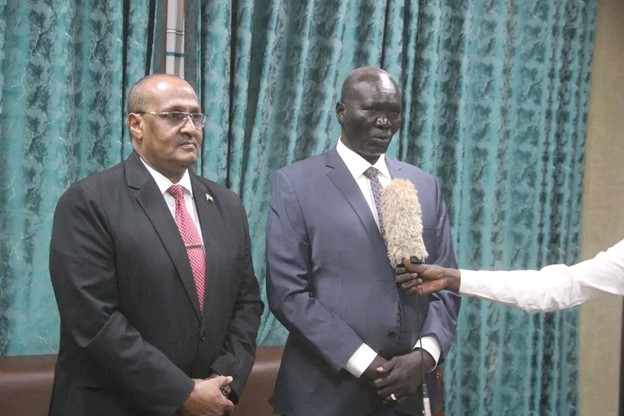
In a diplomatic engagement that underscores the deep-seated historical and fraternal bonds between the Republic of Sudan and the Republic of South Sudan, the Minister of Energy and Dams, Agok Makur Kur, hosted the Sudanese Ambassador to Juba, Essam Mohamed Hassan Karrar. The meeting, held on Thursday, January 15, 2026, served as a platform to harmonize strategic visions aimed at transforming the energy landscape of both nations.
The discussions were centered on creating a sustainable energy roadmap, with a heavy emphasis on increasing electricity production. Both leaders explored ways to move beyond traditional power sources by identifying untapped investment opportunities in dams and renewable energy initiatives.
In a statement posted on the official social media page of the ministry, Minister Agok Makur highlighted that the partnership is a reflection of the unbreakable ties shared by the two neighboring states.
“The meeting focused at enhancing bilateral cooperation and coordinating strategic visions, particularly in the electricity and energy sectors,” Hon. Agok Makur Kur stated.
To ensure the longevity of these projects, the two officials detailed a comprehensive plan for technical synergy. This includes the establishment of mechanisms to exchange specialized technical expertise and a rigorous program to train national cadres and technicians, ensuring that local professionals are equipped to manage the burgeoning energy infrastructure.
Ambassador Essam Mohamed Hassan Karrar, in his response, noted that the meeting was not merely symbolic but a foundational shift toward real-world results. He praised the hospitality of the Ministry and emphasized that Khartoum views the energy sector as a vital artery for the strategic partnership between the two capitals.
“The visit represents a practical step toward enhancing bilateral cooperation in the energy sector,” Ambassador Karrar remarked. “Sudan is keen to support South Sudan in electricity and renewable energy projects, emphasizing that the exchange of technical expertise and development of energy infrastructure is a priority of the strategic partnership between Khartoum and Juba.”
The cooperation between Juba and Khartoum in the energy sector is viewed as a critical component of regional stability. South Sudan, which currently possesses significant but largely underdeveloped hydroelectric and solar potential, stands to benefit from Sudan’s existing experience in dam management and grid distribution.
As South Sudan seeks to reduce its dependence on expensive fossil fuels and increase its national power grid coverage, such bilateral agreements are expected to pave the way for lower electricity costs, driving industrial growth and improving the living standards of citizens in both countries.