

By Kei Emmanuel Duku
For the past two weeks, a quiet death sentence has been hanging over the remote stretches of Jonglei State.
In the wards of Lankien and Pieri, at least 20 critically ill patients are waiting for a flight that may never come-trapped between life-threatening diagnoses and a wall of administrative and security blockades that have severed their only link to survival.
The international medical charity Médecins Sans Frontières (MSF) issued a stark warning on Friday, January 16, stating that ongoing restrictions on humanitarian movement are directly preventing the referral of these patients to specialized care.
In the specialized world of emergency medicine, these delays are rarely just paperwork; they are the difference between recovery and permanent disability, or life and death.
Since December 30, 2025, the delivery of essential healthcare in this conflict-scarred corner of South Sudan has been systematically strangled. Necessary medical supplies have been unable to reach the MSF hospital in Lankien or the primary healthcare center in Pieri, leaving doctors to work with dwindling resources in a region already buckling under the weight of displacement and renewed fighting.
“Lives are being put at risk every day because critically ill patients cannot be referred for the care they urgently need,” said Gul Badshah, the MSF Operations Manager. “Patient referrals are not optional or administrative procedures; they are lifesaving interventions.”
The crisis is being felt most acutely by the most vulnerable. Pregnant women with complications and children with acute infections are finding themselves at the center of a geopolitical bottleneck.
As of mid-January, humanitarian organizations have been unable to secure predictable access, a vacuum that MSF warns is contributing to a spike in preventable deaths.
The numbers illustrate a collapsing safety net. Before the current constraints, MSF was a lifeline for a massive population, receiving 1,000 patients a week in Lankien and 700 in Pieri, serving a total catchment area of a quarter of a million people. Now, those doors are barely ajar.
“Health facilities supported by MSF are already facing critical service disruptions,” Badshah added. “In Lankien and Pieri, MSF is now able to offer only lifesaving and emergency care.”
The human cost extends beyond the hospital walls. Fear of airstrikes and ground skirmishes has driven an unknown number of civilians into the deep bush. While some have trickled back to their homes, many women and children remain in hiding, cut off from any form of medical assistance. The situation grew so volatile on New Year’s Eve that MSF was forced to evacuate several staff members from Lankien, further hollowing out the local health capacity.
MSF is now urgently calling for “unhindered humanitarian access,” demanding regular, predictable flights to Jonglei to allow for staff rotations, the delivery of drugs, and the immediate evacuation of the 20 patients whose lives currently hang in the balance.
Jonglei State has long been one of the most volatile regions in South Sudan, characterized by inter-communal violence and seasonal flooding that frequently cuts off ground transport. MSF, which has operated in the region since 1983, remains one of the few providers of high-level surgical and inpatient care.
The current deadlock over flight permissions and movement markers represents a significant escalation in the challenges facing humanitarian actors in the country, where the 2025 record showed MSF alone provided over 830,000 consultations and 12,000 surgeries. Without a resolution, the “lifesaving” mission of these neutral actors remains in a state of perilous suspension.
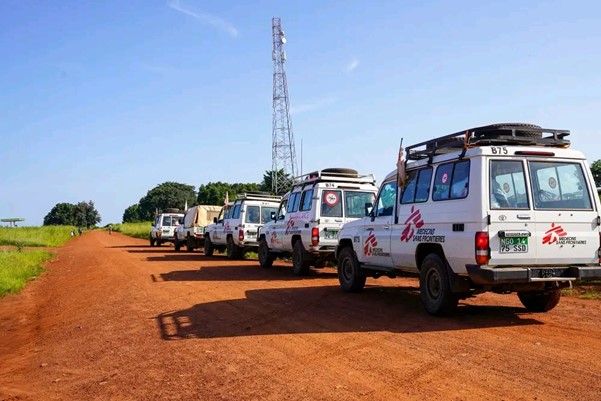
MSF Warns of Looming Deaths in Jonglei as Access Restrictions Block Lifesaving Care
Courtesy photo
By Kei Emmanuel Duku
For the past two weeks, a quiet death sentence has been hanging over the remote stretches of Jonglei State.
In the wards of Lankien and Pieri, at least 20 critically ill patients are waiting for a flight that may never come-trapped between life-threatening diagnoses and a wall of administrative and security blockades that have severed their only link to survival.
The international medical charity Médecins Sans Frontières (MSF) issued a stark warning on Friday, January 16, stating that ongoing restrictions on humanitarian movement are directly preventing the referral of these patients to specialized care.
In the specialized world of emergency medicine, these delays are rarely just paperwork; they are the difference between recovery and permanent disability, or life and death.
Since December 30, 2025, the delivery of essential healthcare in this conflict-scarred corner of South Sudan has been systematically strangled. Necessary medical supplies have been unable to reach the MSF hospital in Lankien or the primary healthcare center in Pieri, leaving doctors to work with dwindling resources in a region already buckling under the weight of displacement and renewed fighting.
“Lives are being put at risk every day because critically ill patients cannot be referred for the care they urgently need,” said Gul Badshah, the MSF Operations Manager. “Patient referrals are not optional or administrative procedures; they are lifesaving interventions.”
The crisis is being felt most acutely by the most vulnerable. Pregnant women with complications and children with acute infections are finding themselves at the center of a geopolitical bottleneck.
As of mid-January, humanitarian organizations have been unable to secure predictable access, a vacuum that MSF warns is contributing to a spike in preventable deaths.
The numbers illustrate a collapsing safety net. Before the current constraints, MSF was a lifeline for a massive population, receiving 1,000 patients a week in Lankien and 700 in Pieri, serving a total catchment area of a quarter of a million people. Now, those doors are barely ajar.
“Health facilities supported by MSF are already facing critical service disruptions,” Badshah added. “In Lankien and Pieri, MSF is now able to offer only lifesaving and emergency care.”
The human cost extends beyond the hospital walls. Fear of airstrikes and ground skirmishes has driven an unknown number of civilians into the deep bush. While some have trickled back to their homes, many women and children remain in hiding, cut off from any form of medical assistance. The situation grew so volatile on New Year’s Eve that MSF was forced to evacuate several staff members from Lankien, further hollowing out the local health capacity.
MSF is now urgently calling for “unhindered humanitarian access,” demanding regular, predictable flights to Jonglei to allow for staff rotations, the delivery of drugs, and the immediate evacuation of the 20 patients whose lives currently hang in the balance.
Jonglei State has long been one of the most volatile regions in South Sudan, characterized by inter-communal violence and seasonal flooding that frequently cuts off ground transport. MSF, which has operated in the region since 1983, remains one of the few providers of high-level surgical and inpatient care.
The current deadlock over flight permissions and movement markers represents a significant escalation in the challenges facing humanitarian actors in the country, where the 2025 record showed MSF alone provided over 830,000 consultations and 12,000 surgeries. Without a resolution, the “lifesaving” mission of these neutral actors remains in a state of perilous suspension.