




By Kei Emmanuel Duku
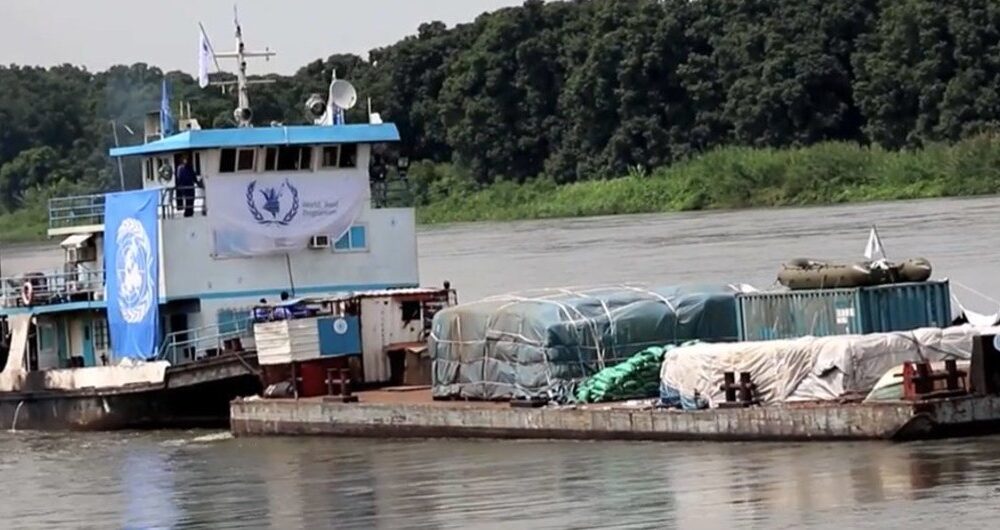
The World Food Programme (WFP) has frozen all operations in Baliet County after “brazen” attacks on a massive river convoy, a move that threatens to cut off a vital survival line for millions.
According to the humanitarian agency, between January 30 and February 1, a 12-boat convoy carrying 1,500 metric tons of food was ambushed and stripped bare by armed youth.
The UN agency issued an urgent call for the protection of humanitarian space after the looting took place overnight in Upper Nile State.
Despite receiving formal security guarantees from local authorities, the WFP reports that the theft occurred without any intervention from county security forces.
In an official communication, the WFP strongly condemned the violence that targeted not only food but also essential items being transported for other aid partners. “Attacks on humanitarians are never acceptable,” reads part of WFP statement, emphasizing that such actions directly sabotage the survival of the most destitute. “We strongly urge all parties involved to respect the critical role of humanitarian workers and to safeguard the facilities that are indispensable for assistance.”
The suspension comes as the agency sounds the alarm over a wider pattern of violence across the region. In Jonglei State, vital infrastructure including warehouses and health facilities has been reduced to rubble during fierce clashes between government forces and opposition groups in Akobo, Ayod, Nyirol, and Uror. “Humanitarian space is shrinking by the hour,” a source familiar with the situation warned. “We cannot save lives if our own staff are being targeted by the very communities they are sent to serve.”
The consequences of this insecurity are immediate and devastating. The WFP has been forced to halt the prepositioning of 12,000 metric tons of food intended to sustain Jonglei State through the upcoming rainy season. “The rainy season is coming, and with it, the threat of mass hunger,” experts warn. “These attacks have effectively locked the warehouse doors on 4.2 million people.”
WFP has made its return to Baliet County conditional, stating that activities will remain suspended until the safety of staff and contractors is guaranteed and the Government of South Sudan takes “immediate measures” to recover the stolen goods. As the agency points out, when a food convoy is looted, it is not just a theft of cargo; it is a direct blow to the school meals, nutrition, and emergency aid that keep the country’s most vulnerable women and children alive.
South Sudan continues to rank as one of the deadliest frontiers for aid workers globally. The geography of the country makes river convoys essential, as road networks are often non-existent or destroyed by seasonal flooding. The prepositioning mentioned by the WFP is a critical race against time; once the rains begin, nearly 60% of the country becomes unreachable by road.
This latest suspension in Baliet County reflects a growing crisis of accountability, where humanitarian aid intended for the most destitute becomes a target for local armed groups, leaving millions at risk of starvation during the upcoming lean season.