

By Kei Emmanuel Duku
For many in South Sudan, a cancer diagnosis is not just a medical crisis; it is a whispered death sentence. In a nation where the healthcare system is still finding its footing, the silence surrounding the “silent killer” has become as lethal as the disease itself.
Health experts are now sounding the alarm as new data reveals a staggering toll: approximately 6,874 new cancer cases are recorded annually in South Sudan, leading to nearly 5,000 deaths. These figures, though based on global estimates, paint a grim picture of a country where 80% of cancer patients do not survive, largely because they are diagnosed too late for life-saving intervention.
The challenge is not just the disease, but the timing of its discovery. Most patients only seek help when the illness has reached an advanced stage, leaving doctors with few tools to fight back.
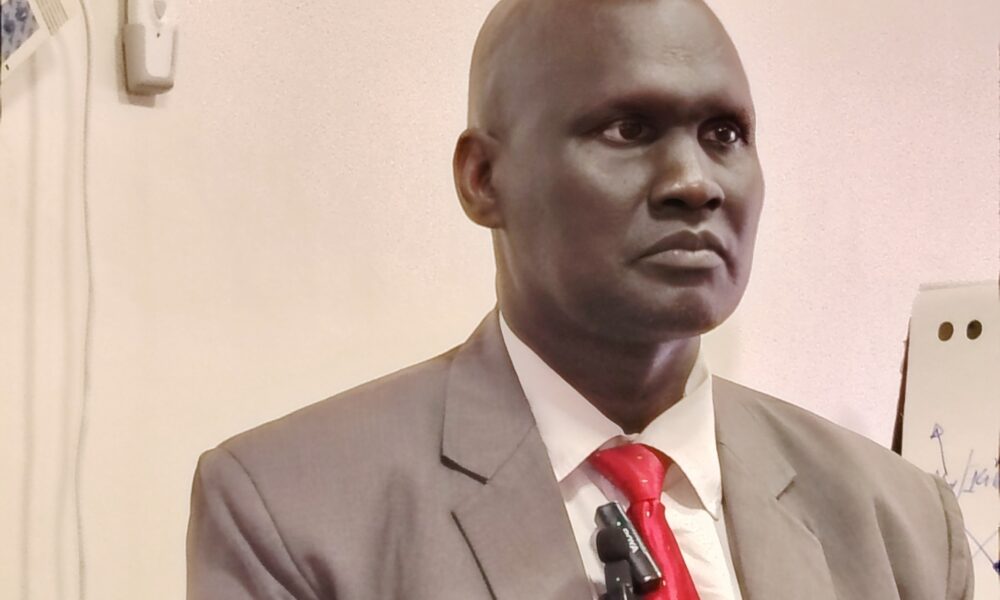
“It continues to be a challenge because many cases of cancer are diagnosed late,” says Dr. Oromo Francis Seriano Omojo, an Associate Professor and Head of the Department of Pathology and Forensic Medicine at the University of Juba. “This is why we are pushing for awareness. We need people to be able to detect early symptoms and signs. The earlier, the better.”
Dr. Omojo notes that the most prevalent threats in South Sudan include breast, cervical, prostate, and liver cancers. He also highlights the devastating link between the country’s HIV endemic and Kaposi’s sarcoma—a cancer that causes lesions or “nodules” on the skin and internal organs.
To bridge the knowledge gap, Dr. Omojo simplifies the warning signs: unexplained weight loss, persistent lumps, and abnormal vaginal bleeding. “If you have a chronic sore that refuses to heal or a sudden roughness in your voice, do not ignore it,” he warns. “It could be an early sign of lung or throat cancer.”
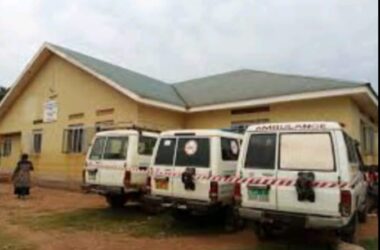
While the medical community advocates for screening, South Sudan’s infrastructure remains a significant hurdle. Currently, only about 16% of health facilities provide any cancer care.
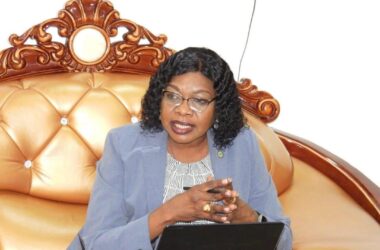
Dr. Albino Amum, Chairperson of the South Sudan Cancer Network, emphasizes that addressing this burden requires massive investment. “Many NGOs and UN agencies do not invest in this field,” Dr. Amum explains. “If a patient goes to Juba Teaching Hospital and is diagnosed, we often have to send them home to wait for death, or if they have money, they travel to India, Turkey, or Germany.”
The financial disparity is a matter of life and death. In neighboring countries, governments often subsidize treatment, but in South Sudan, it is almost entirely an “out-of-pocket” expense.
For Dr. Joseph Gore Elias, a Lecturer at the University of Juba, the current situation is a heartbreaking cycle of helplessness. He notes that the lack of a national cancer center forces doctors into a corner where they can offer little more than bad news.
“We are losing so many patients because they cannot afford to go abroad for treatment,” Dr. Gore says. “Instead of diagnosing and treating them, we are forced to tell them: ‘You have cancer, you have to go outside for treatment.’ When they tell us they have no money, the response is often that they should just go home and die peacefully. It is very painful, but this is the reality in our country.”
To break this cycle, the South Sudan Cancer Network is lobbying for funds to establish a local facility. However, a building is only as good as the experts inside it. Dr. Gore points out a critical gap in the nation’s workforce: South Sudan currently lacks a single indigenous adult oncologist.
“While there is an oncologist at the Juba Medical Complex, he is not South Sudanese,” Dr. Gore explains. “We are advocating for funds to send our own medical experts to specialize in adult oncology and radiation oncology—the field that uses high-energy radiation to shrink tumors and kill cancer cells. Currently, we have no one in the country trained to provide radiation therapy.”
Despite the dire statistics, there is a flicker of hope. The South Sudan Cancer Network is aiming for a complete establishment of a cancer center by 2027. This would include specialized screening, such as Pap smears for women and PSA (Prostate-Specific Antigen) blood tests for men.
“We need to improve our data collection to help us plan,” Dr. Gore adds, noting that research is the key to unlocking new lines of treatment. “We are advocating for more colleagues to join this work so that when we start our services, we have a complete team—doctors, surgeons, and radiation experts—who can deal with all these conditions right here at home.”
As the medical community pushes forward, the message remains clear: South Sudan can no longer afford to let its citizens “die peacefully” at home for lack of a local cure.