By Alan Clement
South Sudan’s fragile health system has received a critical lifeline as the World Health Organization (WHO), working with the Ministry of Health and supported by the South Sudan Humanitarian Fund (SSHF) and the UN Central Emergency Response Fund (CERF), delivered emergency medical supplies and expanded disease surveillance efforts.
According to a WHO statement, the supplies delivered by WHO working with the Ministry of Health and supported by the South Sudan Humanitarian Fund (SSHF) and the UN Central Emergency Response Fund (CERF) underscores how international solidarity and partner coordination are helping to reinforce healthcare resilience in one of the world’s most crisis-affected nations.
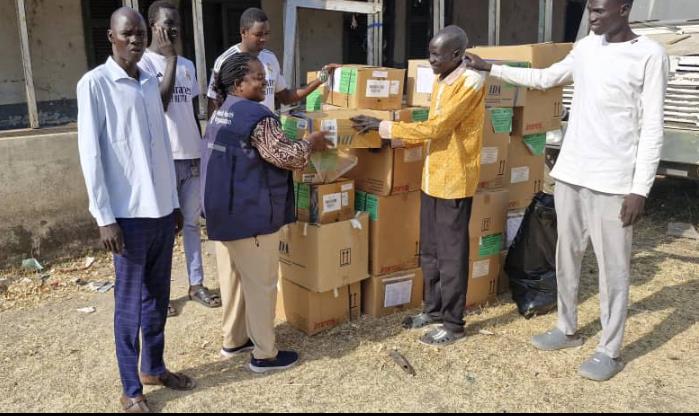
The delivery of 56 cartons of assorted emergency medical supplies is expected to strengthen lifesaving services for communities in Malakal and beyond.
The intervention is not only about meeting urgent needs but also about embedding support within national systems to ensure hospitals can withstand future shocks. “Access to quality healthcare should never depend on crises or shortages,” WHO emphasized, framing the supplies as part of a broader push toward sustainable health infrastructure.
South Sudan’s health sector has long struggled under the weight of conflict, displacement, and limited investment. Hospitals like Malakal Teaching Hospital often face overwhelming demand, with outbreaks of cholera, measles, and malaria stretching already scarce resources.
The latest support aims to ease this burden while reinforcing systemic capacity through improved disease monitoring and stronger coordination among humanitarian partners.
Funding from SSHF and CERF has been pivotal in enabling WHO and the Ministry of Health to act quickly while also planning for long-term resilience. These mechanisms provide flexible resources that allow agencies to respond to emergencies while investing in structural improvements.
In South Sudan, this dual approach has translated into immediate relief for hospitals and a foundation for stronger national health systems.
The intervention reflects a shift in humanitarian strategy: moving beyond short-term crisis response to building sustainable resilience. By strengthening surveillance networks, coordinating partners, and equipping hospitals, WHO and its partners are helping South Sudan take steps toward a healthier future.
For communities in Malakal, the cartons of medical supplies represent more than emergency aid they are a symbol of solidarity and a commitment to ensuring healthcare access even in the most challenging circumstances.