

By Alan Clement
United Nations peacekeeping chief Jean-Pierre Lacroix has warned that South Sudan’s fragile peace process could be undermined unless international pledges for police reinforcements are delivered and cooperation with national authorities is strengthened.
Addressing the UN Security Council during its annual briefing by heads of police components of peace operations, Lacroix underscored the indispensable role of UN Police (UNPOL) in sustaining peace in conflict-affected countries.
“United Nations Police remain a key component of UN peacekeeping and play an indispensable role in fulfilling our mandates,” he said.
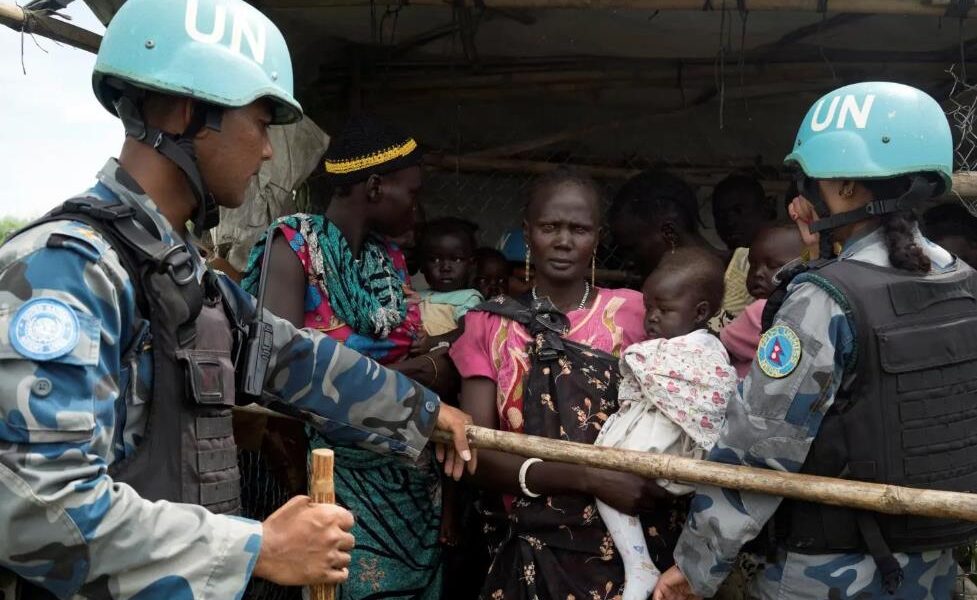
South Sudan, where the “UN Mission in South Sudan (UNMISS)” operates one of the largest police contingents, is particularly vulnerable to the pressures Lacroix described. Displacement camps across the country remain volatile, with UN Police often the first responders to crime, intercommunal clashes, and gender-based violence.
Lacroix noted that UNPOL’s presence in such high-density environments is critical to preventing escalation. “They operate in environments of persistent insecurity, political volatility and growing operational risks,” he told the Council.
The peacekeeping chief highlighted pledges made at the 2025 Peacekeeping Ministerial in Berlin, where member states committed to rapid deployment and specialized policing roles cautioning that South Sudan still faces critical gaps.
“The pledges are essential to ensuring that UN Police are prepared to respond to emerging threats in areas like transnational organized crime, cyber-enabled crime, climate-related insecurity, and the misuse of new technologies,” Lacroix said.
He stressed that cooperation with host-State institutions is equally vital. “We must deepen cooperation with host-State police and other law enforcement agencies,” he said, pointing to the South Sudan National Police Service (SSNPS).
Despite UNMISS’s support, the SSNPS continues to struggle with limited capacity, resource shortages, and strained public trust. Analysts warn that without stronger collaboration, UNMISS’s efforts to stabilize communities could be undermined.
The briefing came against the backdrop of a severe liquidity crisis affecting the UN system with Lacroix acknowledging that missions have been forced to cut costs, repatriate personnel, and reduce civilian staff.
“Efficiency is necessary. We are committed to finding ways to save. However, this efficiency drive cannot substitute for predictable and sustainable financing,” he said warning that without timely payment of assessed contributions from member states, peacekeeping’s ability to fulfill its mandates will be severely compromised.
For South Sudan, the implications are stark since UNMISS has been central to protecting civilians during outbreaks of violence in Jonglei, Upper Nile, and Unity states. Budget cuts risk weakening that protective presence at a time when the country’s peace agreement remains fragile and intercommunal tensions persist.
Lacroix also highlighted the Action for Peacekeeping (A4P+) initiative, which provides the framework for strengthening effectiveness and safety across missions. He emphasized that the Women, Peace and Security agenda remains central, but progress in increasing women’s participation in UNPOL is “fragile, particularly in the context of budget cuts.”
Despite these challenges, Lacroix pointed to renewed political commitment demonstrated at the Berlin ministerial. “We must ensure that mandates are matched with adequate resources. We must sustain political unity around peacekeeping. And we must equip United Nations Police to meet the demands of tomorrow,” he concluded.
For South Sudan, where UN Police are often the thin line between fragile calm and renewed violence, the warning is clear: without sustained financing, pledged reinforcements, and stronger cooperation with national authorities, peacekeeping gains could be at risk.