

By Chol D. Johnson /Alan Clement
South Sudan’s permanent ceasefire is under renewed strain after monitors recorded a sharp rise in alleged violations in January 2026, driven by escalating clashes between signatory forces and mounting civilian harm.
The Ceasefire and Transitional Security Arrangements Monitoring and Verification Mechanism (CTSAMVM) said 26 alleged incidents involved violence by signatory parties against civilians or humanitarian actors.
It noted that four alleged cases of sexual and gender-based violence (S/GBV) against civilians were attributed to signatory forces while 27 cases covered other forms of alleged violations.
CTSAMVM reported that the Malakal-based MVT recorded the highest number of alleged violations for the second consecutive month, with 35 incidents across Upper Nile State and north-eastern Jonglei State, underscoring the persistence of conflict in these regions.
According to the monitoring body, the most serious deterioration was recorded in Jonglei State, where near-daily hostilities between the South Sudan People’s Defence Forces (SSPDF) and the Sudan People’s Liberation Movement/Army–In Opposition (SPLM/A-IO) were reported throughout January.
Counties most affected included Uror, Duk, Pigi, Akobo, Ayod and Nyirol, areas that CTSAMVM says have become theatres of sustained confrontation.
Reports from local authorities, military commanders and community representatives cited by CTSAMVM indicate a continuing battle for territorial presence and influence, with several strategic locations repeatedly changing hands.
Pajut in Duk County, Waat in Nyirol County and Yuai in Uror County were among contested areas that reportedly shifted control multiple times during the month.
“The impact on civilians cannot be overstated,” CTSAMVM said, pointing to killings, injuries, sexual violence, displacement and severe movement restrictions linked to the fighting.
The monitoring body warned that the ongoing hostilities have significantly undermined civilian safety and freedom of movement in affected communities.
Of particular concern, CTSAMVM condemned the continued use of aerial bombardments by the SSPDF in civilian-populated areas, describing the practice as a gross violation of Chapter II of the R-ARCSS.
Several sources, including information provided directly by SPLM/A-IO representatives, indicated that civilians were killed and others suffered severe burn injuries following aerial bombardments carried out on 13 and 14 January in Pathai, Uror County.
CTSAMVM stressed that the pattern of violence in Jonglei demonstrates that the Permanent Ceasefire is currently not holding in the state.
It also condemned remarks that incite indiscriminate violence, stating that such language constitutes a breach of the peace agreement’s provisions on hate speech.
The January findings come against the backdrop of shrinking monitoring capacity, raising concerns about the true scale of violations. Due to financial constraints, CTSAMVM was forced to close three Monitoring and Verification Teams in Yei, Bentiu and Yambio during the month.
These teams stopped reporting at various points in January, a factor CTSAMVM said makes the recorded increase in alleged violations “particularly notable”.
According to the monitoring body, operational challenges further hampered monitoring efforts. CTSAMVM said it was forced to cancel five high-priority field missions after delays in obtaining Flight Safety Assurances from the Joint Verification and Monitoring Mechanism (JVMM).
As a result, the mission completed only one Long Duration Patrol in January, conducted by the Yambio MVT to Maridi and Mundri West counties in Western Equatoria State for a multi-day fact-finding mission.
Restrictions on movement also continued to undermine both peace monitoring and humanitarian operations. CTSAM mentioned that UNMISS experienced 53 Freedom of Movement-related restrictions during January and the work of humanitarians was severely affected due to widespread access and movement restrictions as well as direct targeting of humanitarian operations.
CTSAMVM cautioned that the incidents recorded in January remain unverified at the time of reporting, noting that final figures and details may change following investigations.
Nevertheless, the mechanism said the emerging trends point to a dangerous erosion of ceasefire compliance at a time when oversight and access are diminishing.
The monitoring body said its findings are based on information collected by MVTs deployed across the country, including Juba, Malakal and Wau, alongside teams that were operational for part of the reporting period in Yei, Bentiu and Yambio.
As violence intensifies in key regions and monitoring capacity contracts, CTSAMVM warned that sustained non-compliance with Chapter II of the R-ARCSS risks further destabilising the fragile peace process, with civilians continuing to bear the heaviest cost.
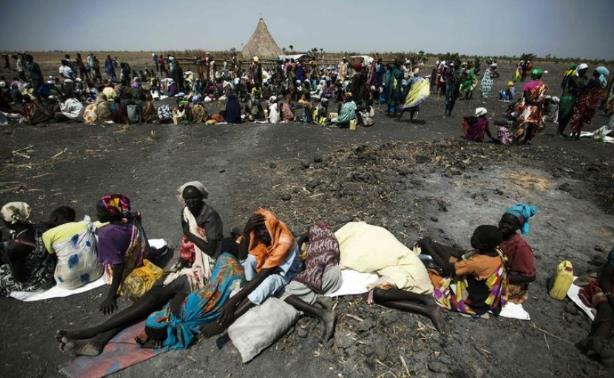
Ceasefire in Freefall as Alleged R-ARCSS Violations Surge Nationwide
More in National:
-
 Climate Shocks, Weak Governance Push Women into Water Crisis
March 23, 2026
Climate Shocks, Weak Governance Push Women into Water Crisis
March 23, 2026
-
 VP Taban claims officials obstruct access to President
March 23, 2026
VP Taban claims officials obstruct access to President
March 23, 2026
-
 Residents urge gov’t to construct drainage after floodwater incident
March 20, 2026
Residents urge gov’t to construct drainage after floodwater incident
March 20, 2026