

By Kei Emmanuel Duku
South Sudan’s fragile peace agreement is spiraling into a major crisis as military combat and targeted attacks on civilians surge across the country. Official monitors from the Ceasefire and Transitional Security Arrangements Monitoring and Verification Mechanism (CTSAMVM) warned in a new report that a “sustained pattern of hostilities” is now putting the entire 2018 peace deal at risk.
The Revitalized Agreement on the Resolution of the Conflict in South Sudan (R-ARCSS) was signed in September 2018 to end years of civil war. The main parties include the government, led by President Salva Kiir Mayardit, and the main opposition group, the SPLM/A-IO, led by First Vice President Riek Machar.
While the agreement initially brought relative stability, the monitoring body recorded 87 alleged violations in January 2026 alone—a 14% increase from the previous month. This spike is particularly alarming as it occurred while the monitoring group was forced to close three field teams in Yei, Bentiu, and Yambio due to financial constraints. The body noted that “these field teams stopped reporting at various points, making the increase in alleged violations particularly notable,” warning that without these teams on the ground, many more crimes may be occurring undocumented.
The epicenter of the crisis is Jonglei State, where the government army (SSPDF) and SPLM/A-IO are engaged in near-daily hostilities. The conflict has shifted into a desperate battle for influence, with towns like Pajut, Waat, and Yuai changing hands multiple times. Monitors stated that “the Permanent Ceasefire is currently not holding in Jonglei State,” while further condemning the use of hate speech that incites “indiscriminate violence as a breach of R-ARCSS provisions.” Across the nation, direct combat between the groups that signed the peace deal has increased by 43% in just thirty days.
For ordinary citizens, the breakdown in security has been catastrophic. The report details a grim landscape of killings, sexual violence, and forced displacement. The official report made it clear that “the impact on civilians cannot be overstated, with killings, injuries, sexual violence, displacement and severe movement restrictions caused by the ongoing hostilities.”
In a significant escalation, the SSPDF has been accused of using planes to bomb civilian areas. The monitoring group warned that “the continued use of aerial bombardments by the SSPDF in civilian-populated environments is a gross violation of Chapter II of R-ARCSS.” One such attack in Pathai on January 13-14 reportedly killed civilians and left others with “severe burn injuries and death.”
The violence has also strangled humanitarian efforts. Aid workers are being directly targeted, and their movement is being blocked across the region. Monitors observed that “the work of humanitarians was severely affected due to widespread access and movement restrictions as well as direct targeting of humanitarian operations.”
Even the monitors themselves are being obstructed; the group was “forced to cancel 5 high-priority field missions due to 5 incidents of delays obtaining Flight Safety Assurances,” leaving the international community with a shrinking window into the growing conflict. As the fighting intensifies, Malakal has emerged as the most dangerous flashpoint, recording 35 separate violations in the last month alone.
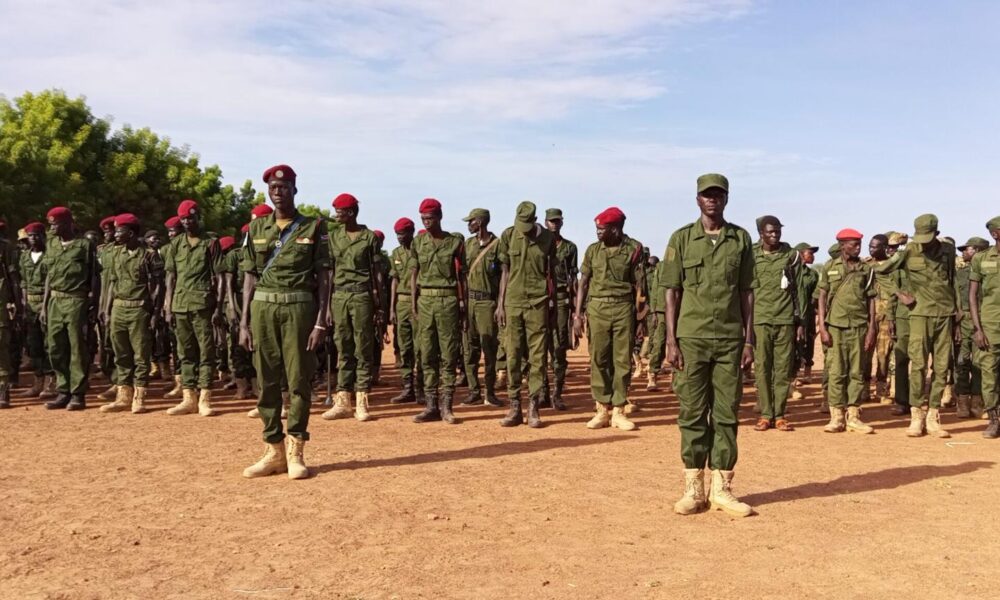
Peace Deal Under Threat as 87 Alleged Violations Recorded in a Single Month
More in National:
-
 Climate Shocks, Weak Governance Push Women into Water Crisis
March 23, 2026
Climate Shocks, Weak Governance Push Women into Water Crisis
March 23, 2026
-
 VP Taban claims officials obstruct access to President
March 23, 2026
VP Taban claims officials obstruct access to President
March 23, 2026
-
 Residents urge gov’t to construct drainage after floodwater incident
March 20, 2026
Residents urge gov’t to construct drainage after floodwater incident
March 20, 2026