


By Kei Emmanuel Duku
The leadership of Rajaf Secondary School is celebrating a major turning point in student dignity and health following a targeted infrastructure investment that has ended a long-standing sanitation crisis. According to the Girls’ Education South Sudan (GESS) website and social media platforms, hope has been restored to the institution after the programme provided critical funding for inclusive facilities to bridge the sanitation gap.
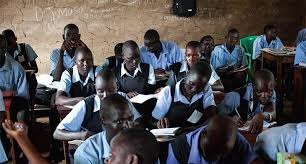
For years, the school operated under “untold difficulties” after its only shared latrine collapsed, forcing students to seek toilets in nearby households or abandon their lessons entirely. “The construction of the latrine has given our school a new face,” remarked Mr. Ladu Peter, the Head Teacher, noting that for the first time, the school possesses a facility designed for learners with disabilities. The sanitation crisis had previously created severe health risks and disrupted learning, particularly affecting girls and learners with disabilities who lacked safe and dignified access.
The intervention was made possible through a $14,315 allocation from the GESS Capital Expense Fund (Capex), a pilot introduced in 2024 to address barriers that hinder quality education. Unlike standard capitation grants, these funds are strictly dedicated to tangible improvements, such as the construction of the five-stance inclusive pit latrine and the installation of an electricity power supply at the school. The implementation was managed by GESS State Anchors on behalf of the school, which oversaw the progress of the construction.
The new facility was designed to be fully inclusive, featuring one room specially created for learners with disabilities, alongside two stances for girls, two stances for boys, and one dedicated stance for teachers. Head Teacher Ladu Peter noted that the improvements extended beyond sanitation, stating that with the new power connection, they no longer struggle with exam printing or office heat.
Deputy Head Teacher Emmanuel Yona added that the grant has lifted a “huge burden” from the administration, which previously relied on meager parental contributions that were never enough to cover infrastructure needs. “With GESS support, our students now learn in a healthier environment,” Mr. Yona remarked, though he noted the school still requires a kitchen, library, and computer benches to further improve learning outcomes.
The impact on student retention is already visible, particularly for young women who previously faced embarrassment due to the lack of facilities. A student leader shared that girls feel more comfortable staying in school now that they have their own latrine, whereas before, many would go home and some never returned.
The GESS programme, which is funded by UK aid, the Government of Canada, the European Union, Sweden, and Norway, views Rajaf Secondary as a model of how well-targeted interventions can restore hope in the education system. This pilot demonstrates that with the right support, schools can overcome systemic barriers to promote gender equity and inclusion across South Sudan.