


By Chol D. Johnson
The Governor of Central Equatoria State (CES), Emmanuel Adil Anthony, has commended the Yangwara community for organizing a cultural event, saying culture unites communities across South Sudan.
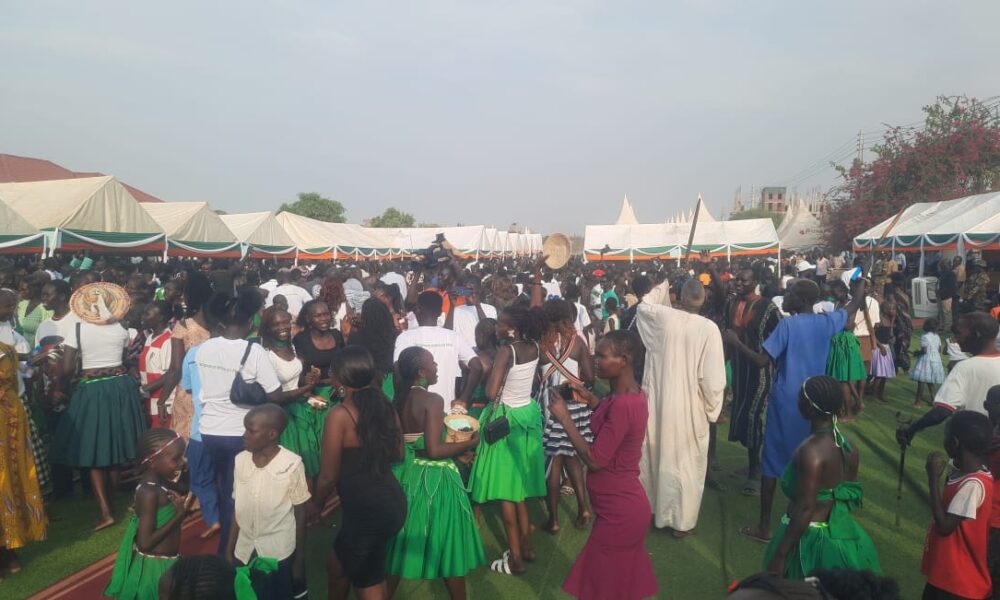
Speaking on Saturday during the opening of the Yangwara Pojulu Tijor Cultural Carnival, 1st Edition, held in Juba, Governor Adil urged the community to preserve and promote their cultural heritage.
“I urge the Yangwara community to remain the number one cultural dance group in South Sudan. I remember that during festivals in Sudan, Yangwara ranked first, followed by the Acholi cultural dance,” he said.
The governor suggested that the second edition of the celebration be held in the village once peace is fully restored, to allow children and other community members to visit and learn more about their cultural roots.
He also encouraged the teaching of the Yangwara language in schools so that children can grow up knowing their mother tongue.
Governor Adil promised that cattle would be returned to their original areas to enable farmers to cultivate their land and improve food production for both consumption and sale in the market. He noted that although the Yangwara were traditionally cattle keepers, farming has become their main source of food.
He called on the youth of South Sudan, particularly those from the Yangwara community, to unite and promote peace for the country’s development.
“I urge the youth of South Sudan and the Yangwara community to embrace unity and peace for the achievement and development of our country, rather than war,” he said.
The event was attended by government officials and members of Bari-speaking communities in Juba. The carnival was held under the theme: “Celebrating Our Roots and Strengthening Unity Through Culture.”
Former CES Governor Rabi Mujung Emmanuel also addressed the gathering, recalling that the Yangwara cultural dance ranked first during the welcoming celebrations of SPLM/A members in Juba in 2005.
“I remember during the welcoming celebration of SPLM/A members in Juba in 2005, the Yangwara were the number one cultural dance group among the 64 tribes that participated,” Mujung said.
He encouraged Yangwara youth and all South Sudanese to promote cultural activities while embracing positive modernization. He called for improvements in living standards, including the use of grinding machines for sorghum and sesame, and the drilling of boreholes to improve access to clean water.
The Yangwara are one of the Bari-speaking communities in Central Equatoria State. The name “Yangwara” means “Horns.” The community is located in the western part of Juba and borders the Mundari to the north, Pojulu to the south, Bari to the east, and Moru to the west.
Although traditionally cattle keepers, continuous cattle-related conflicts led the community to shift toward agriculture. Today, they also rear goats, sheep, and chickens.
The Yangwara are predominantly farmers, cultivating crops such as cassava, sesame (simsim), groundnuts, sweet potatoes, beans, and yams. Their traditional foods include luparate (piranha), doti (greens), and fish locally known as sou mengu.