


By Alan Clement
Northern Bahr el Ghazal State has approved a $2.5 million health operational budget for the 2025/26 financial year, anchoring its plan on internationally recognized health system building blocks to strengthen accountability and service delivery.
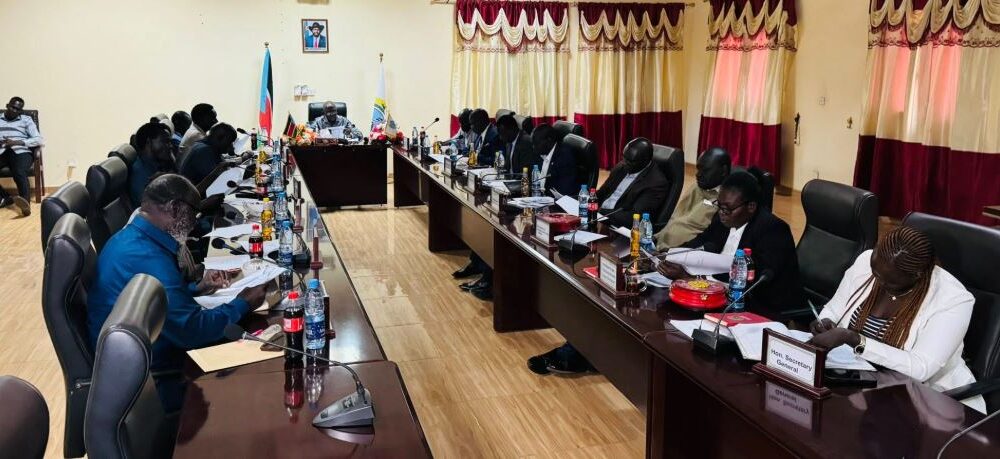
According to the governor’s office, the decision was made at the Third Council of Ministers sitting in 2026, where the Council approved a memo from State Health Minister Dr. Riny Riny Lual outlining the Ministry’s Annual Operational Plan and financing framework.
The plan is structured around six health system building blocks widely recognized by the World Health Organization: leadership and governance, health workforce, health products and technologies, health management information systems, service delivery, and health financing.
By adopting this framework, the state aims to ensure that health interventions are not only well-coordinated but also measurable against global benchmarks.
The statement stressed that the approach is intended to improve transparency in resource allocation, strengthen institutional capacity, and enhance accountability in the delivery of health services.
It emphasized that anchoring the operational plan on these building blocks ensures every dollar spent is tied to a clear outcome in governance, workforce, or service delivery.
The operational budget, estimated at USD 2,547,435, will be primarily funded by the state government. However, the plan also anticipates indirect support from communities, international partners, the private sector, and individuals of goodwill.
This multi-stakeholder approach reflects the reality that public health in South Sudan often relies on a combination of government commitment and external assistance.
The health sector cannot thrive on government allocations alone; its success depends on collective responsibility, with partners, citizens, and the private sector standing together to support the plan.
Northern Bahr el Ghazal, like many states in South Sudan, faces persistent challenges in healthcare delivery, including shortages of trained personnel, limited infrastructure, and inadequate supply chains for essential medicines.
The adoption of a structured operational plan is seen as a step toward addressing these systemic weaknesses.
Aligning state-level strategies with global frameworks is critical for attracting donor confidence and ensuring sustainability. By embedding accountability mechanisms, the government hopes to reduce inefficiencies and improve outcomes in maternal health, child survival, and disease prevention.
The approval of the budget marks a significant milestone in the state’s efforts to strengthen its health system. Implementation will require close monitoring, with the Ministry of Health expected to report progress against each of the six building blocks.
The success of the plan will depend not only on government funding but also on the willingness of communities and partners to contribute resources and expertise. If effectively executed, the $2.5 million plan could serve as a model for other states seeking to balance local ownership with international best practices.