


By Alan Clement
South Sudan is under a climate alert as forecasts warn that extreme heat and rising Nile waters could endanger millions in the coming months, intensifying pressure for swift, coordinated government action to protect vulnerable communities.
The seasonal outlook issued by the IGAD Climate Prediction and Applications Centre indicates that temperatures between 35°C and 47°C are expected across northern, northeastern and northwestern parts of the country, potentially affecting up to 15 million people.
The forecast cautioned that such heatwave conditions could heighten health risks for children, the elderly and other at-risk groups, while straining water supplies, health services and livelihoods.
The ICPAC advised authorities to disseminate heat early warning messages, issue public guidance on hydration and heat avoidance as well as prepare medical facilities for heat-related illness and ensure continuity of water supply systems.
The advisory further called for targeted outreach to high-risk populations, including those living in remote counties and displacement sites, where access to cooling, clean water and health care remains limited.
In many northern areas, communities rely on boreholes and seasonal water points that are highly sensitive to evaporation, and prolonged temperatures approaching 47°C could accelerate water depletion while increasing cases of dehydration and heat stress.
According to ICPAC, health facilities that already face shortages of personnel, medicines and equipment may see additional pressure if preventive measures are not implemented early.
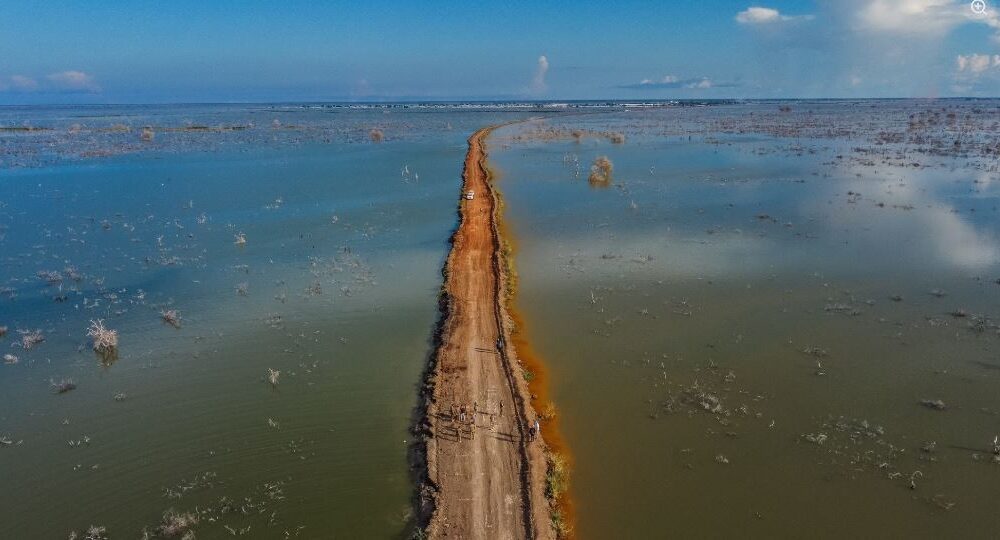
At the same time, the climate outlook warned of sustained high stream flows in the Nile system, increasing the risk of riverine flooding, sedimentation and displacement, despite March–May being climatologically dry across much of South Sudan.
Communities along the White Nile and within the Sudd wetlands, many of whom have endured consecutive years of flooding, remain exposed to renewed inundation that could damage homes, farmland and feeder roads.
The advisory urged close monitoring of river levels, reinforcement of dykes in flood-prone areas, improved drainage and stronger coordination with disaster response institutions to support timely early warning and preparedness.
It also highlighted the need to promote water management, rainwater harvesting and conservation measures in water-stressed western regions, where high temperatures may increase evaporation and reduce water availability despite elevated flows elsewhere
The broader regional outlook indicates enhanced probabilities for above-normal rainfall across parts of the Greater Horn of Africa, a pattern that influences Nile basin hydrology and reinforces the transboundary nature of flood risk.
Under the coordination framework of the Intergovernmental Authority on Development, seasonal forecasts are intended to guide anticipatory action, but their effectiveness depends on how quickly national institutions translate warnings into operational plans and budget allocations.
Agriculture, one of South Sudan’s most climate‑sensitive sectors, also featured prominently in the advisory. Although the March–May period is typically dry—with cultivation concentrated along the Nile and in areas sustained by deep groundwater—the government has been urged to act early.
Establishing inter‑ministerial planning committees ahead of the main production season is critical to coordinate land preparation and guarantee timely delivery of essential inputs, including fuel, seeds, fertilizers, and financing.
Early planning is seen as essential to prevent climate stress from compounding existing food insecurity.
For vulnerable households, particularly those dependent on small-scale farming, livestock and informal labor, the convergence of extreme heat and potential flooding presents overlapping risks that could erode coping capacities.
Heat stress may reduce productivity and increase water demand, while flood-related displacement can disrupt markets, schooling and access to health services, deepening humanitarian needs if preparedness measures fall short.
While the seasonal forecast does not predict uniform disaster, it underscores heightened risk and the importance of acting before impacts intensify.
With millions potentially exposed to dangerous temperatures and riverine communities facing renewed flood uncertainty, the call for early government action reflects the growing urgency of climate adaptation in a country where environmental shocks increasingly shape humanitarian realities.