

By Chol D. Johnson
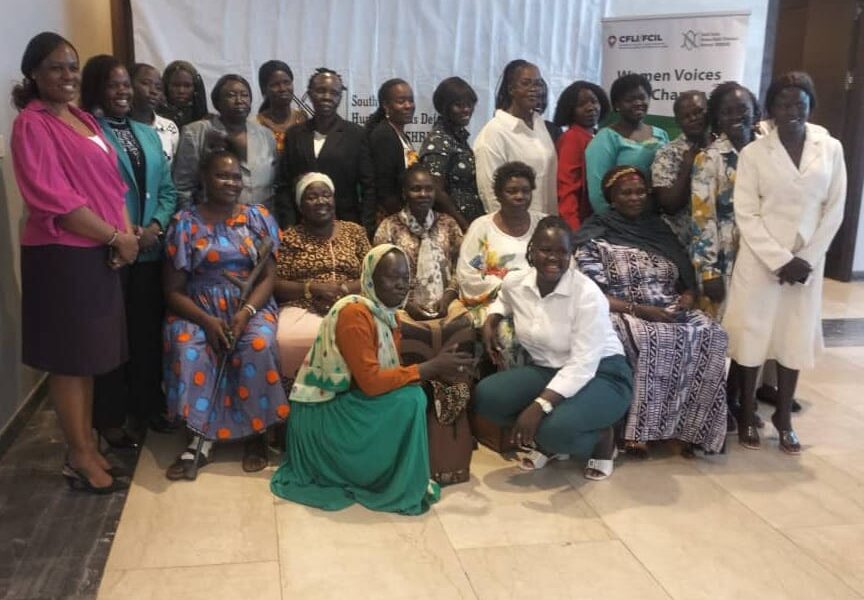
The South Sudan Human Rights Defenders Network (SSHRDN) on Friday called for urgent action to dismantle discriminatory practices that silence women’s voices and limit their participation in decision-making processes across the country.
Speaking during the second edition of the Dialogue for Policy Influence for Better Women’s Position in South Sudan held in Juba, Omara Joseph Wani, Protection and Advocacy Officer at SSHRDN, said women must move beyond token representation to meaningful participation in governance.
“Policy influence is not about token representation, but about meaningful participation,” Joseph said. “Women should not only be present at the table, but their voices must carry weight in shaping decisions.”
He said the dialogue serves as a platform to challenge structures that marginalize women and to advocate for policies guaranteeing equal access to education, healthcare and economic opportunities, as well as stronger representation in political and civic spaces.
Joseph noted that although South Sudanese women have played critical roles in sustaining families during conflict and contributing to peacebuilding efforts, they remain underrepresented in decision-making institutions.
“This imbalance is not only unjust; it undermines the very foundation of our democracy and the pursuit of lasting peace,” he said, adding that women’s rights are human rights and gender equality is a fundamental right.
The event, held under the theme “Women’s Voices for Change,” brought together more than 40 participants, including members of the Transitional National Legislative Assembly (TNLA), representatives of women’s leagues from political parties and other stakeholders. It was sponsored by the Canada Fund for Local Initiatives (CFLI) in partnership with SSHRDN.
Adeng Leek, a Women’s League representative in the TNLA, said the women’s parliamentary caucus unites female lawmakers to address issues affecting women, including those with disabilities.
“We represent women with disabilities, and when we discuss their concerns, we ensure their voices are included,” she said, noting that women with disabilities in parliament have equal rights under the law.
Zahra Siad, representing Women Human Rights Defenders (WHRD), said that despite women forming the majority at community levels, they remain few in parliament. She acknowledged that although the law provides for 35 percent affirmative action, the target has yet to be achieved due to party discipline, internal politics, gender bias and media scrutiny.
“They say this woman is not a woman, which is wrong. Women are part and parcel of society,” Siad said, criticizing discriminatory narratives in some media outlets.
Juan Lucy Ladu, deputy chairperson of the Union of Persons with Physical Disabilities, highlighted challenges faced by women and persons with disabilities in political participation, citing limited access to resources within political parties.
“With elections coming, we also need to be part of this process as voters and candidates. This is the major gap,” she said.
Participants called for stronger implementation of affirmative action and inclusive policies to ensure women’s voices are fully represented in shaping the country’s future.