

By Manas James Okony
The Anyuak community of Akobo County in Jonglei State has raised urgent concerns regarding their electoral rights and representation as the country approaches its first general elections in December 2026.
Following a meeting with leadership from the National Election Commission (NEC), community leaders have formally requested immediate intervention to safeguard the credibility and fairness of the election process.
The plea follows the submission of a letter of complaint signed by notable figures in the community, including their king, traditional chiefs, Members of Parliament, youth representatives, and women’s leaders.
The Anyuak people are apprehensive that unresolved issues could jeopardize their participation in the polls, which have already faced repeated delays due to unmet prerequisites.
South Sudan is on course to hold its first-ever general elections after multiple postponements in the past.
Recent developments include the establishment of geographic constituencies, formation of High Electoral Committees at the state level, and the impending commencement of voter registration elements deemed essential for a credible electoral process by the NEC. Nonetheless, the Anyuak community remains skeptical about their representation in these newly defined constituencies.
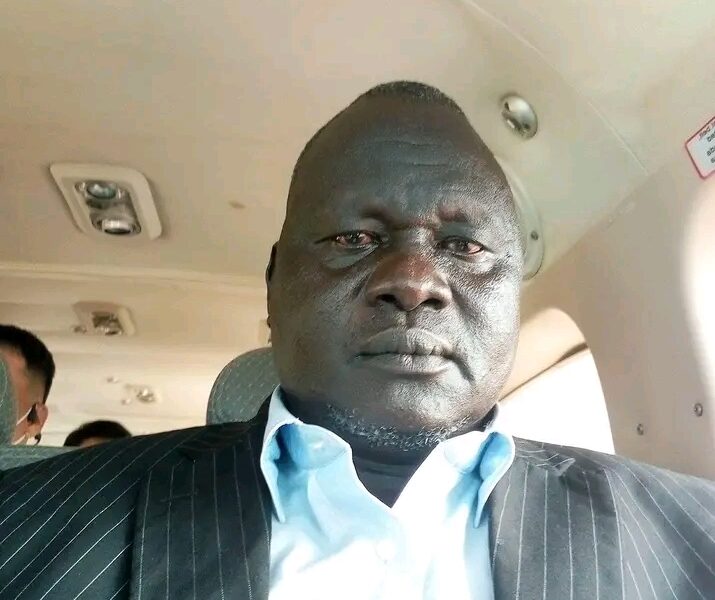
In an interview with No. 1 Citizen Daily Newspaper, community representative and royal advisor John Opiew Olok expressed both hope and concern.
While he acknowledged advancements made toward electoral preparedness, he highlighted longstanding grievances pertaining to the status of Akobo County and alterations made to geographic boundaries established in 2010.
“Since 2005, we have endured displacement and marginalization from our ancestral lands,” Opiew stated. “The boundaries defined by the January 1, 1956 agreement, which are recognized internationally and were adopted by South Sudan in 2011, clearly designate Akobo as Anyuak territory. However, recent alterations have relegated us to a minority status, fueling ongoing tensions with the Mor Lou Nuer community.”
He referenced the historical context of these boundary changes, indicating that they have led to violence during prior elections and pose similar risks for the upcoming polls.
A critical point raised by Opiew Olok was the inconsistency between the NEC’s assertion that the 2026 elections would adhere to the 2010 geographical constituencies and the reality in Akobo.
The community leader noted that whereas Akobo was previously divided into three constituencies—the Akobo North Constituency No. 20, Akobo Center Constituency No. 21, and Akobo East Constituency No. 22—new definitions have reduced this to two constituencies: Akobo North No. 5 and Akobo South No. 6. “This change effectively excludes several villages—including Arini, Alil, Ojwaa, and Nyikani—from representation,” he added.
Moreover, Opiew pointed out that certain locations have undergone name changes without community consent.
“Burmath has been renamed Nyandit, and Akobo is now referred to as Bilkey. These alterations lack any legal foundation and appear to be a systematic effort to erase our cultural heritage, further diminishing our ability to engage meaningfully in the electoral process,” he lamented.
Opiew called upon the NEC leadership to address their grievances urgently.
“Decisions affecting our community are being made without our input due to a lack of representation at the national level. We demand a proportional representation framework for both the Anyuak and Mor Lou Nuer communities in Akobo, especially given the prevailing insecurity that restricts our presence across much of the area,” he stated.
NEC Chairman, Prof. Abednego Akok, acknowledged receipt of the Anyuak community’s complaints and mentioned the formation of a committee tasked with addressing all grievances raised by concerned groups.
“We have received numerous complaints—not just from the Anyuak. A committee has been established led by chief electoral officer with members from commission and secretariat to review these cases, and I will forward their findings to the national leadership,” he stated.
He reiterated that the 2010 constituencies would largely govern the upcoming elections, insisting that voters from that period would be the primary electorate if still alive.
The Anyuak community’s call for redress emphasizes the need for genuine dialogue and fair representation in South Sudan’s evolving political landscape, particularly as the nation prepares for what could be a pivotal moment in its democratic journey.
The Anyuak people, a Luo-speaking ethnic group, are indigenous to Akobo and Pochalla areas of Greater Jonglei, inhabiting the fertile floodplains along the banks of the Sobat, Akobo, and Baro rivers, where they rely on agriculture, fishing, and livestock herding as their primary means of sustenance.
South Sudan gained independence from Sudan on July 9, 2011, following years of civil war and struggle for self-determination. However, the nascent nation faced immediate challenges, including internal conflict, economic instability, and issues related to governance. In December 2013, civil war erupted between rival factions within the ruling Sudan People’s Liberation Movement (SPLM), leading to widespread violence that disproportionately affected marginalized communities, including the Anyuak.