


By Alan Clement
Qualified teachers are abandoning rural schools due to poor pay and lack of incentives, leaving thousands of pupils without proper instruction in English and Mathematics, the National Teachers’ Union has warned.
The alarm was raised following last year’s Primary Leaving Examination results, which showed English and Mathematics as the most poorly performed subjects nationwide.
According to Garang Deng Kuol of the National Teachers’ Union of South Sudan, the crisis is not rooted in student interest but in systemic neglect of teacher welfare and classroom resources. “Qualified teachers cannot accept to work in remote areas because there is no salary, there is no good pay,” Kuol said.
He added that, “If we want those remote children to benefit, we need a way of encouraging teachers and motivating them to go and remain in the class.”
The union’s warning highlighted a widening education gap between urban and rural schools as pupils in towns and cities, where teachers are more likely to remain, recorded stronger performance in last year’s examinations, while those in villages struggled to meet even basic standards.
Kuol explained that many trained teachers abandon rural postings for urban centres, where they can supplement meagre government salaries with private work. This migration leaves rural classrooms staffed by underqualified or temporary teachers, undermining the quality of instruction in technical subjects like English and Mathematics.
“These two subjects are too technical. They need the most-qualified teachers in the class, and the student must have the textbook in hand. Without proper teaching, the student will not perform well,” Kuol explained.
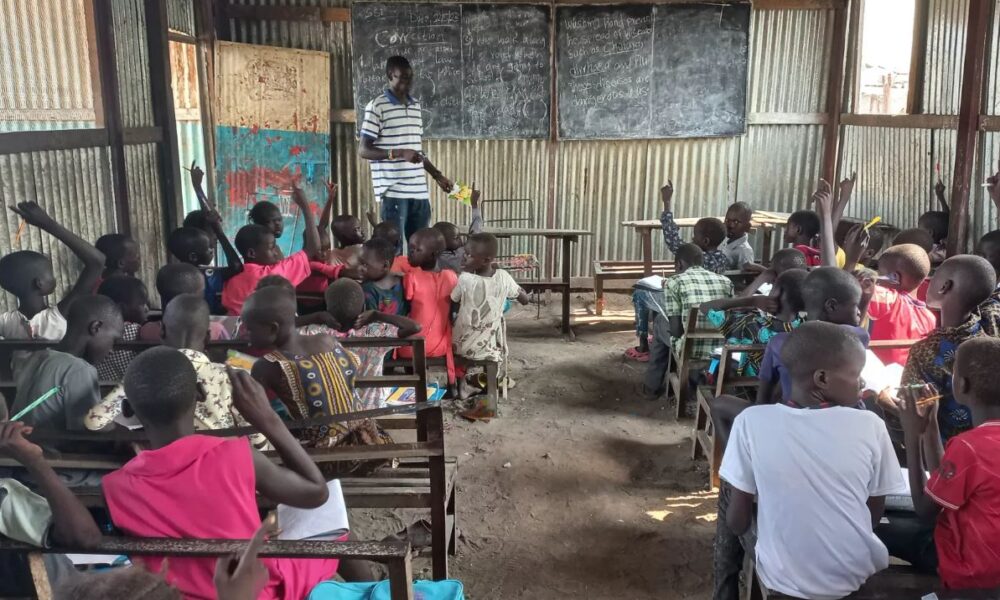
Urban pupils often benefit from textbooks, stable teaching schedules, and better-trained instructors, while rural children are left with overcrowded classrooms, inconsistent lessons, and minimal parental support.
Kuol stressed that while subjects such as Christian Religious Education or Science can be partially grasped through self-study, English and Mathematics require direct guidance from qualified teachers and consistent access to textbooks.
“If you have little knowledge about the English language, you can’t even read it alone. But for CRE and Science, if you try to read, you can at least bring something little.”
He urged the Ministry of General Education and Instruction to prioritize teacher training and motivation arguing that even well-trained teachers lose morale when salaries are delayed or remain too low to sustain livelihoods. “If a teacher is trained and not motivated, he will not teach the way we are expecting,” he said.
He added, “Motivation encourages them to remain in class and gives them moral strength to pass knowledge to the learner.”
Kuol proposed rural incentives including additional allowances for teachers who accept postings in remote villages as a way to stem the exodus. He suggested that even modest top-ups could make rural teaching more attractive than urban alternatives.
“If you pay little on top of the incentives given to the teachers on the name of rural remain, this will encourage teachers to go and work there,” he said, adding that modest allowances could make rural postings more appealing, as teachers would see greater benefit in staying in villages rather than leaving for towns.
Beyond government policy, Kuol emphasized the role of parents and communities in supporting children’s education noting that many families leave learning entirely to schools, failing to monitor progress or reinforce lessons at home.
“Parents should not only leave learners for school. They must monitor and follow up what the children receive today and how they are performing,” Kuol said.
The rural-urban divide in exam performance reflects broader inequalities in South Sudan’s development. Without urgent reforms, rural children risk being locked out of future opportunities, perpetuating cycles of poverty and underdevelopment.
For Kuol and the teachers’ union, the message is clear: without investment in teacher welfare, textbooks, and rural incentives, South Sudan’s education system will continue to fail its most vulnerable pupils.
“If we are not paying them well, there is no motivation, there is no accommodation,” Kuol warned adding, “Of course, the improvement of learning services in villages is difficult.”
The poor performance in English and Mathematics is more than an academic issue; it is a governance and accountability crisis.
As urban pupils advance and rural children fall behind, the future of South Sudan’s education system hinges on whether the government can bridge the gap by valuing teachers, equipping classrooms, and ensuring that no child is left behind simply because of where they live.