



By Alan Clement
Crawford Capital’s disputed contract has ignited calls for stronger parliamentary oversight, as analysts warn the row exposes deep weaknesses in transparency and accountability across South Sudan’s financial governance system.
The debate erupted follows a March 5 Ministerial Memo in which Trade Minister Atong Kuol Manyang Juuk ordered a 90‑day review of Crawford Capital’s digital payment system, citing operational problems affecting trade services and revenue collection.
The directive prompted high‑level intervention from Vice President James Wani Igga, chair of the Economic Cluster, who insisted the Crawford Capital contract was cabinet‑approved and beyond unilateral ministerial reversal citing Cabinet Resolution No. 34/2024.
“The engagement of Crawford Capital was not a unilateral decision,” VP Igga wrote in a letter responding to the minister, emphasizing that cabinet resolutions carry collective executive authority and cannot be altered by a single ministry.
The standoff quickly expanded into a national debate over government contracting and the role of private firms in revenue collection. Political Analyst and Executive Director of the Institute of Social Policy and Research, Boboya James Edmond said it exposes major gaps in how institutions negotiate and supervise agreements.
“The government of South Sudan, with the different officials, have no clear understanding in terms of contractual agreements and the terms and conditions they sign,” said the analyst.
Boboya argued that the dispute reflects a broader failure in how government institutions handle contracts, stressing that officials often sign agreements without fully grasping their implications.
“It calls for a comprehensive review of government policies so that they understand these contracts before entering into them,” he told this outlet.
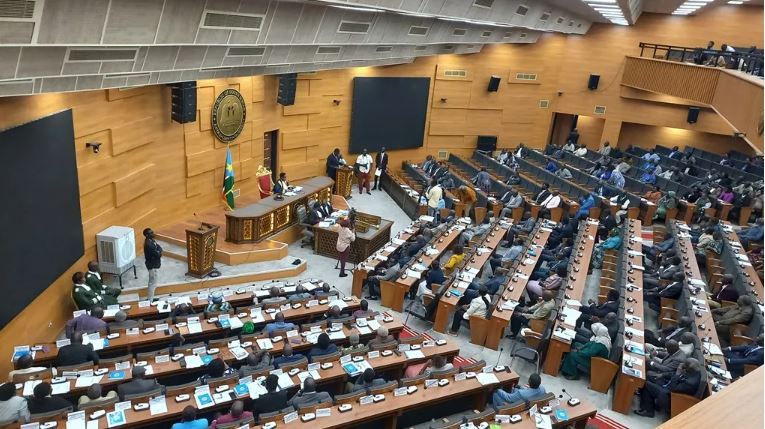
He urged the Transitional National Legislative Assembly to scrutinize the agreement with Crawford Capital to determine whether it aligns with national interests. “We are calling for parliament to examine this agreement and determine whether it is really in line with the public interest or in line with some individuals in government,” Boboya said.
The Crawford Capital platform is part of South Sudan’s push to digitize revenue collection, replacing manual systems with electronic platforms to reduce corruption, improve efficiency, and strengthen oversight of public finances.
Digital systems are seen as vital to strengthening fiscal governance in South Sudan, where weak oversight and reliance on oil revenues limit domestic tax collection. Critics say the Crawford Capital row shows reforms falter without strong procurement and oversight.
Some reports alleged that digital payment platforms in the country charge mandatory service fees on imports and exports, raising questions about how these revenues are managed and whether they are fully reflected in the national budget.
The issue has drawn attention due to Crawford Capital’s role in managing electronic gateways for trade licensing and oil permits, with scrutiny intensified by the lack of publicly available records showing a competitive tender process.
Despite criticism, some economists say the dispute reflects administrative misunderstandings rather than wrongdoing. Abraham Maliet noted ministers may review operations but stressed consultation is vital before major decisions.
“Ministers routinely have the right to check what is happening in their ministries. What the minister did was to pause in order to gain more understanding of how the company operates” Dr. Abraham told this outlet.
He added that the disagreement appears largely procedural, describing it as a matter of communication and consultation between government institutions. In his view, clearer dialogue and coordination could have prevented the standoff. “This is a matter of communication and consultation,’ he noted.
He downplayed fears that the dispute could undermine investor confidence, arguing that government oversight of private contractors is a normal part of economic governance. “The investors cannot lose confidence because the government is doing what is necessary to understand the system,” he said.
Parliament moved swiftly, with a letter seen by this outlet dated March 6 in which the Trade and Industry Committee requested documentation from the ministry and announced consultations with the revenue authority and Crawford Capital.
The lawmakers warned that abrupt disruptions to digital payment platforms could interfere with government revenues and undermine ongoing efforts to eliminate manual collection methods.
Institutional context was reinforced when the Governance Cluster, chaired by Rebecca Nyandeng De Mabior, convened a meeting attended by seven ministers.
It emphasized the effective implementation of Presidential Order No. 35 of 2025, mandating the SSRA e-government system for revenue collection, underscoring the cabinet’s collective commitment to the Crawford Capital arrangement.
Analysts said the outcome of the dispute could have wider implications for governance reforms in South Sudan, particularly as the country seeks to strengthen its financial institutions and improve transparency in public finance management.
For analyst Boboya, the controversy reflects a broader governance challenge that goes beyond the Crawford Capital contract. “There is already damage to public trust. Citizens have not trusted the government for many years, and when they see issues like this, it increases mistrust,” he stressed.
He added that the solution lies in establishing transparent procurement systems and ensuring parliamentary oversight of major government contracts. “If there is political will, this can be corrected,” Edmond said.
Boboya cautioned that without genuine political commitment, reforms risk stalling and citizens will continue to bear the brunt of weak governance. “If there is no political interest, then the status quo will continue and the suffering of the people will continue.”
As debate over the Crawford Capital agreement continues, the case is increasingly being viewed as a test of the government’s commitment to transparency, accountability, and institutional reform in the management of public resources.