

By Alan Clement
South Sudan’s unpaid salaries and worsening economic hardship are rooted in collapsing oil revenues, senior SPLM party leaders admitted, urging a shift to agriculture and mining as citizens struggle with rising costs and stalled services.
At the opening of the SPLM Central Equatoria State expanded meeting, Vice President and SPLM Deputy Chairman Dr. James Wani Igga delivered a rare acknowledgment of the country’s revenue crisis.
Dr. James Wani Igga told the gathering that South Sudan’s fiscal crisis is directly tied to collapsing oil revenues, explaining that the government can no longer raise enough income to meet obligations.
“So, challenges that reduce government revenue like now is the problem. We have not paid salaries and so on. Number one is because we are no more generating enough revenue.” Wani Said
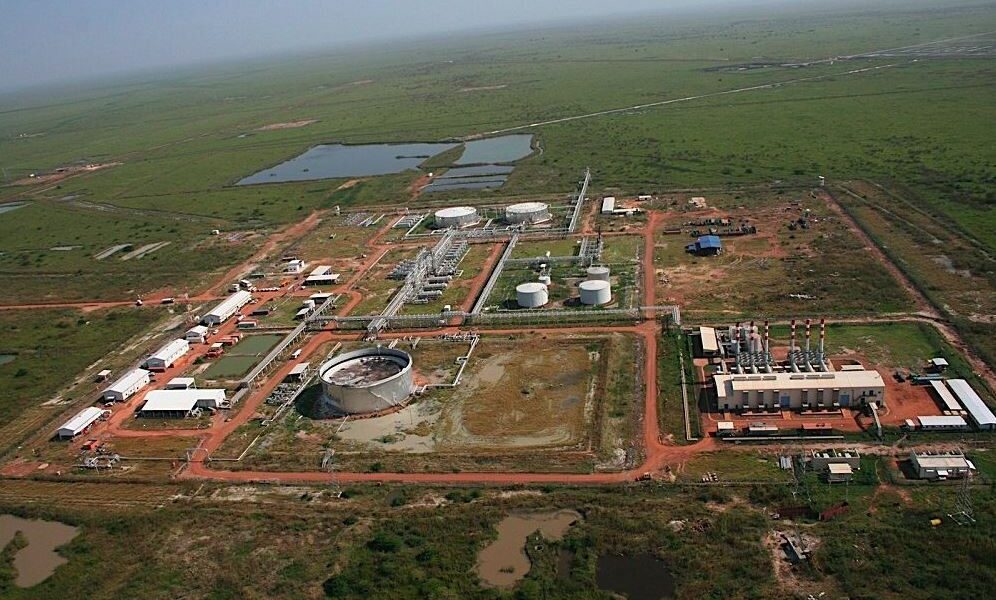
Dr. Wani Igga added that the collapse in oil output has left the state unable to sustain its commitments: “Our oil, almost 80 to 90 percent of the production is now water; only between 10 to 20 percent is real oil. So, the revenue is attacked, and this is why we must look for other areas of revenue,” he told the gathering
Oil has long been South Sudan’s economic lifeline, accounting for the vast majority of government revenue. But Dr. Wani Igga’s remarks underscored how fragile that dependence has become.
With oil output collapsing, the government has struggled to pay civil servants, fund services, and stabilize the economy. Citizens across the country have felt the impact through inflation, shortages, and unpaid wages.
Dr. Wani Igga argued that the solution lies in diversification. He pointed to agriculture as South Sudan’s most neglected sector, despite the country having more than 95 percent arable land.
“We go and take food from neighboring countries as if we don’t have farmland,” he said, blaming poor infrastructure, limited farming technology, and insecurity for keeping production low.
He urged leaders to confront these challenges head‑on, warning that “lamenting and lamenting is not going to help us.”
The Vice President also highlighted the country’s untapped mineral wealth. Central Equatoria alone, he said, holds millions of tonnes of resources including gold, diamond, uranium, copper, silver, magnesium, and more than 22 types in total.
“They are untapped, they are unutilized. The question is, when are we going to move?” asked VP Igga, calling for mining to become a new revenue stream as oil revenues collapse.
For ordinary citizens, the implications are clear as weak infrastructure and insecurity have already driven up food prices, while the collapse in oil revenue threatens to deepen poverty. Dr. Wani Igga’s remarks highlight how governance failures such as poor roads, weak institutions, and corruption translate directly into hardship for households.
During the session, SPLM Secretary General Dr. Akol Paul Kordit framed the party’s mission as unfinished liberation.
“We have liberated ourselves from the National Congress Party, but we are yet to liberate ourselves from hunger, poverty, illiteracy, tribalism, and corruption,” he said urging members to stand against these evils and praised efforts to crack down on dishonest officials.
Dr. Akol’s remarks reinforced the link between corruption and economic stagnation.
He argued that weak institutions, staffed by incompetent officials, have undermined revenue collection and service delivery.
Citizens, he said, continue to suffer because the state has not transformed its liberation struggle into effective governance.
For residents of Juba and beyond, the speeches resonate with daily struggles including rising fuel costs, water shortages, and food inflation have left families vulnerable. Teachers, health workers, and civil servants have gone months without pay, eroding trust in government and weakening public services.
Citizens are increasingly demanding that leaders move beyond rhetoric to concrete action by investing in roads, supporting farmers, and ensuring accountability in resource management.
Dr. Wani Igga’s warning about oil depletion may serve as a turning point. By acknowledging the crisis openly, he has placed responsibility squarely on the government to diversify revenue streams and protect citizens from further economic shocks.
Whether through agriculture, mining, or stronger institutions, the challenge is clear: South Sudan must act before the collapse of oil revenues deepens the hardship already felt across the country.