


By Chol D. Johnson
The Deputy Special Representative of the United Nations Mission in South Sudan (UNMISS), Anita Kiki Gbeho, has called for a coordinated plan between the government and partners to address the challenges facing displaced communities.
According to a press statement issued on Tuesday by the Ministry of Finance and Planning, Gbeho emphasized the need for a joint strategy involving multiple government institutions to respond effectively to the humanitarian situation.
“The UN Resident Coordinator also discussed the humanitarian situation in the country and the need for a joint plan to address the plight of displaced communities in coordination with different government institutions,” the statement noted.
Gbeho pledged UN support, including funding, to facilitate the development and implementation of the joint plan. She added that UN institutions would help guide donor programs to align with government priorities.
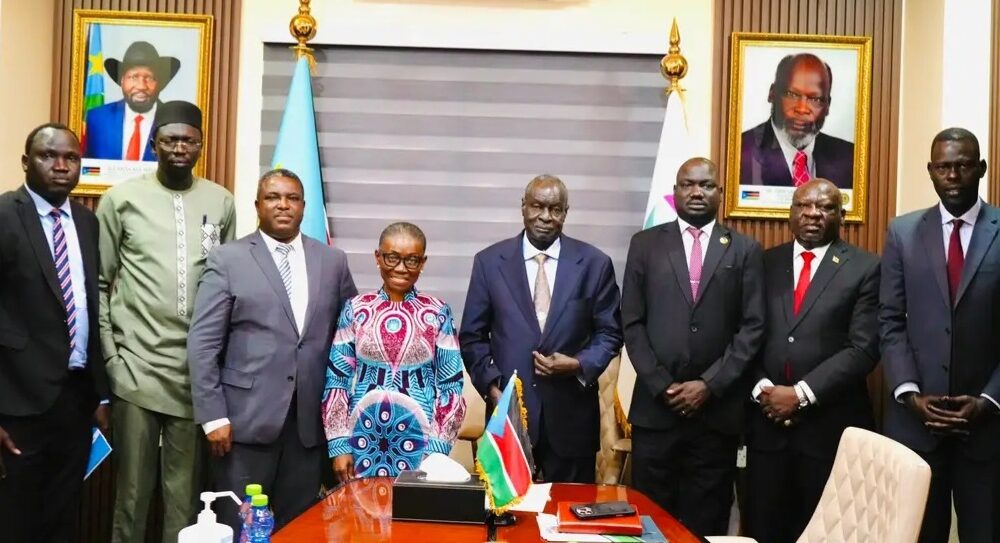
The Minister of Finance and Planning, Salvatore Garang Mabiordit, met with Gbeho to discuss areas of cooperation between the government and UN agencies.
Their discussions also covered progress on the formulation of the South Sudan Development Plan (SSDP) 2026–2036.
Additionally, the meeting highlighted the role of development partners in coordinating their support with the government to ensure effective implementation of the long-term national development plan.
South Sudan has faced recurring humanitarian crises since gaining independence in 2011, largely driven by conflict, economic instability, and climate shocks.
Despite the 2018 peace agreement, tensions between the South Sudan People’s Defence Forces (SSPDF) and the Sudan People’s Liberation Army-in-Opposition continue to trigger sporadic violence in some parts of the country.
At the same time, severe flooding in several states over recent years has worsened displacement, destroying homes, livelihoods, and infrastructure.
According to humanitarian agencies, millions of people remain internally displaced or in need of assistance, placing increasing pressure on both host communities and aid systems.
The involvement of the United Nations Mission in South Sudan and other development partners has been critical in providing humanitarian relief, supporting peacebuilding efforts, and assisting the government in long-term planning initiatives such as the SSDP.
These developments come amid increasing displacement across the country, driven by ongoing conflict and climate-related challenges such as flooding.
Clashes between the SSPDF and SPLA-IO have forced many civilians to flee their homes and seek refuge in neighboring communities.