

By Chol D. Johnson
The government of South Sudan has revealed an initiative to develop a regulatory framework to establish a minimum wage in the country.
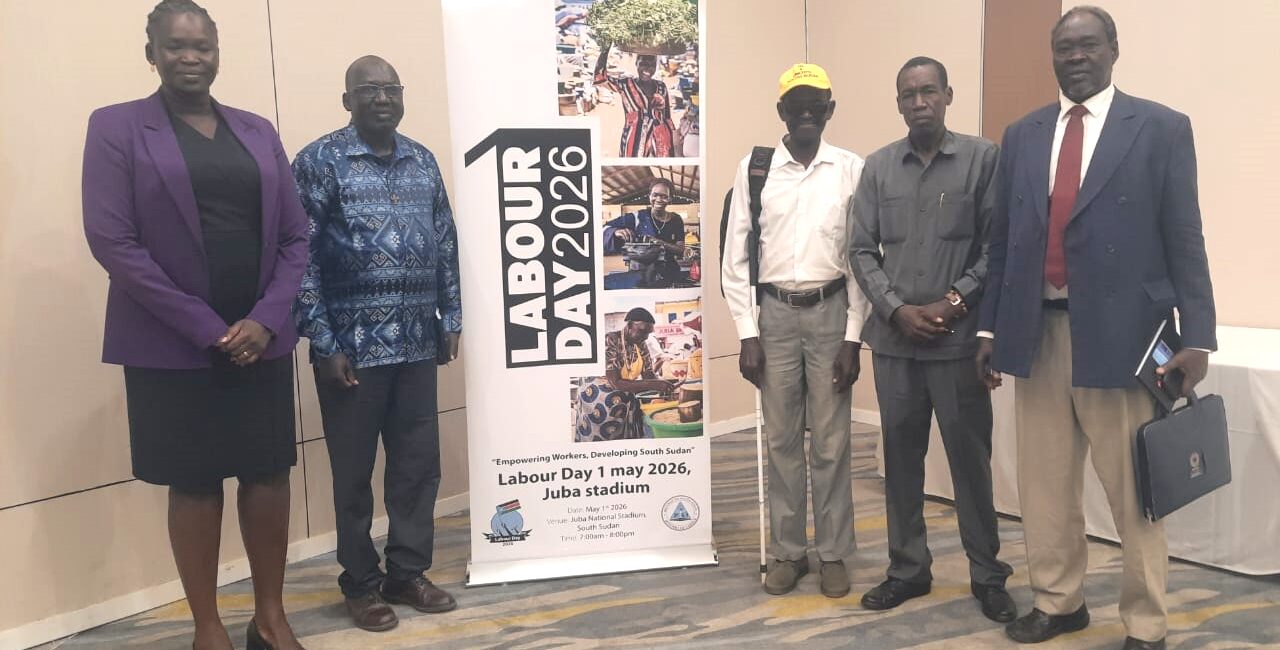
Speaking on Thursday during an International Labour Day panel discussion, John Chol Dau, Director General for Vocational Training at the Ministry of Labour, said the government is in the process of developing a framework for this initiative.
“The government is making significant progress in developing national policies and a regulatory framework to establish what could be a minimum wage in South Sudan,” Chol said.
Chol emphasised that the government is taking steps to engage with employers to consult on what a clear minimum wage should be in the country. He noted that the South Sudan Labour Act of 2017 remains the primary guiding policy currently in effect.
Chol added that the Ministry of Labour is working diligently to create a framework that puts the minimum wage process under active consideration. His remarks came during the International Labour Day celebrations on Thursday as South Sudan joined the world to commemorate the May 1st holiday.
“It is the day the government wants to encourage South Sudanese workers to come out and celebrate the resilience and the contributions workers have made in the country,” Chol expressed. He also appreciated the government for providing a platform for the public to celebrate, dialogue, and connect.
Pasquale Michael Apai, the Secretary-General of the South Sudan Workers Trade Union Federation (SSWTUF), expressed appreciation for the ministry’s initiative.
“I thank the Ministry of Labour for the achievement of making this day happen to join the celebration of International Labour Day in a massive gathering,” Apai said.
Apai noted that the role of the SSWTUF is to protect workers and advocate for improved working conditions across the country. He highlighted that the union is working with the government and employers to ensure that employees are organised and can participate effectively in a free and fair environment.
He added that the union’s voice is vital to support the ongoing review of salary structures in the country.
“We want to make sure that we know the number of workers in the public sector through the review of the salary structure,” he assured.
Meanwhile, Augustino Wudu Hillary, executive director of the South Sudan Union of Persons with Disabilities, urged both the public and private sectors to prioritise professionalism when hiring individuals with disabilities.
“People should be employed based on the knowledge and skills they have acquired. We have many educated persons with disabilities, but many have been employed only by the Ministry of Gender,” Wudu said.
Wudu stated that most graduates with disabilities are not given opportunities to work in most government institutions. He noted that persons with disabilities are often sidelined and assigned to disability-specific facilities, rather than being placed in professional institutions according to their merit.
“Most of our graduates with disabilities are not given the opportunity to work according to their profession,” he said.
Wudu urged the government to consider merit and professionalism when employing people with disabilities within government institutions.