


By Sabri Dibaco
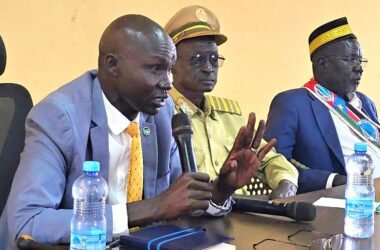
Civil society activist and Executive Director of the Community Empowerment for Progress Organisation (CEPO), Edmond Yakani, has welcomed the government’s announcement that South Sudan’s crude oil production has increased to 174,000 barrels per day, describing the development as a positive step for the country’s economy.
Speaking on Monday, Yakani praised the National Ministry of Petroleum for publicly disclosing the increase in oil output, saying the announcement demonstrated a commitment to transparency in the management of the country’s natural resources.
“Our crude oil production has increased to 174,000 barrels per day. This is encouraging and positive information for the citizens of South Sudan,” Yakani said. “I appreciate the Ministry of Petroleum for demonstrating a sense of transparency by announcing the increase in production.”
However, the CEPO Executive Director stressed that transparency should not stop at production figures. He urged the government to disclose the amount of revenue generated from the sale of the increased oil production, arguing that full accountability requires citizens to know how much income the country earns from its natural resources.
“We want to hear how much revenue was generated from the sale of these 174,000 barrels per day. Transparency and accountability do not begin and end with announcing production figures. The public also deserves to know the revenue generated from oil sales,” he said.
Yakani further called on the government to invest oil revenues in productive sectors such as agriculture, rather than using the funds primarily for the purchase of services and recurrent expenditures.
“The best practice is to inject oil revenue into other productive sectors that can generate sustainable income for the country,” he noted.
At the same time, he acknowledged the need for the government to address the prolonged salary arrears affecting civil servants across the country.
He appealed to national leaders to allocate part of the revenue to clear outstanding salaries while maintaining a long-term focus on economic diversification.
“There is a need to respond to the concerns of civil servants who have gone for a long period without receiving salaries,” Yakani said.
The activist also challenged members of the Transitional National Legislative Assembly to exercise their oversight role by demanding public disclosure of oil revenues.
“As lawmakers, Parliament should stand up and demand the announcement of the revenue earned from the sale of crude oil in the international market,” he stated.
Beyond the petroleum sector, Yakani raised concerns about the lack of transparency surrounding South Sudan’s gold industry.
He said significant gold extraction and trade activities are taking place across the country, yet little information is publicly available regarding revenues generated from the sector.
He warned that competition over gold mining and trade has increasingly contributed to tensions within communities and called for similar transparency measures to be applied to the gold industry.
“We hope the same practice of transparency and accountability will be exercised in the gold sector. There are claims that no revenue is being generated from gold, yet extraction and trade are taking place on a large scale,” he said
Yakani concluded by urging authorities to ensure that revenues from the country’s natural resources benefit all citizens through accountable and transparent management.
South Sudan’s economy remains heavily dependent on oil, which accounts for the majority of government revenues and export earnings.
The country’s oil sector has faced numerous challenges over the years, including disruptions caused by conflict, infrastructure constraints, and fluctuations in global oil prices.
The recent increase in production to 174,000 barrels per day marks one of the highest output levels reported in recent years and is expected to boost government revenues.
However, civil society organisations and development partners have consistently called for greater transparency in the management of oil and mineral resources to ensure that proceeds contribute to national development and improved public services.
The issue of salary arrears for civil servants and concerns over accountability in both the oil and gold sectors remain among the key governance challenges facing South Sudan.