
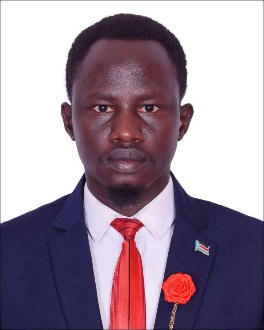

Writer: Engr. Maker Mangol Acien Yuol
Imperfect polls are still better than permanent transitions that cannot bring development, while wars continue across the country. South Sudan must set the country on a path to hold free and fair elections. These imperfect polls can be improved in future elections.
As South Sudan’s revitalised transitional government of national unity ended on 26 June 2026 at 11:59 PM, this piece continues to advocate for one thing: ending the agreement and holding free, fair elections that can bring real change to South Sudan.
This agreement was meant to stabilise the country. After more than six years, it has failed to deliver accountable basic services or durable peace. Open-ended power-sharing entrenches unaccountable leadership and raises the risk of renewed conflict. I call for ending the current agreement, forming a caretaker government, and implementing a transparent, time-bound roadmap to genuinely free and fair elections in 2026.
More than six years after the Revitalised Agreement on the Resolution of the Conflict in the Republic of South Sudan was signed on 12 September 2018, and more than four years since the Revitalised Transitional Government of National Unity took office on 22 February 2020, the promise of peace, development, and accountable governance remains unfulfilled. What began as a political compromise to stabilise the nation has become a framework that shields leaders from oversight, weakens institutions, and increases the risk of renewed conflict.
Instead of strengthening the rule of law and restoring basic services, the current agreement has substituted political deals for individual accommodation in government. Appointments and power-sharing negotiated behind closed doors, without transparent checks and balances, have fostered impunity and eroded public trust. Citizens who expected security, schools, hospitals, water, and roads now face uncertainty and stagnation.
Open-ended transitional agreements are dangerous. They incentivise short-term political survival over long-term national rebuilding. Every year without a clear, time-bound path to elections deepens frustration and raises the likelihood that grievances will spill back into violence. South Sudan cannot afford further delay.
We call for an immediate end to agreements that enable unaccountable leadership and for the establishment of a transparent, time-bound roadmap to genuinely free and fair elections. Only credible elections can restore public trust, rebuild institutions, and chart a path toward lasting peace and development.
A caretaker government must be formed to allow the National Elections Commission to carry out its duties while giving space for all parties to contest positions. This will pave the way for citizens to vote for leaders from the grassroots to national seats.
Delay is not neutrality; it is a risk. South Sudan needs a clear, time-bound path to elections so citizens can choose leaders who will rebuild institutions and deliver services.
South Sudan’s future belongs to its people. A clear, time-bound path to elections in 2026 is the first step toward restoring trust, rebuilding institutions, and securing lasting peace.
About the Author
Engr. Maker Mangol Acien Yuol is a civil engineer, opinion writer, and leader based in Juba. He holds a Bachelor of Science (BSc) in Civil Technology, BCT, from the Federal TVT Institute, Addis Ababa, Ethiopia, and is pursuing a Master of Science (MSc) in geotechnical engineering at the University of Juba. Geotechnical engineering is the branch of civil engineering concerned with the behaviour of soil, rock, and groundwater and how they interact with structures built on, in, or from them. He writes on geotechnical safety, sustainable infrastructure, youth development, leadership, and other issues affecting South Sudan. He can be reached at makermangolacien@gmail.com for verification or comments.
Disclaimer: Any opinion published on our platform does not represent our view or position.