
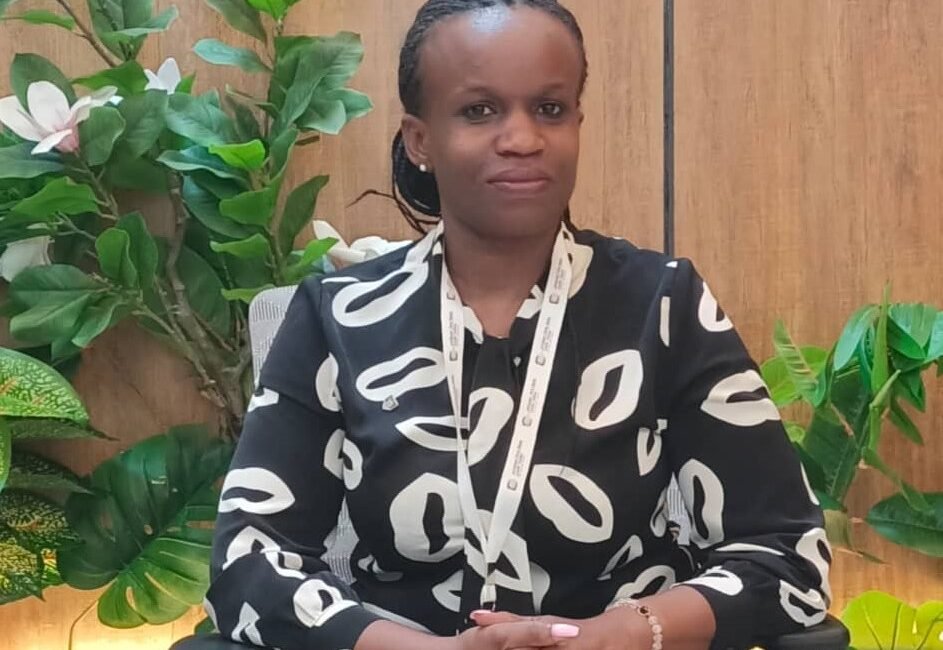

Writer: Ms. Catherine Lunkuse
Having worked in the banking sector in South Sudan, one observation has consistently captured my attention: the significant gap between the number of men and women who actively use banking services.
The disparity is striking. Far fewer women hold bank accounts compared to their male counterparts, raising an important question: Where are the women in business?
Financial inclusion is more than simply opening a bank account. It is about accessing opportunities to save securely, make payments conveniently, access credit, grow businesses, and build a stronger financial future.
The banking sector is continuously evolving, and innovative financial products are making banking more convenient and accessible.
One example is ‘Push and Pull,’ an innovative product offered by Afriland First Bank South Sudan, which allows bank customers to link their bank accounts to their Mobile Money (MoMo) wallet.
This enables seamless bank withdrawals and transfers between the bank account and the MoMo wallet. The product has been widely embraced by many men, who not only use it for bank withdrawals and transfers but also use it to navigate the liquidity challenges currently affecting the country by providing easier access to funds through mobile money channels.
This presents a tremendous opportunity that more women, particularly women entrepreneurs, should take advantage of to grow their businesses, improve cash flow, and achieve greater financial independence.
South Sudanese women are not strangers to business. They are traders, entrepreneurs, professionals, service providers, and owners of small and medium-sized enterprises.
Every day, women wake up early to run businesses, provide for their families, employ others, and contribute to the economy. However, many continue to operate largely outside the formal banking system.
This can limit their access to financial products and opportunities that could help them expand their businesses and strengthen their financial security.
The issue, therefore, is not whether women are economically active. They clearly are. The question is whether they are fully connected to the financial system that can support and accelerate their economic participation.
This is a wake-up call to all stakeholders—banks, government institutions, development partners, and community leaders—to strengthen financial literacy, increase awareness, and make banking services more accessible, affordable, and welcoming to women.
To my fellow women, I encourage you to embrace banking. Open a bank account, explore available financial products, save consistently, and take advantage of digital banking solutions. Banking is not just about keeping money; it is about unlocking opportunities, building financial security, and positioning yourself and your business for sustainable growth.
When women participate fully in the financial system, families become stronger, businesses flourish, communities become more resilient, and the nation prospers.
The future of South Sudan’s economy depends on the full participation of its women. Let us make financial inclusion a reality for every woman.
About the author:
Ms. Catherine Lunkuse is a Banker | Lecturer | Corporate Trainer
PhD Candidate, Jomo Kenyatta University of Agriculture and Technology (JKUAT), Kenya
Disclaimer: Any opinion published on our platforms does not represent the company’s views or its position.